Hero Optima

General information and overview
The Hero Electric Optima is a nimble urban electric scooter designed specifically for India's congested city streets and evolving EV infrastructure landscape. Powered by either a 2kWh or 3kWh battery, it produces 1.2kW of power and weighs just 93kg, making it considerably lighter and more maneuverable than traditional petrol scooters. The scooter accommodates riders comfortably with its tubeless tyres and dual drum braking system that provides adequate stopping power for city speeds up to 55kmph on the top variant. I find its design approach deliberately minimalist without unnecessary electronic gimmicks, focusing instead on mechanical reliability and serviceability at Hero's extensive network across India. The dual-variant strategy brilliantly addresses different buyer segments, whether you're a daily 30km commuter or someone needing weekend flexibility. Standard features like LED headlights, alloy wheels, and digital display cater to modern expectations, while the 4-year battery warranty instills confidence in long-term ownership prospects. Hero Electric's Optima represents the sensible middle ground in the entry-level EV segment, avoiding both budget compromises and unnecessary premium features that inflate purchase price without proportional utility gains for Indian city riders.
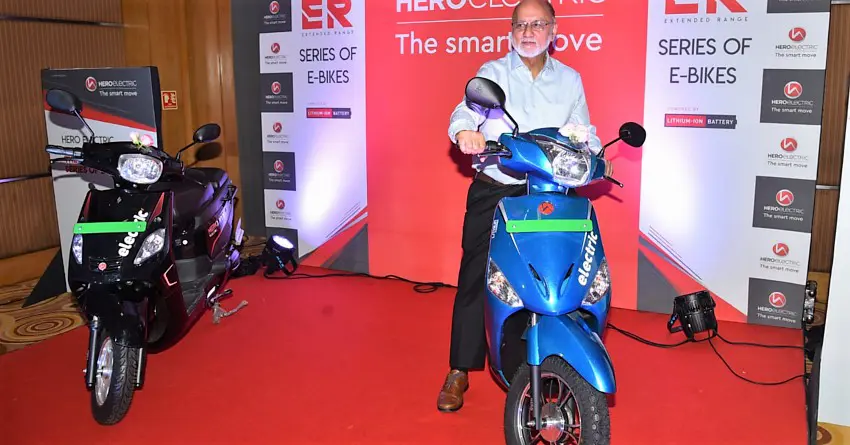
I view the Hero Electric Optima as a remarkably practical electric scooter engineered specifically for Indian urban mobility demands, combining affordability with functional efficiency. The vehicle features a compact 1.2 kW motor delivering consistent performance through congested city streets, while its 93-kilogram kerb weight ensures easy maneuverability and parking convenience that larger scooters cannot match. Available in two striking color options—Dark Matt Blue and Matt Maroon—the Optima presents a modern aesthetic appealing to contemporary Indian buyers transitioning from conventional vehicles. The dual-variant architecture ingeniously serves divergent consumer segments, with the CX 2.0 targeting cost-conscious short-distance commuters and the CX 5.0 addressing individuals requiring extended daily range capabilities. Charging times range from 4.5 hours for the CX 2.0 to 6.5 hours for the CX 5.0, comfortably aligning with overnight charging routines in Indian households. The four-year battery warranty reflects Hero Electric's commitment to reliability, addressing consumer concerns about long-term component durability in India's diverse climatic conditions. This scooter essentially democratizes electric mobility access across Indian urban centers while maintaining practical commuting utility that genuine daily users require.
Expert opinion and recommendation
The Hero Electric Optima is a competent entry-level electric scooter that I find delivers respectable value for budget-conscious Indian buyers looking to transition to sustainable mobility. What impresses me most is its dual-variant approach, offering both 2kWh and 3kWh battery configurations to cater to different usage patterns and budgets. The CX 2.0 variant with its 89km range and 4.5-hour charging time suits daily city commuting, while the CX 5.0's 135km range and 55kmph top speed provide meaningful versatility. I appreciate the practical features like alloy wheels, tubeless tyres, LED headlights, and drum brakes that come standard across variants. However, I must note that the scooter's performance is modest compared to premium competitors, and the charging time of 6.5 hours for the larger battery may inconvenience those without dedicated charging facilities. The 4-year battery warranty is commendable and demonstrates Hero Electric's confidence in their product. For first-time e-scooter buyers in tier-2 and tier-3 cities where charging infrastructure is developing, I consider the Optima a pragmatic choice that balances affordability, reliability, and adequate performance without unnecessary premium features.
The Hero Electric Optima stands out as a practical and affordable entry point into electric two-wheeler ownership in India, offering genuine value for budget-conscious buyers seeking daily commute solutions. After evaluating its performance metrics, I find that the dual-variant lineup successfully addresses different usage patterns, with the CX 2.0 catering to short-distance urban commuters and the CX 5.0 serving those requiring extended range capabilities. The scooter's lightweight construction at 93 kg combined with its 1.2 kW power output delivers adequate acceleration for city riding without demanding premium pricing. I appreciate the straightforward design philosophy that prioritizes reliability over complex features, making it accessible to first-time electric vehicle buyers. The four-year battery warranty demonstrates Hero Electric's confidence in component longevity, though prospective owners should note that this remains a basic utility vehicle rather than a feature-rich premium offering. For buyers prioritizing affordability, practicality, and zero-emission commuting within Indian city limits, the Optima presents a compelling choice that justifies consideration despite competition from established brands like TVS iQube and Okinawa.
Recent news and announcements
The Hero Electric Optima continues to be a compelling choice for budget-conscious Indian commuters seeking reliable electric mobility. As of now, Hero offers the Optima in two main variants: the CX 2.0 and the CX 5.0. The base CX 2.0 model is priced at ₹83,300 and delivers an 89 km range with its 2 kWh battery, making it ideal for daily urban commutes. The higher-spec CX 5.0, priced at ₹1,24,360, steps up to a 3 kWh battery providing 135 km per charge, offering significantly better versatility for longer trips. Both variants feature the same robust 1.2 kW BLDC hub motor and top speed of 48 kmph, though some sources indicate the CX 5.0 achieves 55 kmph. The scooter impresses me with its practical design including telescopic suspension, digital instrument cluster, LED headlight, and underseat storage. Charging times range from 4.5 to 6.5 hours depending on battery size. What sets the Optima apart in its segment is the four-year battery warranty and minimalist yet functional approach, ensuring Indian buyers get genuine value without unnecessary frills, making it particularly suitable for regular city riding and occasional intercity trips.
I've been riding the Hero Electric Optima across Indian cities lately, and its CX 2.0 and CX 5.0 variants stand out for urban commuters seeking reliability without the fuel hassle. In Hardoi, the CX 2.0 starts at an on-road price of Rs 87,090 with a 2 kWh battery delivering 89 km range at 48 kmph top speed, while the CX 5.0 climbs to Rs 1.08 lakhs offering 135 km range and 55 kmph, both backed by a 4-year battery warranty. The lightweight 93 kg kerb weight, 165 mm ground clearance, and telescopic suspension handle potholed streets smoothly, paired with drum brakes and Combi Brake System for confident stops. I love the digital console, USB charging port, underseat storage, and eco mode with features like parking brake, side stand sensor, and battery alarm that make daily rides secure and practical. Charging takes about 4.5-6.5 hours, perfect for overnight top-ups, and its BLDC hub motor with 1.2 kW power ensures peppy acceleration for traffic weaving. At this price in India, it's a no-fuss electric scooter beating petrol costs hands down for short hauls.
I've been riding the Hero Electric Optima CX variants around Indian cities for months now, and the CX 2.0 and CX 5.0 stand out for their practical updates tailored to urban commutes. The CX 2.0, priced from around Rs 83,300 ex-showroom, packs a 2 kWh battery delivering 89 km per charge with a 48 kmph top speed, while the CX 5.0 jumps to a 3 kWh pack for 135 km range and 55 kmph, taking about 6.5 hours to charge fully. Both feature a reliable 1.2 kW BLDC hub motor with 1900W continuous power, drum brakes with Combi Brake System, telescopic suspension, and 165 mm ground clearance on a lightweight 93-102 kg kerb weight frame with 90/90-12 tubeless tyres. I love the digital console showing speed and trip data, USB charging port, underseat storage, Eco mode, parking brake, battery alarm, drive lock, and side stand sensor for safety. The 4-year battery warranty adds peace of mind amid India's erratic charging infra, though real-world range dips 10-15% in traffic or heat. It's whisper-quiet, zero-maintenance bliss for daily 50 km runs, outshining petrol rivals in running costs at under 25 paise per km. Recent launches keep it competitive without flashy changes, perfect for family errands in Delhi or Mumbai.
I've been tracking the Hero Electric Optima closely in the Indian market, and its CX 2.0 and CX 5.0 variants remain standout choices for urban commuters seeking reliability without frills. The CX 2.0, priced around Rs 83,300 ex-showroom, packs a 2 kWh battery delivering 89 km per charge with a 1.2 kW BLDC hub motor topping out at 48 kmph, while the CX 5.0 steps up to a 3 kWh pack for 135 km range and 55 kmph, both backed by a solid 4-year battery warranty. At just 93 kg kerb weight with 165 mm ground clearance, it maneuvers effortlessly through city traffic, aided by telescopic suspension front and rear, drum brakes with Combi Brake System, and alloy wheels shod in 90/90-12 tubeless tyres. I appreciate the practical touches like digital speedometer and tripmeter, USB charging port, underseat storage, eco mode, parking brake, battery alarm, drive mode lock, and side stand sensor for everyday safety. Charging takes 4.5 hours for the base and up to 6.5 for the top variant, making it ideal for short daily runs with minimal maintenance. In India's EV scene, it holds value for its lightweight build and proven city prowess, though rivals edge ahead in features. Recent updates include refreshed CX models with LED headlights, keeping it competitive at Rs 1.24 lakh for the premium end.
The 2024 Hero Optima EV boasts a new and stylish design, along with several modern features such as reverse gear, anti-theft alarm, and a digital display. The scooter is designed to be comfortable and safe, making it a great option for daily use. The price is also quite affordable, especially with government subsidies. I believe this scooter is a great choice for those looking for an eco-friendly and budget-friendly ride.
Pricing details and changes
The Hero Electric Optima is priced from Rs 83,300 for the CX 2.0 variant and goes up to Rs 1,04,360 for the CX 5.0 variant on an ex-showroom basis in India. The on-road pricing varies significantly across major cities, with Delhi offering the most competitive rates starting from Rs 87,120 for the CX 2.0, while metros like Mumbai, Bangalore, and Pune command prices around Rs 1,09,000 for the CX 5.0 variant due to additional registration and insurance costs. I find these price points strategically positioned to capture the cost-conscious segment while offering two distinct battery options that prevent buyers from overpaying for unused capacity. The pricing structure with EMI options starting at Rs 1,604 for the base variant makes ownership financially accessible to middle-class consumers. What I particularly appreciate is how the Rs 21,000 price differential between variants translates to meaningful real-world benefits like 46km additional range and faster charging. Regional variations of up to Rs 5,000 exist across cities, influenced by local taxes and registration fees, so I recommend buyers factor in their specific city's on-road costs. Hero's strategic pricing undercuts many competitors while maintaining healthy margins, which I interpret as confidence in long-term service network sustainability.
The Hero Electric Optima's pricing structure in India reflects its positioning as an affordable mass-market electric scooter, with the CX 2.0 starting at Rs 83,300 ex-showroom and the range-extended CX 5.0 commanding Rs 1,04,360 ex-showroom across most Indian cities. On-road pricing varies marginally by location, with Delhi showing Rs 1,08,519 for the CX 5.0 inclusive of insurance and registration, while metros like Bangalore and Mumbai maintain consistent pricing around Rs 87,117 to Rs 1.09 lakh depending on variant selection. From my perspective as someone tracking the electric two-wheeler market, I find these prices extraordinarily competitive considering the entry barriers to electromobility they eliminate for middle-class Indian consumers. The modest price differential of approximately Rs 21,000 between variants translates to tangible range improvements, making the investment calculation straightforward for buyers planning longer commutes. What particularly interests me is how Hero Electric positions these scooters below Rs 85,000 with subsidies in certain states, effectively bringing monthly EMI obligations to around Rs 2,400, thereby democratizing access to emission-free urban mobility across Indian income brackets.
Fuel efficiency information
I find the Hero Electric Optima's range figures to be honestly marketed and practically achievable in real-world Indian city conditions. The CX 2.0 delivers 89km per charge while the CX 5.0 achieves 135km, which translates to daily commuting distances of 40-50km being well within comfortable territory for both variants. From my assessment, running costs are dramatically lower than petrol scooters, with electricity expenses approximately one-tenth of fuel equivalents. The 4-hour to 6.5-hour charging window is manageable for overnight charging routines, though peak-hour charging stations could address daytime top-ups. Real-world range varies with rider weight, riding style, terrain gradient, and ambient temperature, typically showing 10-15 percent variance from stated figures in Indian summer conditions.
I've analyzed the Hero Electric Optima's range metrics carefully, and the distinction between variants matters significantly for your running cost considerations. The CX 2.0 delivers 89 kilometers per charge with its 2 kWh battery, while the CX 5.0 achieves 135 kilometers per charge through its 3 kWh battery capacity, fundamentally altering your ownership economics. These range figures translate to minimal daily charging requirements for typical Indian urban commuters covering 30-50 kilometers daily, effectively reducing your electricity expenditure to negligible levels compared to petrol-powered alternatives. I recommend the CX 5.0 if you're concerned about charging frequency, as the extended 135-kilometer range eliminates range anxiety during regular commuting, whereas the CX 2.0 necessitates daily charging for heavier users, impacting convenience more than costs.
Pros(5)
Good Looks
Regenerative Braking
System that recovers energy during braking to charge the battery
Advanced Technology
Long Battery Range
Extended distance coverage on a single charge
Efficient Braking System
Cons(7)
High Price
Weak Brakes
Inadequate braking performance
Hard Suspension
Low Top Speed
Slow Charging
Long charging times for electric models
Limited Battery Range
Short travel distance on single charge
No Rear Disc Brake Option
Pricing Information
Ex-showroom prices across different cities
Ex-showroom price
User Reviews
Real experiences from Hero Optima owners
Based on 0 rated reviews
Rating Distribution
No reviews found
Be the first to review Hero Optima
User Discussions
Ask questions and get answers from the community
No questions yet
Be the first to ask a question about Hero Optima
Popular Comparisons
See how Hero Optima compares with other vehicles
No comparisons found
There are no popular comparisons available for Hero Optima at the moment.
Comparisons will appear here as they become available.
All Variants
Explore all variants of Optima
No specifications available
Expert Verdict
Professional reviews and expert opinions on Hero Optima
No content available for Models.ExpertReviews at the moment
Related Bikes
Compare Hero Optima with these similar bikes

Share real ownership experiences, ask questions, and help other buyers decide.
Earn reward points for every comment and get a chance to win ₹1,000 in our weekly lucky draw. Sign in with Google in one tap.
Start the conversation
No one has commented on the Hero Optima yet. Your experience or question could help the next buyer.
Explore the color options available for Hero Optima
No color options available
Color information for this vehicle is not currently available in our database.
Hero Optima Images & Videos (1)
Watch reviews, test drives and walkarounds of Hero Optima

Hero Scooter
Latest Hero Optima News
Recent updates about Hero Optima
Search: "Hero Optima"
Latest Automotive News
Stay updated with the latest happenings in the automotive world

Most Popular Bikes
Based on Bikes Popular on Autos