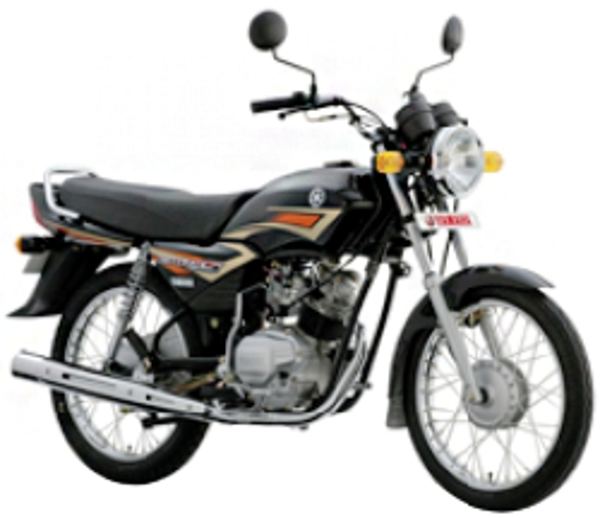
Yamaha Crux (2010)

General information and overview
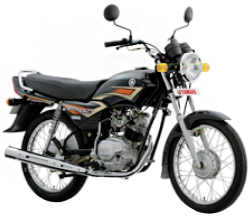
The 2010 Yamaha Crux is a simple, no-frills commuter motorcycle designed to withstand tough usage often seen in rural and semi-urban India. It is powered by a 105.6cc air-cooled, 4-stroke, SOHC engine delivering 7.6 PS at 7500 rpm and 7.5 Nm torque at 6000 rpm, mated to a 4-speed constant mesh gearbox. The bike weighs 113 kg, carries 11 liters of fuel, and features telescopic front forks with a swing arm rear suspension to ensure road stability. Drum brakes front and rear handle braking duties, reflecting the utilitarian focus. Its design is minimal with a sturdy frame, spoke wheels, and basic instrumentation, emphasizing durability and easy maintenance. Though it lacks modern conveniences such as electric start and disc brakes, the bike’s smooth engine and comfortable seating make it suitable for long highway rides and daily city commuting. The Crux’s core appeal lies in its reliability, low running costs, and ability to serve as a dependable workhorse for the Indian rider, making it a niche but valued choice in its era.
The Yamaha Crux 2010 model is a simple, no-nonsense 106cc commuter motorcycle designed primarily for Indian buyers seeking reliability and value in rural and semi-urban areas. It features a 4-stroke, air-cooled SOHC single-cylinder engine producing about 7.6 bhp and 7.5 Nm torque mated to a 4-speed manual gearbox. Weighing 113 kg, with a fuel tank capacity of 11 liters, it balances good mileage with decent run-length capability. The bike’s drum brakes front and rear and telescopic front forks with rear swingarm suspension deliver stable handling but lack modern sophistication, making it better suited for practical use than performance riding. It uses only a kick starter, reflecting its basic, rugged design. The Crux is known for its comfortable seating for city and moderate long rides, sturdy build, and dependable mechanics, making it a strong choice for budget-conscious buyers who prioritize longevity and economical ownership over flashy features.
Expert opinion and recommendation
The Yamaha Crux (2010) stands out as a rugged and reliable commuter bike especially suited for buyers looking for simplicity and durability rather than flashy features. Its 106cc engine offers smooth power delivery, excelling on highways and long rides with minimal vibrations and comfortable seating. While it lacks modern amenities like electric start and front disc brakes, it compensates with a solid build and low maintenance costs. However, the low torque at lower RPMs can make urban stop-and-go traffic slightly challenging, requiring frequent downshifts. The suspension, particularly at the rear, is hard but stable on highways, aiding handling though compromising city comfort. The Crux’s no-nonsense design and proven mileage appeal strongly to rural commuters or daily riders focused on reliability and cost efficiency. Overall, it is a practical choice for those prioritizing function and fuel economy over features.
The Yamaha Crux (2010) stands out as a reliable and economical commuter bike that was particularly suited for rural and value-conscious buyers in India. Its 106cc engine offers smooth and refined performance, ideal for steady cruising and consistent city rides, though its low-end torque is modest, sometimes requiring downshifts in slow traffic. The bike’s rugged build and simple mechanics make it low-maintenance, aligning with buyers who prioritize durability over advanced features. However, it lacks modern amenities like electric start and front disc brakes, which might deter some buyers today. The suspension feels hard at city speeds but improves on highways, contributing to stable handling. Its large fuel tank and lightweight frame make it multifunctional for heavy loads and daily use. While it’s no longer in production, the Crux’s blend of fuel efficiency, simplicity, and robustness has earned it a loyal following, especially among middle-aged riders and those needing a dependable, no-frills bike for varied road conditions in India.
Recent news and announcements
The Yamaha Crux, a popular commuter bike in India, was discontinued in November 2016. This decision was part of Yamahas strategy to focus on more profitable and technologically advanced models. The Crux had been a staple in the Indian market for its reliability and fuel efficiency. I think this move was necessary for Yamaha to stay competitive in the evolving market.
In 2015, Yamaha introduced some minor updates to the Crux, including new color schemes and slight tweaks to the engine for better performance. These updates were aimed at keeping the bike relevant in a market flooded with newer models. The bike still retained its 106cc, 4-stroke engine and air-cooled single cylinder SOHC configuration. I believe these updates helped in maintaining customer interest for a bit longer.
The Yamaha Crux was known for its impressive mileage, with an ARAI-certified 85 kmpl. This made it a favorite among commuters who prioritized fuel efficiency. The bikes 11-liter fuel tank and 2-liter reserve further enhanced its appeal for long rides. I think the fuel efficiency was one of the key selling points of this bike.
In 2013, there were rumors that Yamaha might resurrect the Crux with a more powerful engine, possibly similar to the R15, but these plans never materialized. The existing model continued with its 7.6 bhp @ 7500 rpm and 7.5 Nm @ 6000 rpm engine. Im a bit disappointed that this never happened, as it could have given the bike a new lease on life.
The Yamaha Crux featured a simple yet effective design, with an analogue speedometer, odometer, and fuel gauge. The bike had a kick-start mechanism and a 4-speed gearbox, making it easy to handle for daily commuting. I think the simplicity of the design was part of its charm.
Pricing details and changes
When it was available in India, the Yamaha Crux was priced attractively both ex-showroom and on-road, making it one of the most affordable Yamaha motorcycles in the country. The ex-showroom price hovered around ₹40,000 to ₹45,000 depending on the city, with on-road costs slightly higher factoring in taxes, insurance, and registration. Although it is discontinued now, used models can be found within a competitive price range reflecting its value-for-money reputation. The pricing strategy targeted budget-conscious rural and semi-urban buyers wanting a dependable machine without premium pricing. From a buyer’s perspective, the Crux offered outstanding practicality at a low initial and running cost, making it ideal for first-time motorcycle users or those needing a low-investment, sturdy commuter bike.
When it was available, the Yamaha Crux was priced very competitively to cater to budget-conscious buyers, with an ex-showroom price typically around Rs. 39,000–42,000 in India. On-road prices varied from about Rs. 45,000 to Rs. 47,000 depending on state taxes and insurance. Although discontinued, its affordability stood out, particularly in rural markets where buyers sought durable transport without high running or initial costs. Today, you might find used Crux models priced between Rs. 20,000 and Rs. 40,000 depending on condition and location. The low purchase cost combined with inexpensive servicing made it attractive for first-time buyers and those focused on value for money. Even compared to contemporary commuter bikes, the Crux was viewed as a wallet-friendly choice despite lacking modern features.
Fuel efficiency information
The Crux is known for its exceptional fuel efficiency in Indian conditions, with ARAI-certified mileage of around 76 kmpl and real-world averages between 65 to 70 kmpl depending on riding style and conditions. This outstanding mileage makes it highly economical to run, reducing fuel expenses significantly. For buyers concerned primarily about running costs and mileage, the Crux presents a compelling proposition in the commuter motorcycle segment, supporting cost-effective daily travel without compromise.
The Yamaha Crux offers excellent fuel efficiency, typically delivering between 65 to 70 kmpl in real-world Indian conditions, with official figures claiming even up to 76-85 kmpl under test conditions. Its lightweight frame and modest 106cc engine contribute to low fuel consumption, keeping running costs minimal. This makes it an appealing option for those whose priority is mileage and affordable day-to-day ownership.
Specifications
- Number of Cylinders
- 1
- Maximum Torque
- 7.85 Nm @ 6000 rpm
- Maximum Power
- 7.6 HP @ 7500 rpm
- Number of Gears
- 4
- Ground Clearance
- 160.00 mm
- Kerb Weight
- 113.00 kg
- Fuel Tank Capacity
- 11.00 litres
- 2-Wheeler Type
- Commuter
Pros(3)
Solid Build Quality
Vast Service Network
Good Mileage
Cons(1)
Love It, Hate It Looks
Pricing Information
Ex-showroom prices across different cities
Ex-showroom price
User Reviews
Real experiences from Yamaha Crux (2010) owners
Based on 0 rated reviews
Rating Distribution
No reviews found
Be the first to review Yamaha Crux (2010)
User Discussions
Ask questions and get answers from the community
No questions yet
Be the first to ask a question about Yamaha Crux (2010)
Popular Comparisons
See how Yamaha Crux (2010) compares with other vehicles
No comparisons found
There are no popular comparisons available for Yamaha Crux (2010) at the moment.
Comparisons will appear here as they become available.
All Variants
Explore all variants of Crux (2010)
Complete Specifications
Yamaha Crux (2010)
- Overall Length
- 2000.00 mm
- Overall Width
- 735.00 mm
- Overall Height
- 1075.00 mm
- Ground Clearance
- 160.00 mm
- Wheelbase
- 1260.00 mm
- Kerb Weight
- 113.00 kg
- Fuel Tank Capacity
- 11.00 litres
- Engine Details
- 105.6cc
- Cooling
- Air Cooling
- Maximum Power
- 7.6 HP @ 7500 rpm
- Maximum Torque
- 7.85 Nm @ 6000 rpm
- Number of Cylinders
- 1
- Bore
- 49 mm
- Stroke
- 56 mm
- Number of Gears
- 4
- Gearbox Type
- Constant Mesh
- Clutch
- Wet multi-plate coil spring
- Bike Variant
- Yamaha Crux (Old)
- Availability Status in India
- Discontinued
- 2-Wheeler Type
- Commuter
- Latest Price in India
- Yamaha Crux (Old Model) price was Rs 36,000 before being discontinued.
- Fuel Type
- Petrol
- Front Brake
- Drum
- Rear Brake
- Drum
- Tubeless Tyres
- Alloy Wheels
- Front Suspension
- Telescopic
- Rear Suspension
- Swing arm
- Frame (Chassis)
- Double cradle type, steel
- Pass Light
- Battery Type
- Maintenance Free
- Capacity
- 12V
- Mileage
- Yamaha Crux (Old Model) mileage is 55-65 kmpl (approximate).
- Speedometer
- Analogue
- Tachometer
- None
- Trip Meter
- None
- Fuel Gauge
- Analogue
- Pillion Footrest
- Electric Start
- Step-up Seat/Split Seat
Expert Verdict
Professional reviews and expert opinions on Yamaha Crux (2010)
No content available for Models.ExpertReviews at the moment
Related Bikes
Compare Yamaha Crux (2010) with these similar bikes

Share real ownership experiences, ask questions, and help other buyers decide.
Earn reward points for every comment and get a chance to win ₹1,000 in our weekly lucky draw. Sign in with Google in one tap.
Start the conversation
No one has commented on the Yamaha Crux (2010) yet. Your experience or question could help the next buyer.
Explore the color options available for Yamaha Crux (2010)
No color options available
Color information for this vehicle is not currently available in our database.
Yamaha Crux (2010) Images & Videos (1)
Watch reviews, test drives and walkarounds of Yamaha Crux (2010)
Crux 2010
Latest Yamaha News
Recent updates from Yamaha
Search: "Yamaha"

Latest Automotive News
Stay updated with the latest happenings in the automotive world


Most Popular Bikes
Based on Bikes Popular on Autos
Recently Added Bikes
New Bikes Added On Autos