
ARAI Cylinder Testing Facility Gets NABL Accreditation: Why It Matters
ARAI's cylinder testing facility at Takwe near Pune has received ISO/IEC 17025:2017 accreditation from the National Accreditation Board for Testing and Calibration Laboratories. The reported scope covers Type I through Type IV high-pressure gas cylinders.The facility can support testing for CNG, bio...
Editorial Team
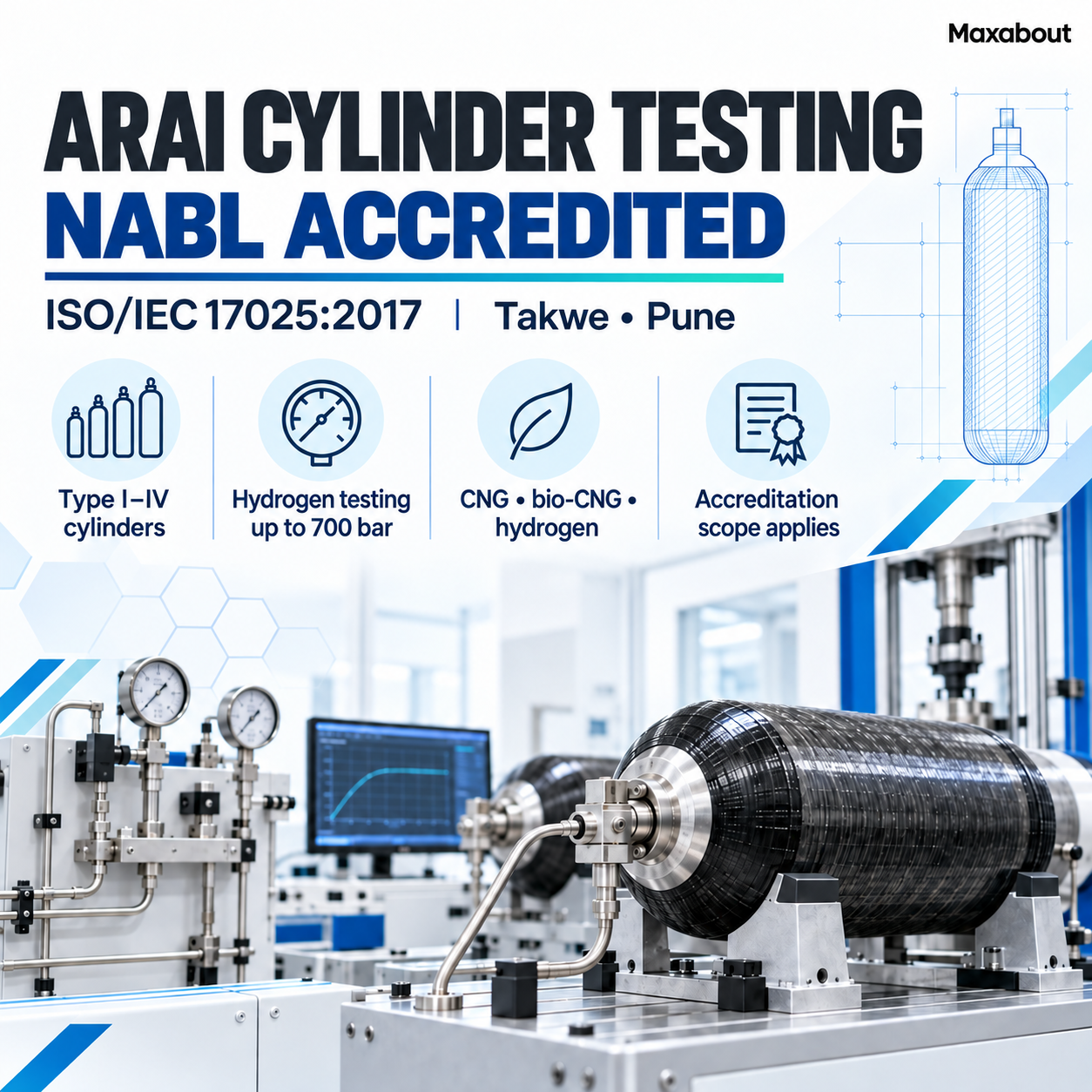
ARAI's cylinder testing facility at Takwe near Pune has received ISO/IEC 17025:2017 accreditation from the National Accreditation Board for Testing and Calibration Laboratories. The reported scope covers Type I through Type IV high-pressure gas cylinders.
The facility can support testing for CNG, bio-CNG and hydrogen applications, including hydrogen testing up to 700 bar within its accredited scope. This is a technical infrastructure milestone rather than a new vehicle launch, but it has direct relevance to component validation and safety.
What the facility covers
ISO/IEC 17025:2017 NABL accreditation.
Testing for Type I, II, III and IV high-pressure cylinders.
Hydrogen-cylinder testing up to 700 bar within scope.
Support for CNG, bio-CNG and hydrogen component development.
Different cylinder types use different combinations of metal liners, composite reinforcement and construction methods. A facility able to evaluate the full range can support conventional gaseous fuels as well as newer lightweight storage systems.
Why domestic testing capacity matters
Manufacturers and suppliers need repeatable, recognised testing to validate pressure vessels before homologation and deployment. Local capability can reduce dependence on overseas laboratories, shorten development cycles and create a common technical foundation for Indian programmes.
Hydrogen storage is especially demanding because high operating pressure places strict requirements on materials, manufacturing consistency, valves and inspection. Accreditation confirms laboratory competence for the stated scope; it does not certify every future cylinder automatically.
Buyer and industry relevance
Consumers will not see an immediate change at dealerships, but stronger validation infrastructure supports safer development of gaseous-fuel vehicles and components. It can also help regulators and manufacturers assess designs using recognised methods.
The direct accreditation-scope document was not independently retained for this report, so specific capabilities remain attributed to ARAI through the cited industry coverage.
Bottom line
The Takwe facility's NABL accreditation expands India's ability to test high-pressure cylinders across multiple construction types and fuels. Its value will be measured through rigorous, transparent testing as CNG, bio-CNG and hydrogen programmes develop.
Explore the story
Related news


Share your view and join the discussion.
Earn reward points for every comment and get a chance to win ₹1,000 in our weekly lucky draw. Sign in with Google in one tap.
Start the conversation
No one has commented on this article yet. Be the first to share your view.
Want to read more automotive news?
Stay updated with the latest car launches, reviews, and industry insights.
Browse All News