
ARAI and COEP plan ₹105 crore ergonomics centre: why Indian-user data matters
ARAI and COEP Technological University have reportedly signed a Letter of Intent for a ₹105 crore Advanced Ergonomics and Human Factors Research Centre at COEP Tech's Research and Innovation Park in Chikhali, Pune. The proposed facility will focus on engineering around the physical characteristics a...
ARAI and COEP Technological University have reportedly signed a Letter of Intent for a ₹105 crore Advanced Ergonomics and Human Factors Research Centre at COEP Tech's Research and Innovation Park in Chikhali, Pune. The proposed facility will focus on engineering around the physical characteristics and needs of Indian users. The first phase is planned over two to three years, with a full-scale centre envisaged over four to five years. The announcement is a project commitment, not the opening of a completed laboratory.
What ARAI and COEP are proposing
The reported plan covers approximately 38,000 square feet and combines ARAI's testing, engineering and standards experience with COEP Tech's academic and research capabilities. The proposed work includes research, testing, validation, training and industrial collaboration rather than a single vehicle-development project.
| Project detail | Reported position |
|---|---|
| Partnership stage | Letter of Intent signed |
| Planned investment | ₹105 crore |
| Location | Chikhali Research and Innovation Park, Pune |
| Approximate facility area | 38,000 square feet |
| First phase | Planned over two to three years |
| Full-scale centre | Envisaged over four to five years |
The time ranges are the reported project plan. They should not be converted into fixed opening dates without a confirmed implementation schedule.
What does ergonomics mean in a vehicle?
Ergonomics examines how a product fits the people using it. In a vehicle, that can involve the seat, reach to controls, driving posture and the view through the windows. Human-factors research looks at how people interact with systems and tasks, helping engineers evaluate usability instead of treating the user as an afterthought.
Anthropometric data describes human body measurements. A database suited to Indian users can help engineers assess a range of sizes and postures rather than assume that one reference body shape represents everyone.
The first-phase research areas
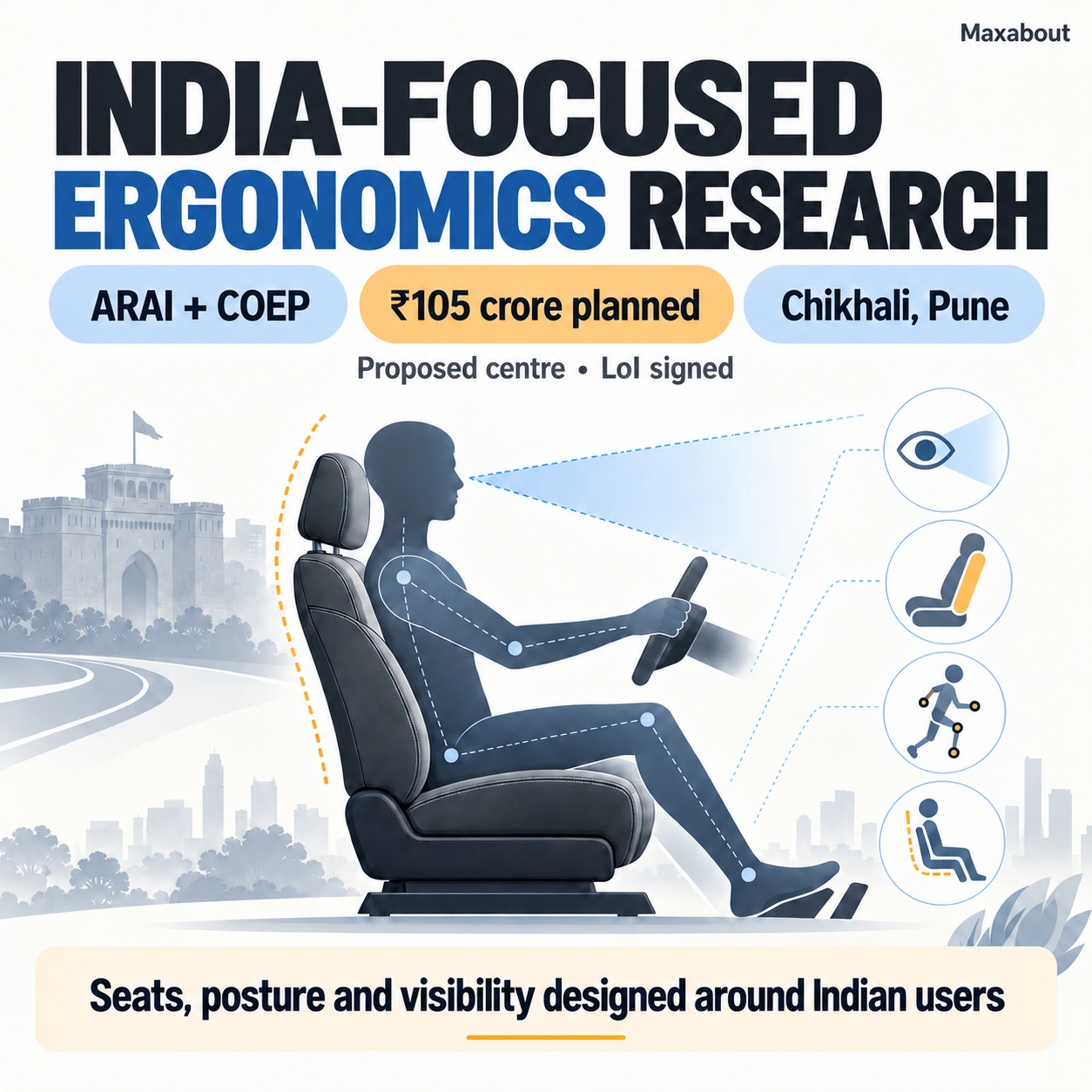
Posture evaluation: Assessing how a person sits or works while using equipment.
Seating comfort: Studying the interaction between the user and the seat.
Biomechanics: Examining movement and physical interaction with products.
Field of vision: Assessing what a user can see from the operating position.
Why the plan matters beyond cars
The proposed centre is intended to serve sectors including automotive, defence, aerospace, railways, agriculture, industrial equipment, consumer products and built environments. That makes its value broader than a new car seat: Indian-user data and testing methods can support different products and working environments.
For automotive readers, the practical interest is whether that research eventually informs more suitable seats, clearer controls and better visibility. Those are potential applications, not demonstrated results of a facility that is still proposed.
What remains to be established?
The signed LoI text, committed funding split, construction milestones, procurement programme and final accreditation scope were not available in the checked material. The partnership is also reported to seek government, industry and CSR funding for research programmes. A planned investment figure should therefore remain distinct from proof that every rupee is already committed or spent.
FAQs
Is the ARAI–COEP centre already operating?
No completed-facility claim is established. The announcement concerns an LoI and a multi-year plan.
Where is it planned?
At COEP Tech's Research and Innovation Park in Chikhali, Pune.
Will the research immediately change a production vehicle?
No immediate product change is established. Research, validation and industrial use are separate stages.
The ARAI–COEP ergonomics research centre plan is significant for its focus on Indian users and multidisciplinary engineering. The next evidence to watch is implementation: funding commitments, facilities and published research outcomes.
Explore the story
Related news






Share your view and join the discussion.
Earn reward points for every comment and get a chance to win ₹1,000 in our weekly lucky draw. Sign in with Google in one tap.
Start the conversation
No one has commented on this article yet. Be the first to share your view.
Want to read more automotive news?
Stay updated with the latest car launches, reviews, and industry insights.
Browse All News