
Tata Motors CV Q2 revenue rises 36%: reported results and margins explained
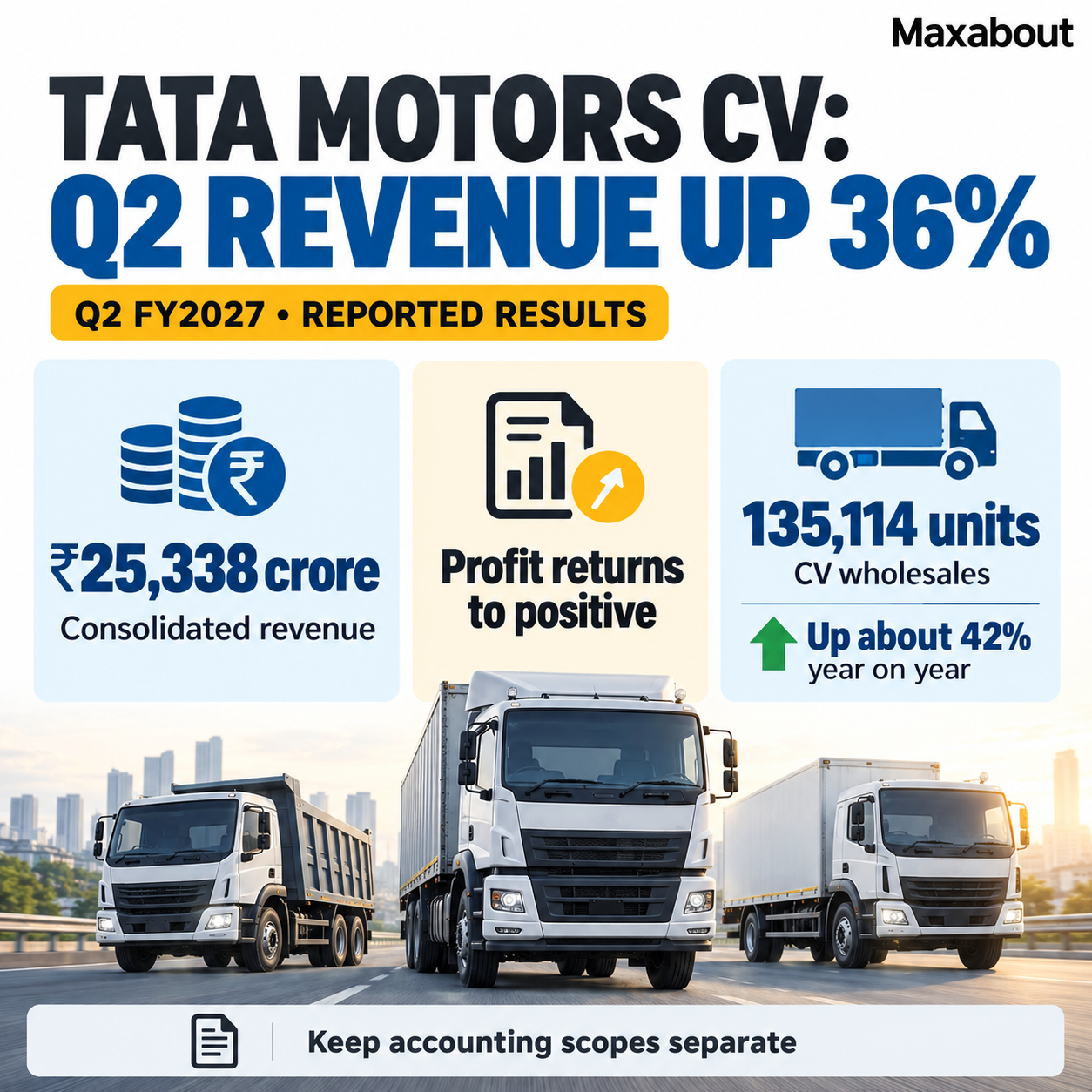
Tata Motors' commercial-vehicle business reported consolidated revenue of ₹25,338 crore in Q2 FY2027, up 36% year on year, alongside a return to profit. The reported results cover the quarter ended 30 September 2026. They describe the commercial-vehicle business and should be kept separate from pass...
Tata Motors' commercial-vehicle business reported consolidated revenue of ₹25,338 crore in Q2 FY2027, up 36% year on year, alongside a return to profit. The reported results cover the quarter ended 30 September 2026. They describe the commercial-vehicle business and should be kept separate from passenger-vehicle figures and from standalone accounts.
The reported quarter in numbers
| Measure | Q2 FY2027 reported figure | Comparison |
|---|---|---|
| Consolidated revenue | ₹25,338 crore | Up 36% year on year |
| Consolidated net profit | ₹1,254 crore | Against a year-earlier loss of₹867 crore |
| CV wholesales | 135,114 units | Up about 42% year on year |
| EBITDA | About₹2,800 crore | Up 31% year on year |
| EBITDA margin | 10.9% | Down 40 basis points |
Revenue growth and profitability tell different stories
The revenue increase describes the size of the business's sales income over the quarter. The return to net profit describes the final earnings outcome after the relevant costs and accounting items. Neither measure should be substituted for the other.
The reported operating figures add a useful qualification: EBITDA increased, but the EBITDA margin fell by 40 basis points, or 0.4 percentage point. That means a larger operating-profit amount did not translate into a higher operating-profit share of revenue. A rising rupee total and a declining percentage margin can occur together.
These figures alone do not establish why every part of the margin changed. Product mix, costs or individual accounting items should not be assigned an effect without supporting detail.
What 135,114 wholesales means
The reported commercial-vehicle wholesale volume was 135,114 units, including domestic and international business, an increase of about 42% from the corresponding quarter. Wholesales describe manufacturer-level vehicle dispatches; they should not be presented as an identical count of vehicles newly registered by end users.
Similarly, the wholesale growth percentage and revenue growth percentage need not match. Unit volumes and sales value are different measures. The figures do not provide a model-by-model retail-demand conclusion or a new-truck price forecast.
Keep consolidated and standalone accounts separate
The headline ₹25,338 crore figure is reported on a consolidated basis. Standalone accounts use a different reporting scope. Mixing revenue from one scope with profit from another would produce a misleading comparison, even when both numbers appear in coverage of the same results announcement.
For readers comparing periods, the safe approach is to keep the company scope, accounting basis and quarter aligned. This article uses the matched reported consolidated figures; it does not combine inconsistent standalone values into a single results summary.
What fleet buyers can take from the results
The quarter is evidence of reported commercial-vehicle business growth, rather than a change to an individual truck's purchase terms. A fleet decision still depends on the actual vehicle specification, quoted price, delivery schedule, finance terms, service coverage and expected duty cycle.
A return to corporate profit does not itself establish a new discount, improved product range, lower operating cost or guaranteed delivery availability. Those require product and dealer information for the relevant purchase.
FAQs
Does the ₹25,338 crore figure cover all Tata passenger cars?
It is the reported consolidated revenue figure for the commercial-vehicle business discussed here. It should not be relabelled as passenger-vehicle revenue.
Did the EBITDA margin rise with revenue?
No. The reported EBITDA margin was 10.9%, down 40 basis points, even as revenue and the EBITDA amount increased.
Are wholesales the same as retail registrations?
No. Manufacturer dispatches and end-user registrations are distinct measures and can differ within a reporting period.
The central point in the Tata Motors CV Q2 FY2027 results is stronger reported revenue and volume with a return to profit. The margin movement and the accounting scope are essential qualifications when interpreting that improvement.
Explore the story
Related news




Share your view and join the discussion.
Earn reward points for every comment and get a chance to win ₹1,000 in our weekly lucky draw. Sign in with Google in one tap.
Start the conversation
No one has commented on this article yet. Be the first to share your view.
Want to read more automotive news?
Stay updated with the latest car launches, reviews, and industry insights.
Browse All News