
Karnataka E20 petrol test dispute explained: What the two sets of results show
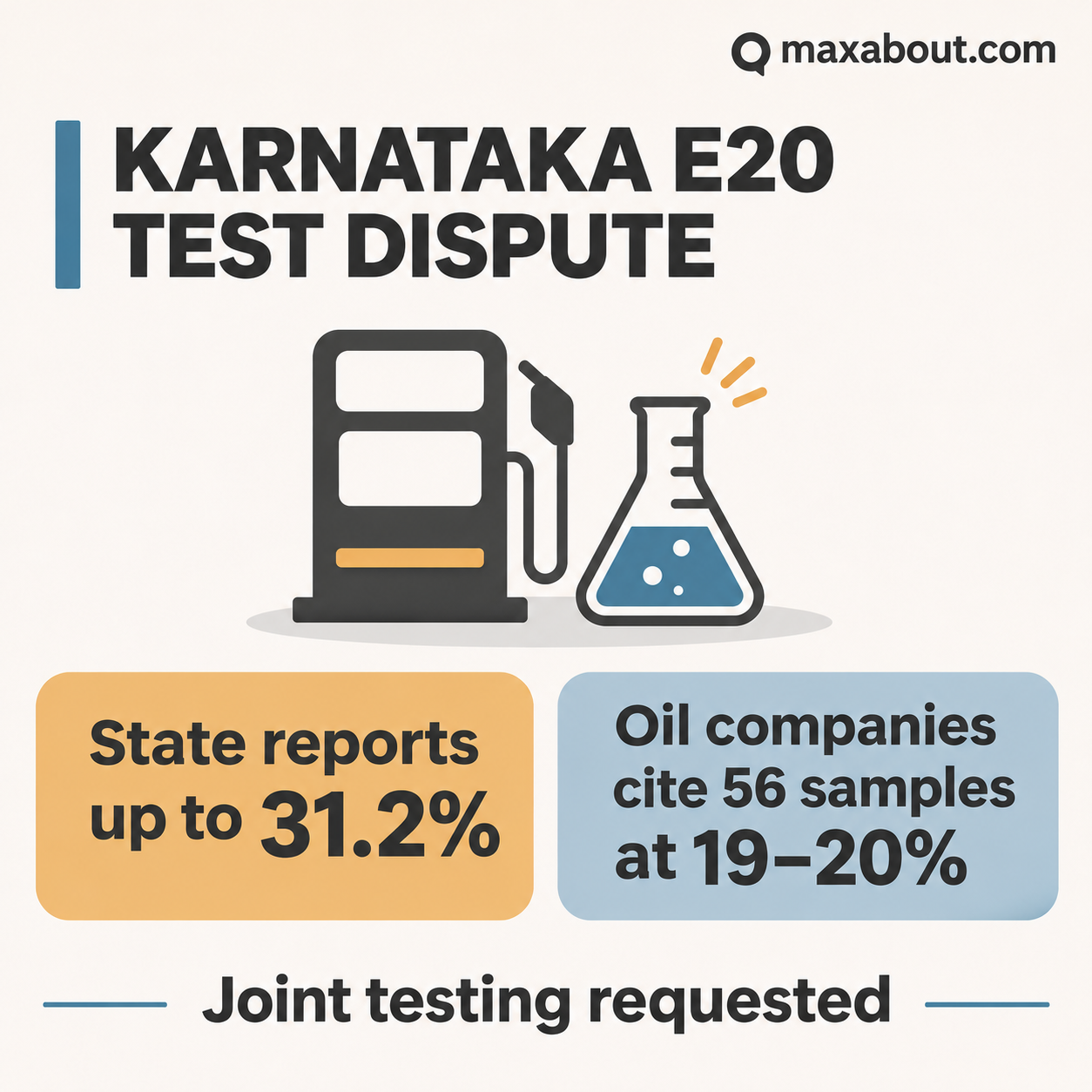
Karnataka reported ethanol readings up to 31.2%. The Petroleum Ministry cites separate tests within the E20 range and says joint testing is needed.
Karnataka has reported finding up to 31.2% ethanol in selected petrol samples, above the 19% to 21% range specified for E20 under IS 17021. The Ministry of Petroleum and Natural Gas disputed the testing procedure on 7 November 2026 and cited a separate set of 56 Karnataka samples that measured between 19% and 20%. Public-sector oil marketing companies have asked for joint sampling and independent retesting. The dispute remains unresolved.
What Karnataka and the oil companies reported
| Test exercise | Reported result | How to read it |
|---|---|---|
| Karnataka’s October exercise | Selected samples reportedly exceeded the E20 range, with a reading of up to 31.2%. | The oil companies questioned how the samples were collected and how the laboratory measured ethanol. |
| Survey cited by the Petroleum Ministry | 56 Karnataka samples measured 19% to 20%. All 893 samples across 27 states and union territories were reported within the 19% to 21% range. | The survey shows what was found in those samples. It does not establish what was in the samples Karnataka flagged. |
Why the ethanol test method matters
IS 17021 sets the specification for E20 petrol. The ministry said that when laboratories use the gas chromatography methods it cited, they must dilute the sample in a 1:1 ratio with petrol free of oxygenates and correct the result using a certified E10 reference material. The ministry said the certificates cited by Karnataka did not identify the full test method or show whether those steps were followed. That leaves an open question about how the reported readings were produced.
A joint retest could establish whether the parties can reproduce an above-limit reading using the same procedure. Both sides would need to document where and when samples were collected, which retained samples correspond to those draws and how the laboratory measured ethanol. Fresh samples could show what a station sells today. Retained samples, if available and suitable for testing, could help resolve the earlier readings.
What this means for motorists
The reports do not establish how widely any above-limit fuel was sold or document vehicle damage from the samples in dispute. To check E20 compatibility, look for the fuel specification in the owner’s manual or ask the manufacturer about the exact model and year. A nationwide survey cannot answer what was in a particular tank. The next meaningful update is a joint test result that identifies the samples and the method used.
Explore the story
Related news




Share your view and join the discussion.
Earn reward points for every comment and get a chance to win ₹1,000 in our weekly lucky draw. Sign in with Google in one tap.
Start the conversation
No one has commented on this article yet. Be the first to share your view.
Want to read more automotive news?
Stay updated with the latest car launches, reviews, and industry insights.
Browse All News