
Next-Gen Tata Nexon Spied: What the Prototype Does and Does Not Confirm
A heavily camouflaged next-generation Tata Nexon prototype has been spotted testing, pointing to a more extensive update than a simple change of bumpers. Reports place the project, often referred to as Garud, on an expected 2027 timeline. That is not a confirmed launch date. The useful clues are in ...
Editorial Team
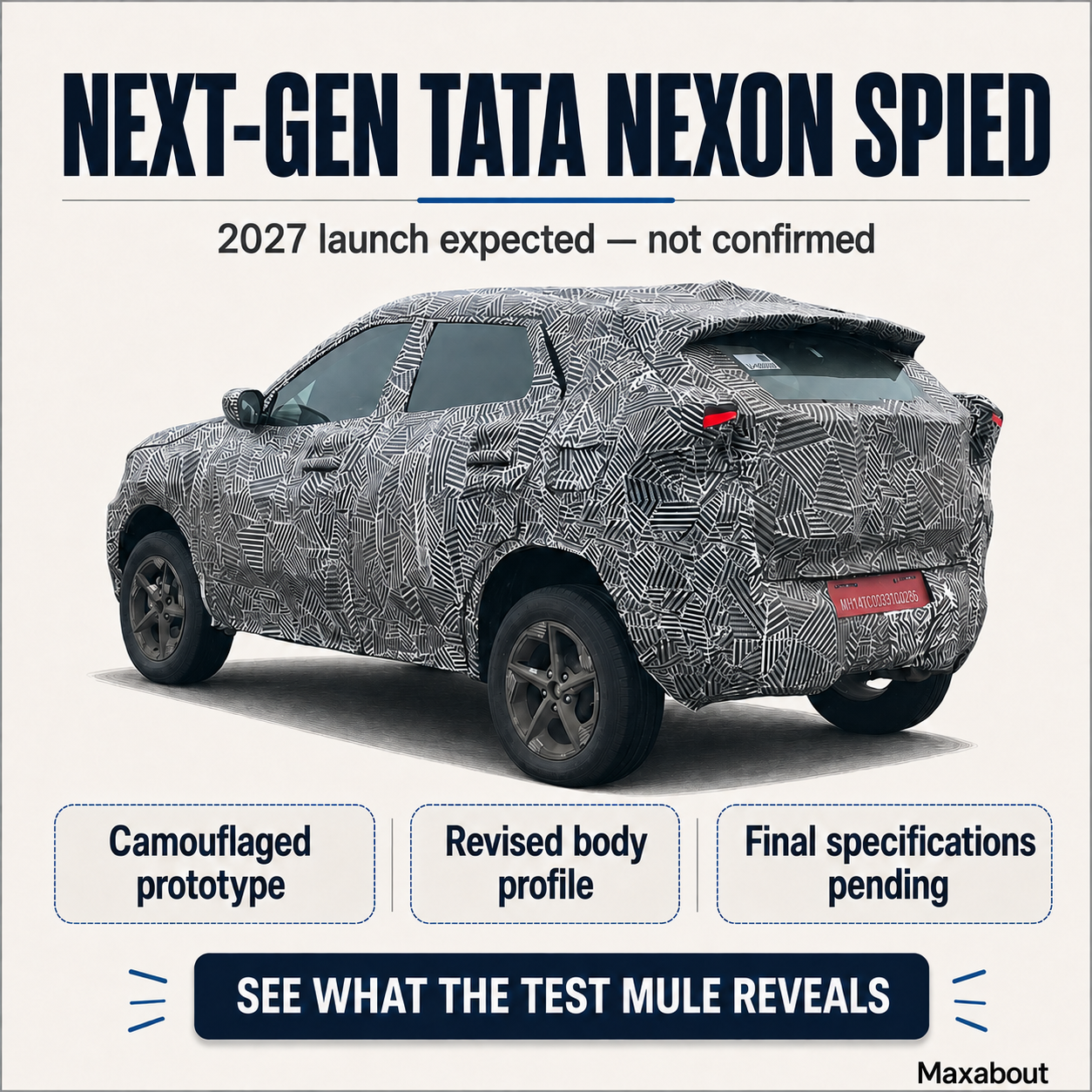
A heavily camouflaged next-generation Tata Nexon prototype has been spotted testing, pointing to a more extensive update than a simple change of bumpers. Reports place the project, often referred to as Garud, on an expected 2027 timeline. That is not a confirmed launch date. The useful clues are in the body profile and temporary test equipment; the final design, prices and powertrain line-up remain unannounced.
What can be seen on the prototype?
The test vehicle appears to have a more upright rear-pillar area, a less sloping roof profile and more angular rear glass. Changes around the rear doors and the upper edge of the A-pillar also suggest revised bodywork. Heavy camouflage prevents a reliable reading of the finished surfaces, so these observations should not be mistaken for a production-design reveal.
The rear lighting is particularly important to interpret correctly. Provisional lamps and other carry-over-looking parts are common on development vehicles. Their presence tells us that testing is under way, not that Tata has selected those components for the showroom model.
Evidence versus expectation
| Topic | What the evidence supports | What remains open |
|---|---|---|
| Exterior | A camouflaged prototype with apparent profile and panel changes | Final lights, surfacing, colours and dimensions |
| Timing | Reports point to 2027 | An official unveiling, booking or delivery date |
| Architecture | Earlier reporting suggests a substantially revised X1 base | Official technical confirmation and extent of changes |
| Engines | Multiple future powertrain possibilities are being reported | The final petrol, CNG, diesel and electric line-up |
| Cabin | No complete production interior is established here | Space measurements, displays, equipment and safety specification |
Does a boxier shape mean more cabin space?
A more upright rear profile could potentially improve the sense of room in the back, but photographs cannot establish usable headroom, legroom or boot volume. Seat position, trim, roof structure and packaging all matter. Treat any promise of extra space as a question to test when official dimensions and production cars become available.
Likewise, a different pillar shape alone does not prove that the entire platform is new. A substantial body revision and a revised underlying architecture can coexist. The distinction matters because visual changes reveal only part of the engineering work.
What about diesel, CNG and the Nexon EV?
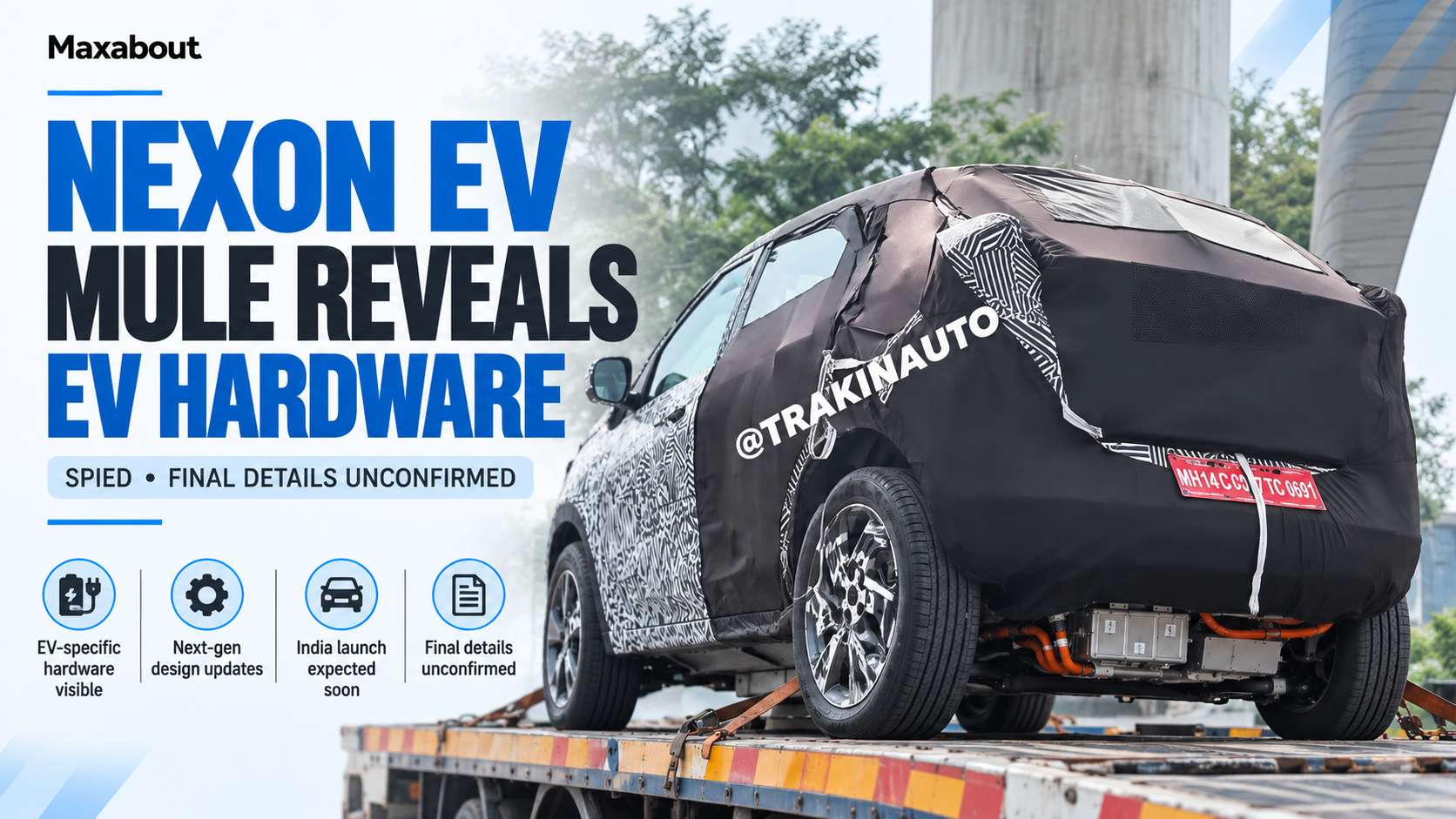
Published expectations differ on the future engine mix, particularly the diesel. There is no confirmed basis here to declare a diesel cancellation, a specific flex-fuel specification or a new electric battery size. A corresponding EV update has been discussed in reports, but the combustion and electric versions need not follow the same launch schedule.
Buyers who specifically need one powertrain should therefore wait for Tata's formal line-up announcement before treating a reported option as guaranteed. Existing-model outputs and battery sizes should not be presented as specifications of this prototype.
Should current buyers wait?
If your purchase is urgent, compare the cars that can actually be ordered, their delivery dates and their written offers. An expected calendar year is too broad to plan a replacement around with certainty. If you can wait, the next useful milestones are clearer production-spec prototypes, an official reveal and a confirmed powertrain/price list.
Do not make a booking decision on an invented price estimate.
Check whether your preferred engine is confirmed, not merely predicted.
Evaluate cabin space in a production vehicle rather than extrapolating from camouflage.
Keep current-car discounts separate from assumptions about the replacement.
The next-gen Tata Nexon sighting is a meaningful development signal. For now, it supports watching the programme closely—not treating its final design, 2027 arrival or mechanical specification as settled.
Explore the story
Related news




Share your view and join the discussion.
Earn reward points for every comment and get a chance to win ₹1,000 in our weekly lucky draw. Sign in with Google in one tap.
Start the conversation
No one has commented on this article yet. Be the first to share your view.
Want to read more automotive news?
Stay updated with the latest car launches, reviews, and industry insights.
Browse All News