
Renault Duster 1.3 Turbo: What the Port-Injection Report Means
A report points to a port-injected version of Renault’s 1.3-litre turbo-petrol. Here’s how the system works and what is known about the Duster range.
Renault India is reportedly developing a port-injected version of the 1.3-litre turbo-petrol engine in the Renault Duster. The report describes a lower-cost derivative of the existing direct-injection engine. Renault has yet to announce an India launch, output figures or a price for the reported version.
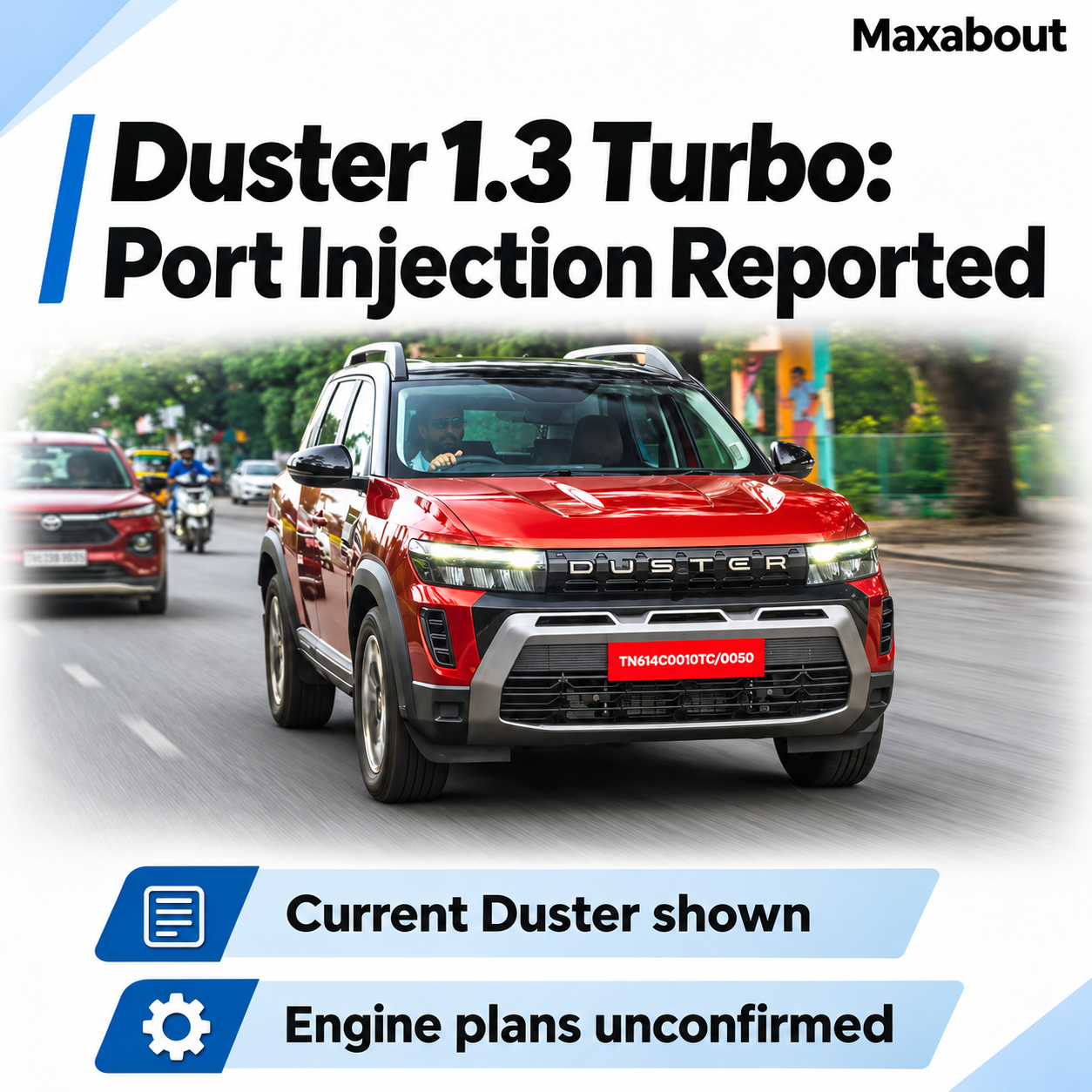
How port injection changes the engine
Multi-point fuel injection, or MPFi, sprays petrol into the intake ports ahead of the valves. Direct injection sprays it into the combustion chamber using high-pressure hardware. A port-injected derivative can reduce fuel-system complexity, but Renault would still have to calibrate and certify the engine for the final vehicle.
What Duster buyers can compare today
Renault’s announced India range includes a 1.0-litre turbo-petrol, a 1.3-litre direct-injection turbo-petrol and a strong hybrid. The reported engine would add another choice only if Renault brings it to production. The final gearbox, variant equipment and certified fuel economy would matter as much as the injection system when comparing quotes.
For a purchase now, compare the engines and trims Renault actually offers. If the reported version reaches showrooms, the key comparison will be its price and equipment against the existing 1.3-litre turbo in an equivalent trim.
Explore the story
Related news




Share your view and join the discussion.
Earn reward points for every comment and get a chance to win ₹1,000 in our weekly lucky draw. Sign in with Google in one tap.
Start the conversation
No one has commented on this article yet. Be the first to share your view.
Want to read more automotive news?
Stay updated with the latest car launches, reviews, and industry insights.
Browse All News