
Montra and MobiLane Connect Commercial EVs to 120-Plus DC Charging Points
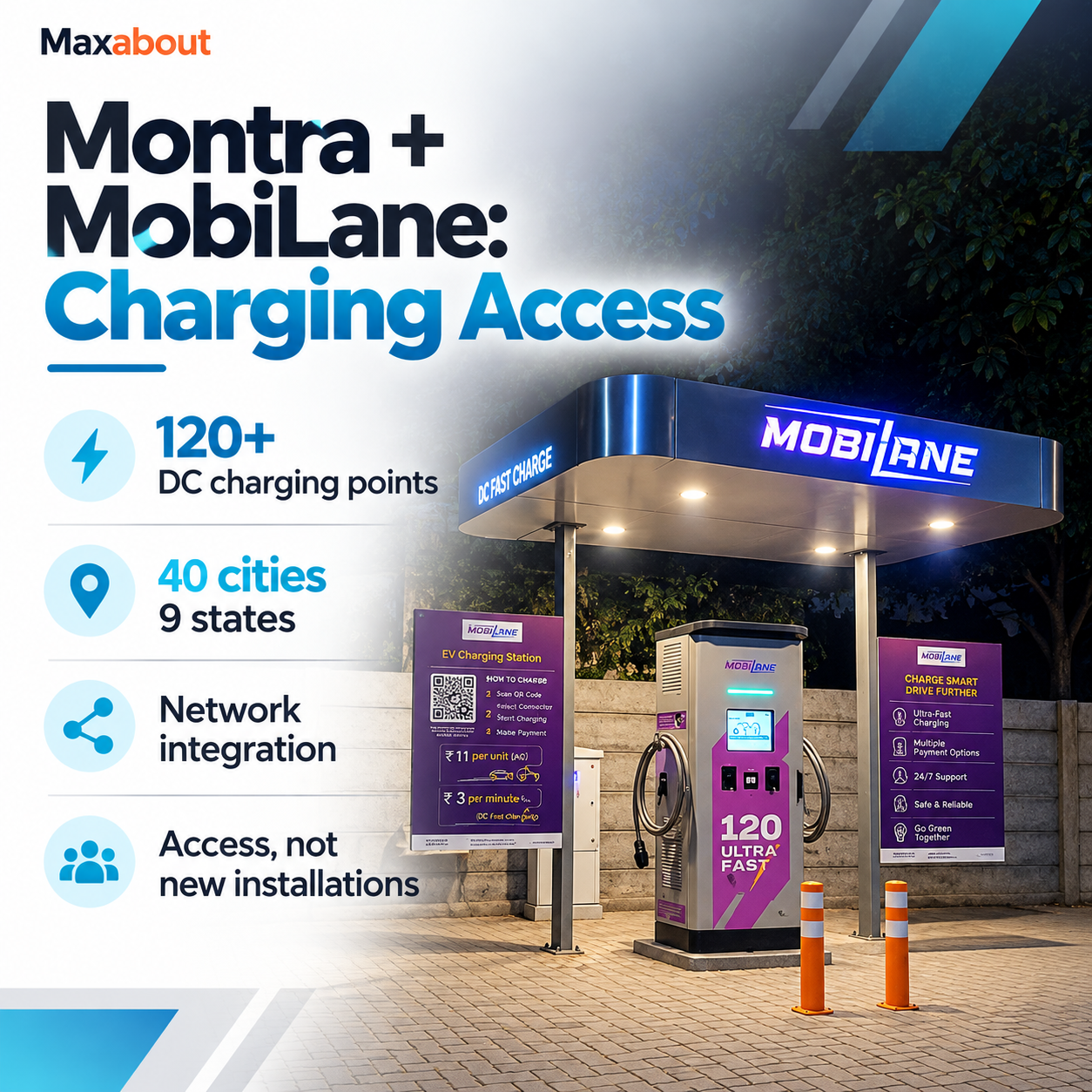
Montra Electric has partnered with MobiLane Network to expand charging access for its commercial EV users, connecting them with a reported network of more than 120 DC fast-charging points across 40 cities and nine states. The collaboration uses digital network integration to support finding and usin...
Montra Electric has partnered with MobiLane Network to expand charging access for its commercial EV users, connecting them with a reported network of more than 120 DC fast-charging points across 40 cities and nine states. The collaboration uses digital network integration to support finding and using participating chargers. These figures describe access to a network; they should not be read as 120 newly installed chargers or guaranteed coverage on every commercial route.
What the partnership changes
The reported integration connects Montra's commercial-vehicle ecosystem with MobiLane's charging network. Its practical purpose is to make participating stations easier for drivers and fleet operators to discover and use through connected services.
That is different from announcing the construction of an entirely new charging network. The checked coverage does not provide a station-by-station commissioning list, additional charger deployment timetable or a claim that every listed point supports every Montra vehicle.
What the reported OCPI integration supports
The collaboration uses the Open Charge Point Interface, or OCPI, for the reported network integration. The described user functions are locating stations, checking charger availability, authorising a session and managing payments at participating locations.
| Reported function | Why it matters operationally |
|---|---|
| Station discovery | Helps identify participating charging options during route planning. |
| Availability information | Helps check the reported status before choosing a stop. |
| Session authorisation | Supports access through the integrated charging service. |
| Payment management | Brings participating charging payments into the connected workflow. |
A digital interface does not change the physical connector fitted to a vehicle or establish the charging power that its battery can accept. The actual vehicle and charger specifications still determine compatibility and charging performance. A displayed availability status is useful information, rather than an unconditional uptime guarantee.
Why the headline network size needs context
The reported 120-plus points, 40 cities and nine states indicate the network's aggregate reach. They do not reveal the distribution of points between cities, whether a site can accommodate a large truck, or how many simultaneous sessions are available.
For a fleet following a fixed delivery route, a nearby compatible point may be more useful than a larger number elsewhere. Location, operating hours, connector support and access arrangements are therefore separate checks from the overall network count. The checked announcement does not publish a complete verified location dataset for a coverage map.
What fleet operators still need to verify
Before relying on a participating charger for a shift, operators need the exact location, vehicle compatibility and applicable tariff. The report does not establish a common tariff, a universal charging speed or guaranteed availability across the network.
Vehicle size also matters. A point that is electrically suitable may still need a practical check for parking, approach and loading constraints. Light commercial vehicles and heavier trucks can have different energy and access requirements; a general commercial-EV announcement should not collapse them into one charging specification.
Route planning should distinguish the advertised integration functions from confirmed operating conditions at each stop. The announcement provides a useful network-access development, while the detailed station information is what allows an operator to determine whether a location fits a particular duty cycle.
Potential benefit without an unsupported savings claim
Better discovery and payment integration can reduce the friction of using separate charging networks. However, the checked report provides no measured saving in charging time, delivery delays, energy cost or fleet operating expenditure.
Those outcomes would need evidence from the vehicles, routes and participating sites being used. The partnership alone does not establish a shorter charging session or a quantified improvement in vehicle utilisation. Keeping the distinction clear makes the announcement useful without overstating it.
FAQs
Are these 120 newly built chargers?
The figure describes access to MobiLane's participating network, rather than a confirmed new-installation count.
Does network integration guarantee every vehicle can charge?
No universal compatibility is established. The vehicle and the specific charger must be checked.
Are prices and station-level locations confirmed?
The checked announcement does not supply a complete verified tariff or station-location dataset.
What does the digital integration offer?
The reported functions include discovery, availability information, session authorisation and payment management.
The Montra–MobiLane partnership broadens reported charging access for commercial EV users. Its operational value will depend on the suitable participating locations and terms available on each fleet's routes.
Explore the story
Related news

Share your view and join the discussion.
Earn reward points for every comment and get a chance to win ₹1,000 in our weekly lucky draw. Sign in with Google in one tap.
Start the conversation
No one has commented on this article yet. Be the first to share your view.
Want to read more automotive news?
Stay updated with the latest car launches, reviews, and industry insights.
Browse All News