
Low-Speed EV 60kg Rule Debate: Yulu Opposes Draft Proposal
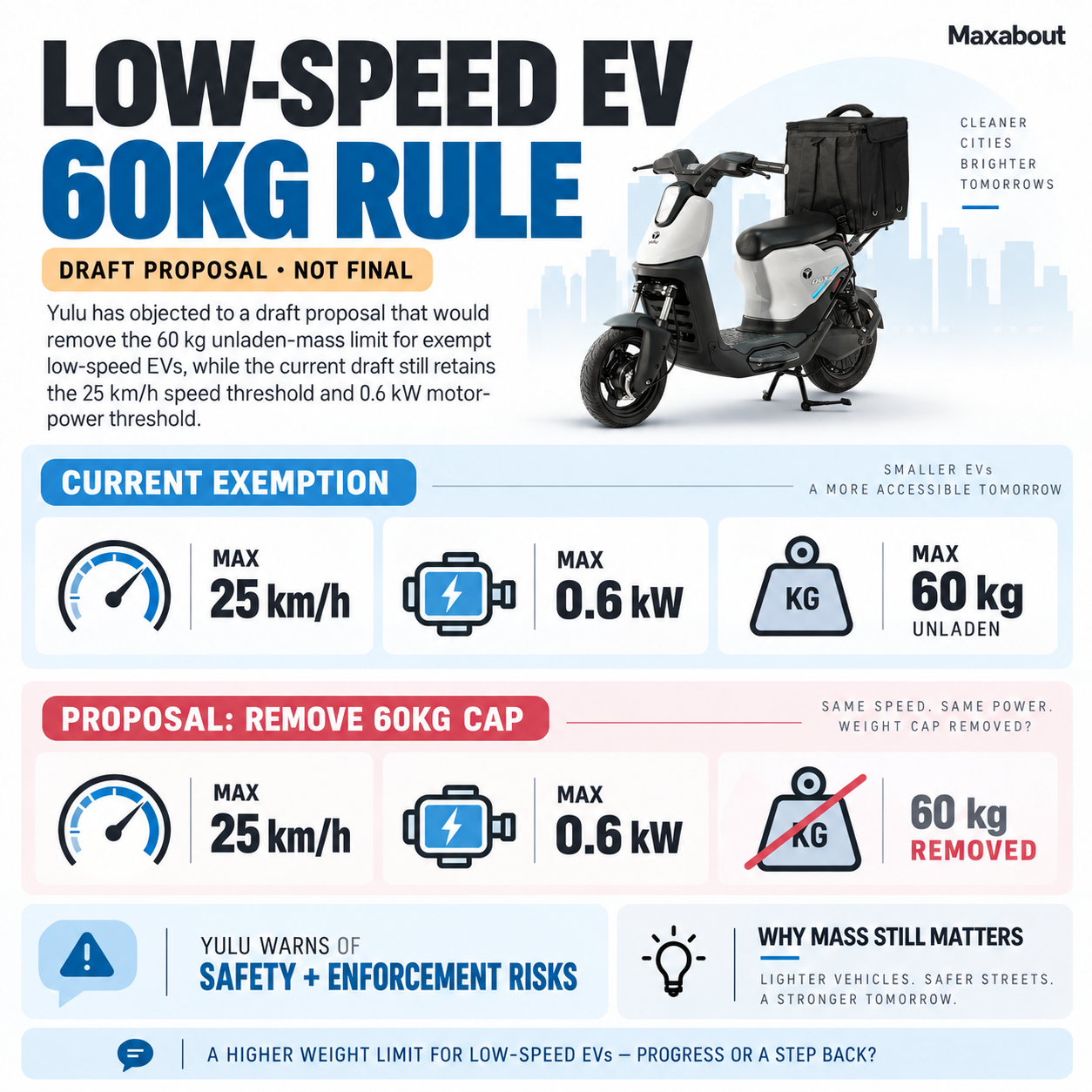
A reported draft proposal could remove the 60kg unladen-mass limit for electric two-wheelers that qualify for India's low-speed EV exemption, while retaining the existing 25km/h maximum-speed and 0.6kW motor-power thresholds. Yulu has objected to the proposed change, arguing that vehicle mass remain...
Editorial Team
A reported draft proposal could remove the 60kg unladen-mass limit for electric two-wheelers that qualify for India's low-speed EV exemption, while retaining the existing 25km/h maximum-speed and 0.6kW motor-power thresholds. Yulu has objected to the proposed change, arguing that vehicle mass remains an important, physically verifiable safeguard for safety and enforcement. The proposal is not a final rule, so current requirements remain the practical reference until an official change is notified and takes effect.
What is changing in the reported draft?
Low-speed electric two-wheelers can sit outside some of the registration and licensing requirements that apply to faster vehicles when they meet prescribed limits. The reported draft keeps two familiar performance thresholds but proposes removing the third physical measure: maximum unladen mass.
| Low-speed EV threshold | Current exemption | Reported proposal |
|---|---|---|
| Maximum speed | 25km/h | Retained |
| Motor power | 0.6kW | Retained |
| Maximum unladen mass | 60kg | Proposed to be removed |
The distinction matters because speed and motor ratings describe performance, while mass describes the physical vehicle. Removing the weight ceiling could allow substantially heavier machines to remain in the exempt category if they are electronically restricted to the same speed and power limits.
Why Yulu objects to removing the mass cap
Yulu's reported position is that the 60kg limit is not an arbitrary specification. It provides a simple physical boundary for a category intended to cover lightweight, low-speed mobility. The company has raised concerns about road safety, vehicle classification and the practical ability of enforcement officials to distinguish exempt vehicles from those that should meet fuller regulatory requirements.
This remains an attributed industry view, not a settled regulatory conclusion. Other stakeholders may argue that modern batteries, stronger frames, better braking equipment or utility-focused designs naturally increase weight. The policy question is whether speed and power limits alone can preserve the original risk profile of the exemption.
Why vehicle mass still matters at 25km/h
Two vehicles travelling at the same speed do not necessarily present the same physical risk. A heavier vehicle carries more kinetic energy, places greater demands on its brakes and tyres, and can transfer more force in a collision. Weight can also affect manoeuvrability, stopping distance, structural needs and how easily a rider can control or recover the vehicle at low speed.
That does not mean every vehicle above 60kg is unsafe. It means mass is one of the inputs regulators may consider when defining a simplified low-risk class. If the limit is removed, equivalent safeguards could need to come from braking standards, component requirements, certification, testing or another clearly enforceable boundary.
Enforcement is part of the debate
A mass figure can be checked physically, while electronic speed restriction and motor ratings may be harder to verify at the roadside. A vehicle could be modified after sale, or its controller settings may not be obvious during a routine inspection. Yulu's concern is that a broader exempt class could make it more difficult to separate compliant lightweight vehicles from heavier machines that have only nominal performance limits.
Effective regulation therefore has two jobs: define an appropriate safety threshold and make compliance practical to test. Removing one measurable limit without strengthening other checks could shift more responsibility to manufacturers, certification bodies and enforcement teams.
What the draft could mean for buyers and operators
More design freedom: manufacturers could build sturdier frames, carry larger batteries or offer greater utility while staying within the low-speed performance caps.
Possible category expansion: heavier delivery or shared-mobility vehicles might seek exempt status if the final rule removes the mass ceiling.
Safety questions: braking, tyres and structural performance become more important as vehicle mass increases.
Compliance uncertainty: buyers should not assume a reported draft changes registration, licensing or insurance obligations today.
Resale and modification risk: electronically restricted vehicles may attract scrutiny if their performance is altered after purchase.
Draft proposal versus current law
The reported measure should be read as a consultation-stage policy proposal, not as a completed deregulation. The official draft notification and its consultation deadline were not independently retained during this review. Until the government issues a final notification with an effective date, sellers and consumers should follow the current applicable classification and verify the status of an individual model through authoritative channels.
Buyers should also be cautious about marketing phrases such as “no licence” or “no registration.” Eligibility depends on the vehicle meeting every applicable threshold and certification condition, not simply on a dealer description or a claimed top speed.
Frequently asked questions
Has the 60kg limit already been removed?
No. The available information describes a draft proposal. It should not be treated as a final rule already in force.
Would the 25km/h and 0.6kW limits remain?
Yes, according to the reported proposal. The debate concerns removal of the 60kg unladen-mass ceiling while those two caps stay.
Why can a heavier low-speed EV be a safety concern?
At the same speed, added mass increases kinetic energy and can place greater demands on braking, tyres and rider control. Safety depends on the complete vehicle design, not weight alone.
Does Yulu's objection mean the proposal will be withdrawn?
No. It is one stakeholder's reported position. The final outcome depends on the regulatory process and the government's assessment of consultation feedback.
Should buyers avoid low-speed EVs?
Not necessarily. Buyers should choose a properly certified vehicle, understand its legal category, avoid unauthorised performance modifications and confirm registration, licence and insurance requirements before purchase.
The low-speed EV 60kg rule debate is ultimately about where India should draw the boundary for simplified electric mobility. Retaining speed and power caps may control performance, while Yulu argues that a physical mass limit still supports safety and enforcement. Until a final notification says otherwise, the proposed removal should remain clearly labelled as a draft rather than presented as current law.
Explore the story
Related news


Share your view and join the discussion.
Earn reward points for every comment and get a chance to win ₹1,000 in our weekly lucky draw. Sign in with Google in one tap.
Start the conversation
No one has commented on this article yet. Be the first to share your view.
Want to read more automotive news?
Stay updated with the latest car launches, reviews, and industry insights.
Browse All News