
Gadkari’s 20% Expressway Leeway Proposal: What the 144 km/h Figure Means
What Gadkari’s proposed 20% expressway enforcement margin means, how the 144 km/h example is calculated, and why motorists should follow posted speed limits.
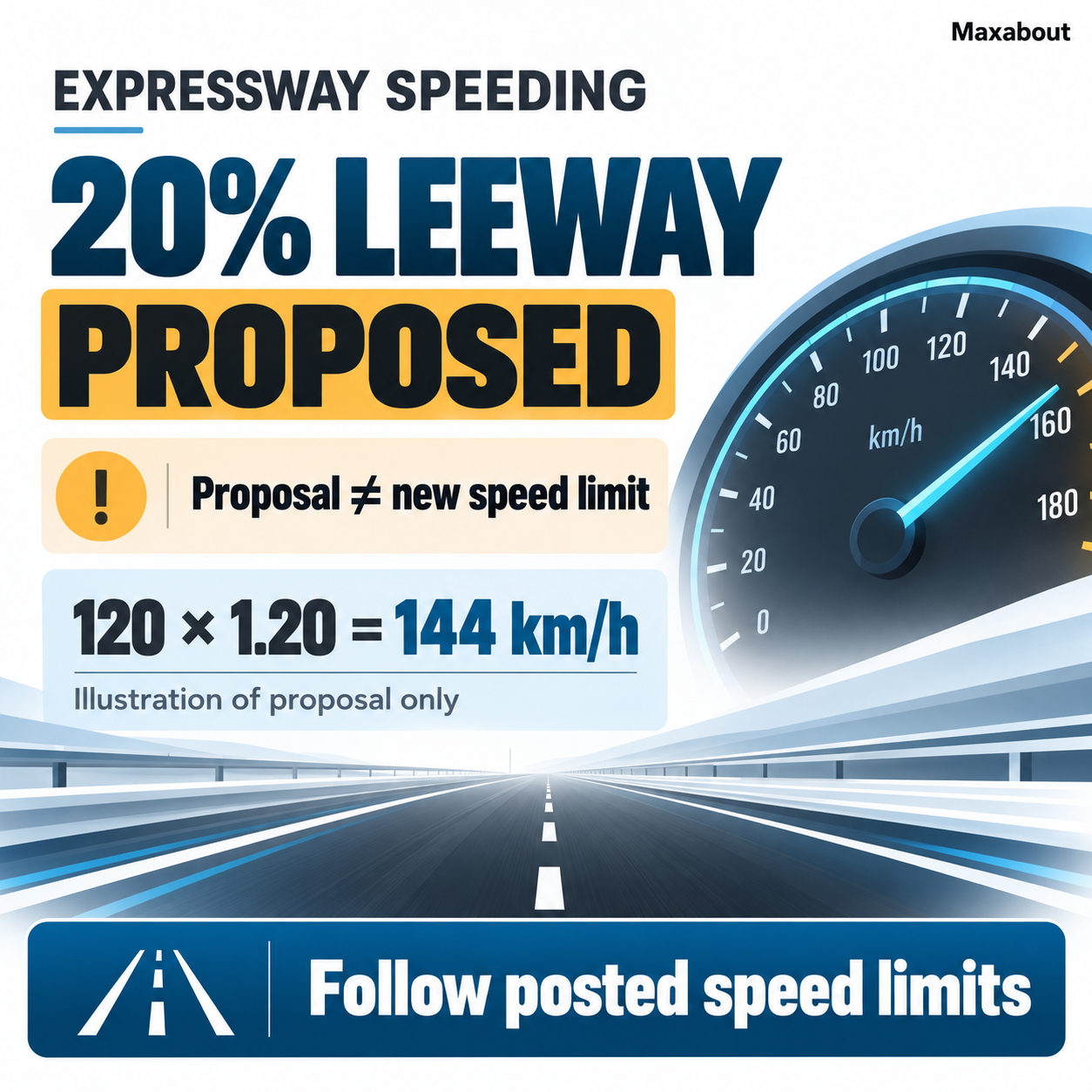
Nitin Gadkari's 20% expressway speeding leeway proposal has raised a practical question: does it let drivers travel at 144 km/h on a road with a 120 km/h limit? The reported remarks describe a proposed margin before speeding penalties, rather than a verified change to the posted limit. The 144 km/h figure comes from applying 20% to 120 km/h; it is not, by itself, permission to drive at that speed.
What the 20% proposal means
The road transport minister reportedly called for a margin above the applicable expressway speed limit before speeding notices are issued. His remarks were made at a conference on the future of India's highways.
Two different decisions matter here: the limit a driver is required to observe and the threshold authorities use when issuing a penalty. A proposal about the second does not establish that the first has changed. Readers should continue to follow the posted limit rather than use a headline about enforcement as their driving instruction.
Why 144 km/h appears in the discussion
The calculation uses a 120 km/h example: 20% of 120 is 24, and 120 plus 24 equals 144. This explains the number being discussed; it does not establish an operational threshold for any particular road.
| Part of the example | Meaning |
|---|---|
| 120 km/h | The assumed applicable limit used in the example. |
| 24 km/h | 20% of 120 km/h. |
| 144 km/h | The result of the proposed-margin arithmetic, not a verified new speed limit. |
What Indian motorists should check
A useful implementation announcement would need to explain which roads and vehicle classes it covers, when it takes effect and how enforcement agencies apply it. Those details cannot be filled in from the percentage alone. No implementation date or uniform operating guidance has been established for this article.
Read the signs on the road you are using.
Do not treat a percentage in a news report as a replacement for an applicable restriction.
If a formal update is issued, check its scope and effective date before relying on it.
FAQs
Has a 144 km/h expressway speed limit been confirmed?
No such change is established here. The figure illustrates what a 20% margin would produce when applied to 120 km/h.
Does this mean all expressways use the same threshold?
The reported proposal does not establish a uniform enforcement arrangement for every expressway. A road-specific conclusion needs applicable official guidance.
The expressway speeding leeway proposal is therefore an enforcement-policy development to watch. Its practical meaning will depend on formal implementation details; motorists should continue to use posted limits for their journey.
Explore the story
Related news





Share your view and join the discussion.
Earn reward points for every comment and get a chance to win ₹1,000 in our weekly lucky draw. Sign in with Google in one tap.
Start the conversation
No one has commented on this article yet. Be the first to share your view.
Want to read more automotive news?
Stay updated with the latest car launches, reviews, and industry insights.
Browse All News