
2 min read
166 views
Kawasaki Ninja 400 Launched in US for $4,999 (INR 3.21 Lakh)
Kawasaki Ninja 400 Launched in US, No Change in Price in Comparison to Ninja 300! - Kawasaki Ninja 400 was recently launched in the US from $4,999 (INR 3.21 lakh approx). The price is for the non-ABS variant as the one with ABS costs $5,299 (INR 3.40 lakh approx). Those who love the KRT livery can g...
Kawasaki Ninja 400 Launched in US, No Change in Price in Comparison to Ninja 300! - Kawasaki Ninja 400 was recently launched in the US from $4,999 (INR 3.21 lakh approx). The price is for the non-ABS variant as the one with ABS costs $5,299 (INR 3.40 lakh approx). Those who love the KRT livery can go for Ninja 400 KRT Edition at $5,499 (INR 3.53 lakh approx).
The next generation design language not just helps the Ninja look better but even shreds 8 kg of weight from its body. It now weighs just 168 kg and thus, performance will stay unmatched from rivals like KTM RC 390, Yamaha R3 and Benelli 302R.
[caption id="attachment_164984" align="aligncenter" width="1024"]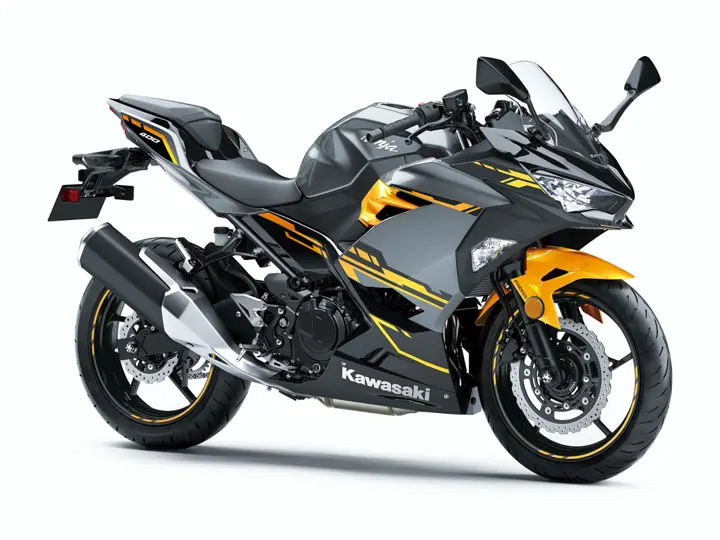 Kawasaki Ninja 400 Launched in US for $4,999 (INR 3.21 Lakh)[/caption]
Ninja 400 comes powered by a 399cc, twin cylinder engine producing 45 HP at 10,000 rpm and 38 Nm at 8,000 rpm. The older frame was shared with Ninja 650 and thus, performance never went up like it was supposed to be in this lightweight segment.
The new design helps Ninja 400 achieve 785 mm of seat height and makes the ride perfect for riders with less than average built. Ninja 400 is capable of sprinting at speeds above 190 kmph. The new design of Ninja 400 is shared with Ninja 250 internationally. India could get both the bikes in early 2018.
[caption id="attachment_164985" align="aligncenter" width="1024"]
Kawasaki Ninja 400 Launched in US for $4,999 (INR 3.21 Lakh)[/caption]
Ninja 400 comes powered by a 399cc, twin cylinder engine producing 45 HP at 10,000 rpm and 38 Nm at 8,000 rpm. The older frame was shared with Ninja 650 and thus, performance never went up like it was supposed to be in this lightweight segment.
The new design helps Ninja 400 achieve 785 mm of seat height and makes the ride perfect for riders with less than average built. Ninja 400 is capable of sprinting at speeds above 190 kmph. The new design of Ninja 400 is shared with Ninja 250 internationally. India could get both the bikes in early 2018.
[caption id="attachment_164985" align="aligncenter" width="1024"]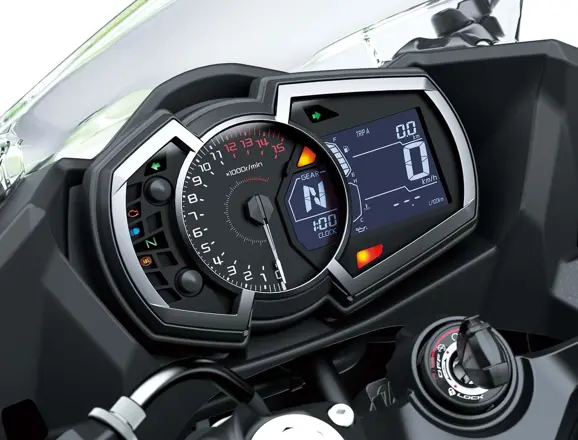 Ninja 400 Console[/caption]
Kawasaki Ninja 300 was even priced at the same point in the USA as Ninja 400, hinting at a worldwide change in engine availability and keeping the price same as before. If this comes out as true, it won’t be wrong to expect an ABS equipped Ninja 400 in India for INR 3.79 lakh.
As Kawasaki keeps a considerable gap between naked and faired bike pricing, one could expect new Z400 ABS to be built on the Z250/Z300 platform, flaunting muscle at around INR 3.49 lakh. These few steps can actually change the way riders look at the entry level twin cylinder segment.
Ninja 400 Console[/caption]
Kawasaki Ninja 300 was even priced at the same point in the USA as Ninja 400, hinting at a worldwide change in engine availability and keeping the price same as before. If this comes out as true, it won’t be wrong to expect an ABS equipped Ninja 400 in India for INR 3.79 lakh.
As Kawasaki keeps a considerable gap between naked and faired bike pricing, one could expect new Z400 ABS to be built on the Z250/Z300 platform, flaunting muscle at around INR 3.49 lakh. These few steps can actually change the way riders look at the entry level twin cylinder segment.
Kawasaki Ninja 400 Launched in US for $4,999 (INR 3.21 Lakh)[/caption]
Ninja 400 comes powered by a 399cc, twin cylinder engine producing 45 HP at 10,000 rpm and 38 Nm at 8,000 rpm. The older frame was shared with Ninja 650 and thus, performance never went up like it was supposed to be in this lightweight segment.
The new design helps Ninja 400 achieve 785 mm of seat height and makes the ride perfect for riders with less than average built. Ninja 400 is capable of sprinting at speeds above 190 kmph. The new design of Ninja 400 is shared with Ninja 250 internationally. India could get both the bikes in early 2018.
[caption id="attachment_164985" align="aligncenter" width="1024"] Ninja 400 Console[/caption]
Kawasaki Ninja 300 was even priced at the same point in the USA as Ninja 400, hinting at a worldwide change in engine availability and keeping the price same as before. If this comes out as true, it won’t be wrong to expect an ABS equipped Ninja 400 in India for INR 3.79 lakh.
As Kawasaki keeps a considerable gap between naked and faired bike pricing, one could expect new Z400 ABS to be built on the Z250/Z300 platform, flaunting muscle at around INR 3.49 lakh. These few steps can actually change the way riders look at the entry level twin cylinder segment.Ad
I
Immanuel Raja is an Automotive Writer with 8 years of experience covering the Indian automotive landscape. He specializes in Electric Vehicles and Hybrid Technology, with particular expertise in battery systems, charging infrastructure, and the integration of alternative powertrains in Indian road conditions. Raja has extensively tested over 200 vehicles across various segments, from entry-level EVs to premium hybrids, developing nuanced insights into their performance on India's diverse and challenging roads. His analysis encompasses both technical specifications and practical ownership considerations that matter to Indian consumers, including charging accessibility, maintenance costs, and performance in extreme weather conditions. With a finger on the pulse of India's evolving automotive preferences, Raja delivers clear, factual assessments that help readers navigate the transition to electrified mobility in the context of India's unique market dynamics.
About the Author
Explore the story
Related news
Comments
Share your view and join the discussion.
Start with:
Earn reward points for every comment and get a chance to win ₹1,000 in our weekly lucky draw. Sign in with Google in one tap.
Start the conversation
No one has commented on this article yet. Be the first to share your view.
Want to read more automotive news?
Stay updated with the latest car launches, reviews, and industry insights.
Browse All News