
India Plans Chip and Auto-Component Rule Changes: What Is Confirmed
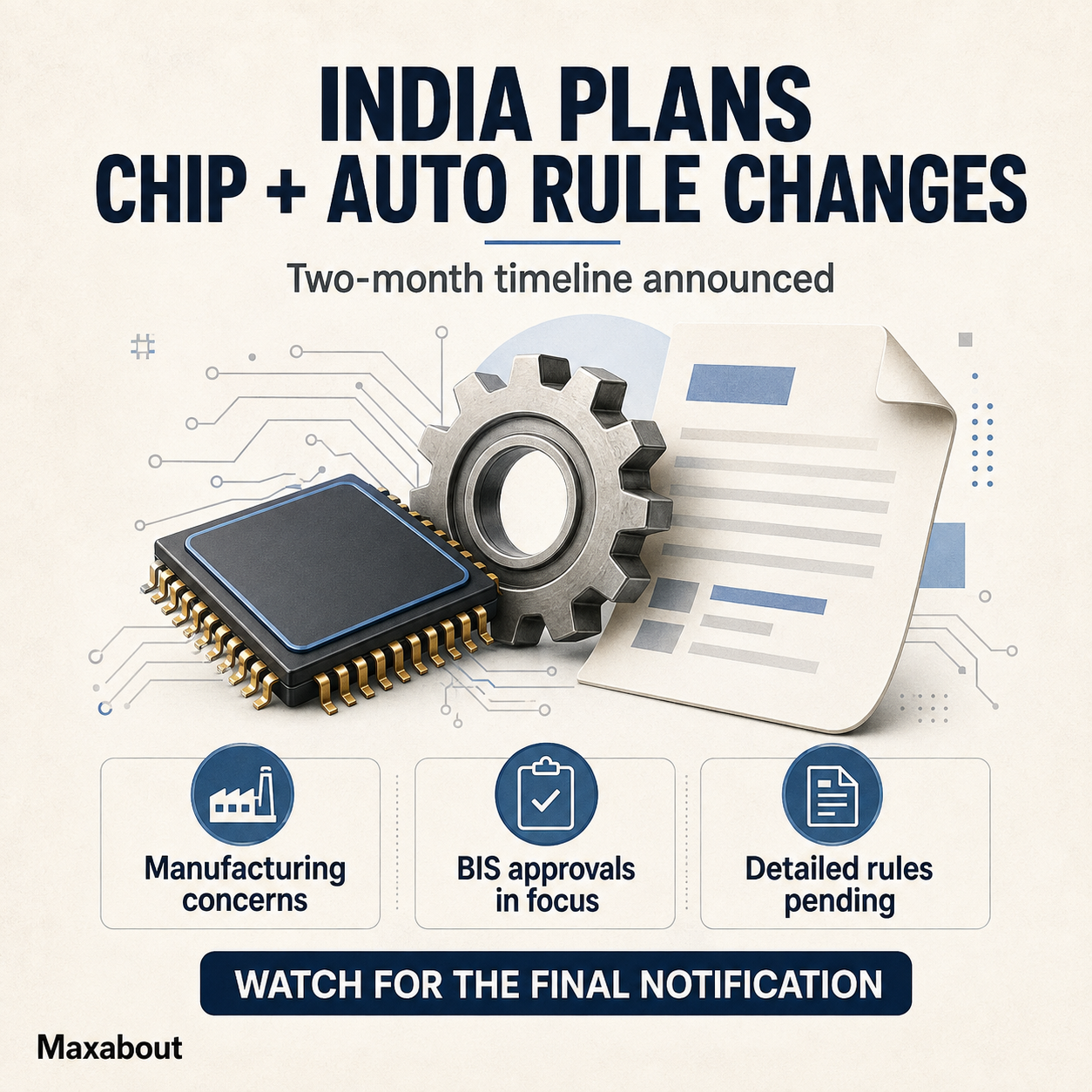
India is preparing regulatory changes to address concerns raised by semiconductor-equipment and automotive-component manufacturers, Commerce and Industry Minister Piyush Goyal has said. Speaking in Tokyo on 24 August 2026, he indicated a two-month window for amendments and new rules. The statement s...
Editorial Team
India is preparing regulatory changes to address concerns raised by semiconductor-equipment and automotive-component manufacturers, Commerce and Industry Minister Piyush Goyal has said. Speaking in Tokyo on 24 August 2026, he indicated a two-month window for amendments and new rules. The statement signals an effort to make manufacturing investment easier; it is not, by itself, a published rule change or a blanket exemption for automotive imports.
What has actually been announced?
Goyal described concerns raised by two corporations: one interested in semiconductor-equipment manufacturing and another in automotive components. He said the government would address their requirements through regulatory changes. He also referred to efforts to simplify the Bureau of Indian Standards framework and approval processes.
The companies, specific provisions, affected product categories and proposed amendments were not identified in the material reviewed. The two-month period should therefore be read as a stated policy timeline, not an effective date that businesses can already rely on.
| Question | Current position |
|---|---|
| Who made the commitment? | Commerce and Industry Minister Piyush Goyal |
| Which sectors were mentioned? | Semiconductor equipment and automotive components |
| What is the indicated timing? | Changes within two months of the statement |
| Are detailed rules available? | No specific amended notification was identified for this commitment |
| Is there a blanket import exemption? | No such exemption is established by the statement |
Why BIS approvals matter in this discussion
BIS is India's national standards body. Its product-certification framework is generally voluntary, while specified products become subject to compulsory requirements through government measures such as Quality Control Orders. The exact product scope, standard, implementation date and certification conditions matter; a general promise to simplify processes does not identify which obligation will change.
For manufacturers planning a factory or sourcing production equipment, predictability can be as important as the final rule. Clear requirements help companies assess equipment procurement, supplier qualification and the sequence of approvals. Those are potential benefits of well-designed changes, not outcomes that have already been demonstrated here.
The India-Japan manufacturing context
The statement came during a visit focused on trade and investment. A subsequent India-Japan semiconductor and artificial-intelligence roundtable on 25 August covered manufacturing, technology cooperation and company concerns. The government said it would work with industry and the relevant departments to address issues raised by participants.
That broader engagement explains why semiconductor equipment and automotive components appear in the same conversation. Both involve industrial investment and supply chains, but the eventual rules may differ significantly by product and sector. A semiconductor initiative should not be presented as automatically applying to every automotive supplier.
What industry should watch next
The issuing authority: which ministry or regulator publishes the change?
The scope: which goods, production activities or categories are covered?
The mechanism: is it a new rule, amended requirement, exemption or simpler application process?
The timing: when does it take effect, and is there a transition period?
The conditions: are there eligibility, documentation or supplier requirements?
Until those details are available, firms should assess their obligations against the current applicable notifications with qualified compliance support. A speech is useful policy evidence, but it cannot replace the formal text needed for an operational decision.
Will this make vehicles cheaper?
No immediate vehicle-price reduction can be inferred. If the eventual measures reduce delays or support local production, there could be longer-term supply-chain benefits. Their scale would depend on the specific changes, investment execution and manufacturer pricing decisions. None of those outcomes follows automatically from the two-month commitment.
For now, the important development is the government's stated intention to address manufacturing concerns. The next decisive news will be the actual notification and its scope—not an assumed change in showroom prices or certification obligations.
Explore the story
Related news






Share your view and join the discussion.
Earn reward points for every comment and get a chance to win ₹1,000 in our weekly lucky draw. Sign in with Google in one tap.
Start the conversation
No one has commented on this article yet. Be the first to share your view.
Want to read more automotive news?
Stay updated with the latest car launches, reviews, and industry insights.
Browse All News