
Maruti Strong-Hybrid Kits Face 4–5-Month Lead Time: What It Means for Buyers
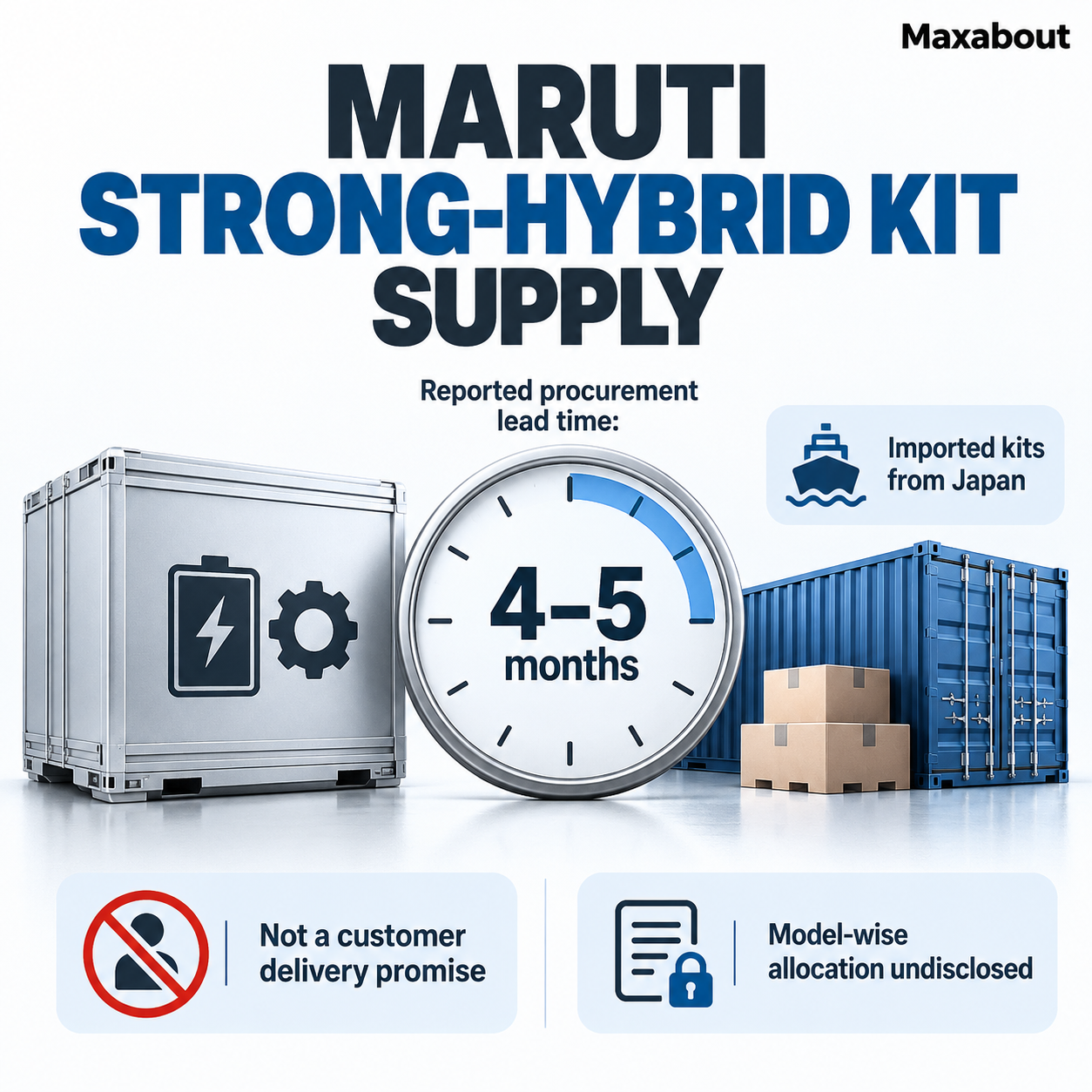
Maruti Suzuki's imported strong-hybrid kits have a reported procurement lead time of four to five months, limiting how quickly the company can raise output when demand changes. The management remarks describe the supply cycle for kits coming from Japan. They do not establish a four-to-five-month wai...
Maruti Suzuki's imported strong-hybrid kits have a reported procurement lead time of four to five months, limiting how quickly the company can raise output when demand changes. The management remarks describe the supply cycle for kits coming from Japan. They do not establish a four-to-five-month waiting period for every customer or a guaranteed date by which supply constraints will end.
What the four-to-five-month figure means
The reported lead time concerns obtaining imported kits for strong-hybrid production. Increasing an order for components and receiving those components are different events; the procurement cycle therefore limits how immediately additional finished-vehicle output can respond.
The available remarks do not quantify monthly kit allocations, specify a model-by-model recovery date or establish the stock available for any particular order. Turning the range into a universal customer waiting period would go beyond what has been disclosed.
What is known, and what remains undisclosed
| Question | Available position |
|---|---|
| Where do the kits come from? | Japan, according to the reported management remarks. |
| What is the reported procurement cycle? | Approximately four to five months. |
| Is that every buyer's waiting period? | No. It describes component procurement, not a confirmed individual delivery date. |
| Are monthly allocations or a recovery date available? | They have not been disclosed in the cited remarks. |
Why a hybrid share can fall even without lower hybrid volume
A powertrain's share depends on both its own volume and the size of the total. If other versions expand faster while hybrid supply cannot respond as quickly, the hybrid percentage can fall even if hybrid volume stays steady. A lower percentage alone therefore does not establish that customer interest has declined.
That explanation is a way to read a sales mix, not a claim about an independently reconciled registration series. Exact model shares require a consistently defined dataset and reporting period.
What a buyer should ask the dealer
Is the quoted delivery estimate for the exact hybrid variant and colour?
Is it based on a confirmed allocation or an expectation of future supply?
When was the estimate last checked, and what booking or refund terms apply?
These questions connect the national supply story to a purchase decision without assuming that every dealer or order faces the same position. Buyers should not start a countdown from the date of the management comment.
What to watch next
A quantified allocation update, a production increase or an official model-specific availability announcement would make the supply picture more useful. Until then, Maruti's strong-hybrid kit lead time explains a constraint on rapid output changes, while individual delivery timing remains a separate question.
Explore the story
Related news





Share your view and join the discussion.
Earn reward points for every comment and get a chance to win ₹1,000 in our weekly lucky draw. Sign in with Google in one tap.
Start the conversation
No one has commented on this article yet. Be the first to share your view.
Want to read more automotive news?
Stay updated with the latest car launches, reviews, and industry insights.
Browse All News