
Delhi proposes 2.5 lakh e-rickshaw cap: draft rules and owner limits explained
Delhi has proposed a city-wide cap of 2.5 lakh e-rickshaws under a draft registration and operating scheme released on 18 October 2026. The reported proposal combines fleet limits with a digital compliance certificate and owner eligibility rules. It is open to public feedback for 30 days and is not ...
Delhi has proposed a city-wide cap of 2.5 lakh e-rickshaws under a draft registration and operating scheme released on 18 October 2026. The reported proposal combines fleet limits with a digital compliance certificate and owner eligibility rules. It is open to public feedback for 30 days and is not final law. For drivers, owners and passengers, the key issue is what the eventual framework would require—not an assumption that every proposed limit already applies.
What the Delhi e-rickshaw draft proposes
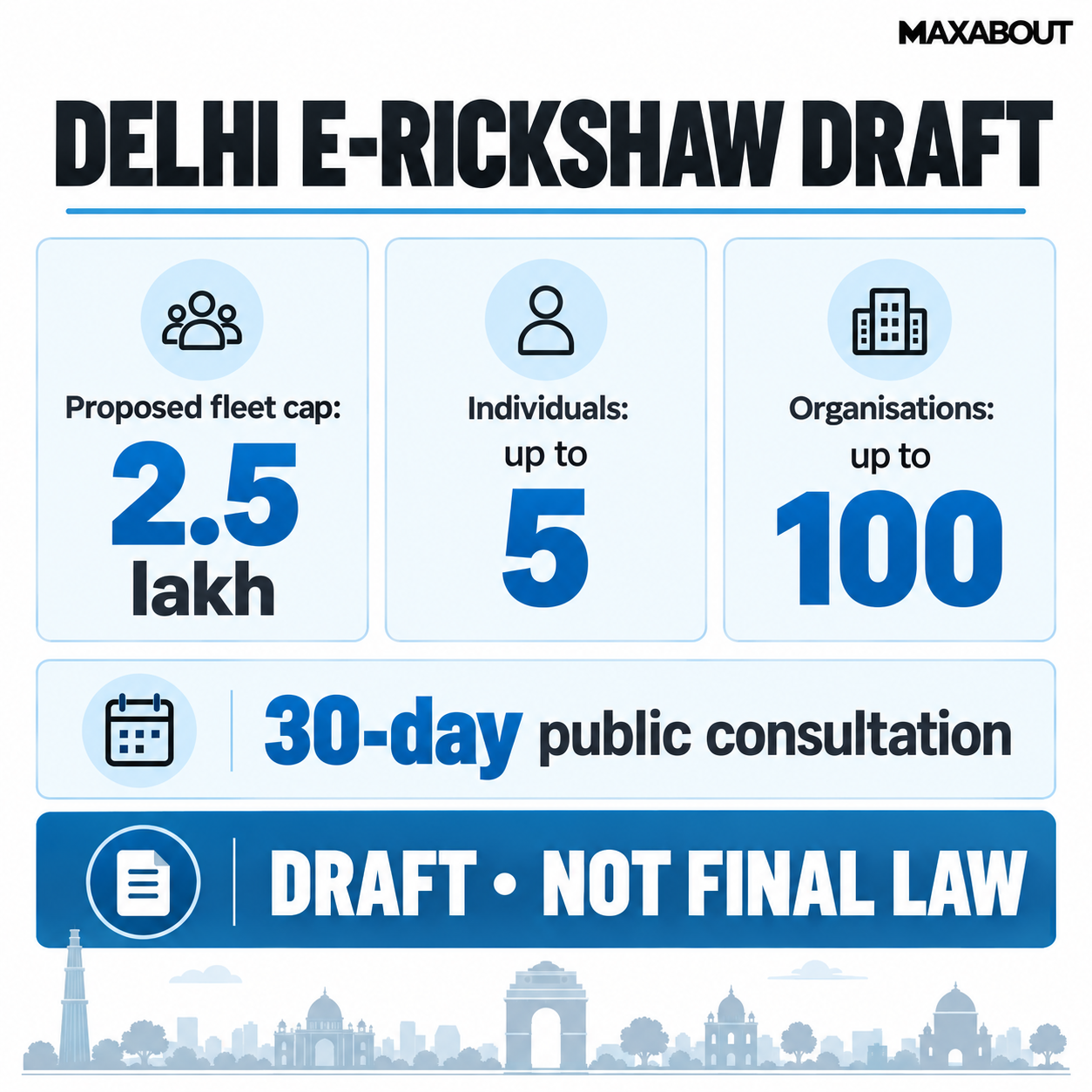
A maximum city-wide fleet of 2,50,000 e-rickshaws, unless the government revises the cap.
A digital E-Rickshaw Compliance Certificate, or ECC, for each vehicle.
Up to five vehicles for an eligible individual owner residing in Delhi.
Up to 100 vehicles for eligible organisations.
A 30-day period for public suggestions before finalisation.
How a fleet cap would work
As reported, further registrations or ECCs would stop once the city-wide total reaches 2.5 lakh, unless the government changes that ceiling. Each e-rickshaw would count separately. A limit on an owner's fleet would therefore operate alongside the overall city limit rather than replace it.
That distinction matters for anyone planning to add vehicles. An individual or organisation being below its own ownership limit would not necessarily mean a fresh registration remains available under the total cap. The final notification and implementation process would need to explain how applications and existing vehicles are handled.
The main proposals at a glance
| Area | Reported draft proposal | What readers should keep separate |
|---|---|---|
| City fleet | 2.5 lakh e-rickshaws | A proposed ceiling, not a confirmed current fleet count |
| Individual ownership | Up to five vehicles for an eligible Delhi-resident individual | Owner eligibility still matters |
| Organisational ownership | Up to 100 vehicles for eligible entities | Additional operating requirements may apply |
| Compliance | Digital ECC for each e-rickshaw | Vehicle registration and other documents remain separate considerations |
| Status | 30-day consultation before finalisation | A draft is not an enforcement notification |
What the digital compliance certificate is meant to do
The proposed ECC would bring the vehicle, registered owner or entity, and driver into a verifiable compliance framework. Reported checks cover matters such as registration, fitness, battery compliance and eligibility. The draft also calls for a driving licence and a Public Service Vehicle badge for drivers.
A digital certificate should not be confused with an announcement that every current operator has already been approved. Readers still need the final requirements, application process and implementation dates before treating the scheme as an operating checklist.
What it means for owners, drivers and passengers
For owners and fleet operators, the proposal raises questions about future fleet expansion, document management and the cost of meeting any final conditions. For drivers, the relationship between vehicle compliance and personal licensing will be important. For passengers, the stated policy concerns include traffic congestion and road safety; the eventual effect will depend on the rules adopted and how they are implemented.
The draft should not be read as proof that existing e-rickshaws are immediately banned, that new registrations have already stopped, or that a particular application is guaranteed approval. Those conclusions require an operative government notification and the relevant circumstances.
What to watch during consultation
The primary draft and final text: Check the actual wording rather than relying on a headline summary.
Existing vehicles: Look for transition arrangements and how compliance will be demonstrated.
Applications and timelines: Confirm the official process and effective dates when announced.
Feedback: Use the channel and closing date stated in the official notice. A precise final deadline is not established here.
Some secondary descriptions differ on the exact fleet threshold for aggregator licensing. That threshold is deliberately not reproduced here without a directly checked primary text. The same care applies to certificate validity and any enforcement start date.
FAQs
Is Delhi's 2.5 lakh e-rickshaw cap already final?
No. The update concerns a reported draft released for public consultation, with 30 days for suggestions before finalisation.
Does the cap mean 2.5 lakh new e-rickshaws will be registered?
No. It describes a proposed ceiling on the city-wide fleet, not an allocation of 2.5 lakh additional vehicles.
What is an ECC?
It is the proposed E-Rickshaw Compliance Certificate, intended to record whether an individual vehicle, its owner or entity, and its driver meet the specified requirements.
The Delhi e-rickshaw draft could create a more formal registration and compliance framework. Its practical impact will become clearer through the primary text, consultation outcome and final notification; the proposal should continue to be described as a draft until then.
Explore the story
Related news




Share your view and join the discussion.
Earn reward points for every comment and get a chance to win ₹1,000 in our weekly lucky draw. Sign in with Google in one tap.
Start the conversation
No one has commented on this article yet. Be the first to share your view.
Want to read more automotive news?
Stay updated with the latest car launches, reviews, and industry insights.
Browse All News