
2 min read
159 views
Delhi High Court Stays Ban on Bull Bars till April 18, 2018
Delhi High Court has ordered a stay on decision of Ministry of Road Transport and Highways decision to ban bull bars till April 18, 2018. Bench consisting of two judges are ready to hear what manufacturers and suppliers of these automotive components have to say about the ban. No challans will be...
Delhi High Court has ordered a stay on decision of Ministry of Road Transport and Highways decision to ban bull bars till April 18, 2018. Bench consisting of two judges are ready to hear what manufacturers and suppliers of these automotive components have to say about the ban.
No challans will be issued during this period and even if no clarity is gained on the topic, the stay can be extended further. Authorities have a lot of time to answer the queries of manufacturers and not just that, they can even come on a mutual agreement on implementation of such ban.
Banning something all of a sudden is quite drastic as it results in loss of jobs and business opportunities to a typical market segment. Think of hundreds of Indian losing business and parallel to that, thousands of workers gets laid due to no work in these factories.
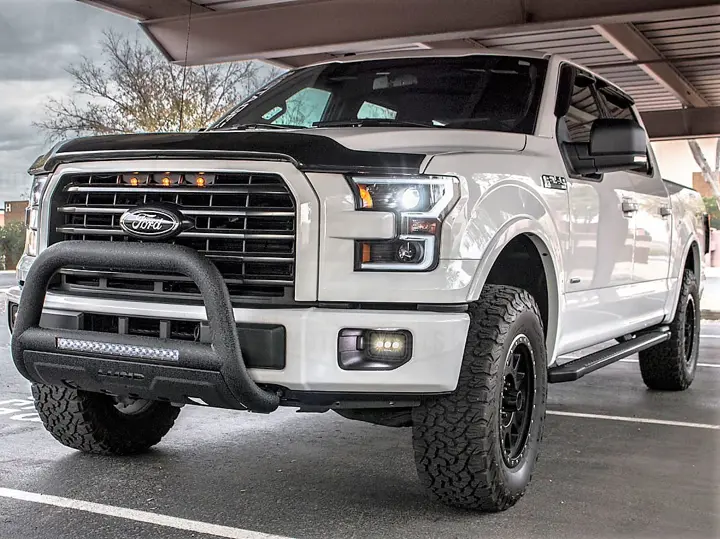 Although it is very important to take care of every pedestrian on road, laying off a large workforce suddenly also results in tough times for humans. Bull bars, as the name explains, is made for a specific purpose. The hard steel or aluminium tubes are meant to keep large animals away from the mainframe.
In other countries, bull bars are fitted on cars that belong to enforcement authorities. The use is quite practical as they have to chase and take down targets that are speeding away. Not just that, they are also in use in rural areas where high speed driving is not a trend.
As animals and other threats appear out of nowhere on rural roads, these bars are used so that the owner does not end up in a repair shop every third day. Ban is not a solution to anything and India never understand the situation.
It is right that it alters the body proportion and brings more damage to the occupants but only when you are at high speed. Driver should know whether they need it or not as everyone knows what sort of road they drive on regularly. It will benefit someone in a remote location who know he drives at 60 kmph in dark everyday and needs to reach home safe through stray animals with a working car for the next day.
Although it is very important to take care of every pedestrian on road, laying off a large workforce suddenly also results in tough times for humans. Bull bars, as the name explains, is made for a specific purpose. The hard steel or aluminium tubes are meant to keep large animals away from the mainframe.
In other countries, bull bars are fitted on cars that belong to enforcement authorities. The use is quite practical as they have to chase and take down targets that are speeding away. Not just that, they are also in use in rural areas where high speed driving is not a trend.
As animals and other threats appear out of nowhere on rural roads, these bars are used so that the owner does not end up in a repair shop every third day. Ban is not a solution to anything and India never understand the situation.
It is right that it alters the body proportion and brings more damage to the occupants but only when you are at high speed. Driver should know whether they need it or not as everyone knows what sort of road they drive on regularly. It will benefit someone in a remote location who know he drives at 60 kmph in dark everyday and needs to reach home safe through stray animals with a working car for the next day.
Although it is very important to take care of every pedestrian on road, laying off a large workforce suddenly also results in tough times for humans. Bull bars, as the name explains, is made for a specific purpose. The hard steel or aluminium tubes are meant to keep large animals away from the mainframe.
In other countries, bull bars are fitted on cars that belong to enforcement authorities. The use is quite practical as they have to chase and take down targets that are speeding away. Not just that, they are also in use in rural areas where high speed driving is not a trend.
As animals and other threats appear out of nowhere on rural roads, these bars are used so that the owner does not end up in a repair shop every third day. Ban is not a solution to anything and India never understand the situation.
It is right that it alters the body proportion and brings more damage to the occupants but only when you are at high speed. Driver should know whether they need it or not as everyone knows what sort of road they drive on regularly. It will benefit someone in a remote location who know he drives at 60 kmph in dark everyday and needs to reach home safe through stray animals with a working car for the next day.Ad
I
Immanuel Raja is an Automotive Writer with 8 years of experience covering the Indian automotive landscape. He specializes in Electric Vehicles and Hybrid Technology, with particular expertise in battery systems, charging infrastructure, and the integration of alternative powertrains in Indian road conditions. Raja has extensively tested over 200 vehicles across various segments, from entry-level EVs to premium hybrids, developing nuanced insights into their performance on India's diverse and challenging roads. His analysis encompasses both technical specifications and practical ownership considerations that matter to Indian consumers, including charging accessibility, maintenance costs, and performance in extreme weather conditions. With a finger on the pulse of India's evolving automotive preferences, Raja delivers clear, factual assessments that help readers navigate the transition to electrified mobility in the context of India's unique market dynamics.
About the Author
Explore the story
Related news


Comments
Share your view and join the discussion.
Start with:
Earn reward points for every comment and get a chance to win ₹1,000 in our weekly lucky draw. Sign in with Google in one tap.
Start the conversation
No one has commented on this article yet. Be the first to share your view.
Want to read more automotive news?
Stay updated with the latest car launches, reviews, and industry insights.
Browse All News