
Blue Energy and HPCL open Bhiwandi truck battery-swap site, reports say
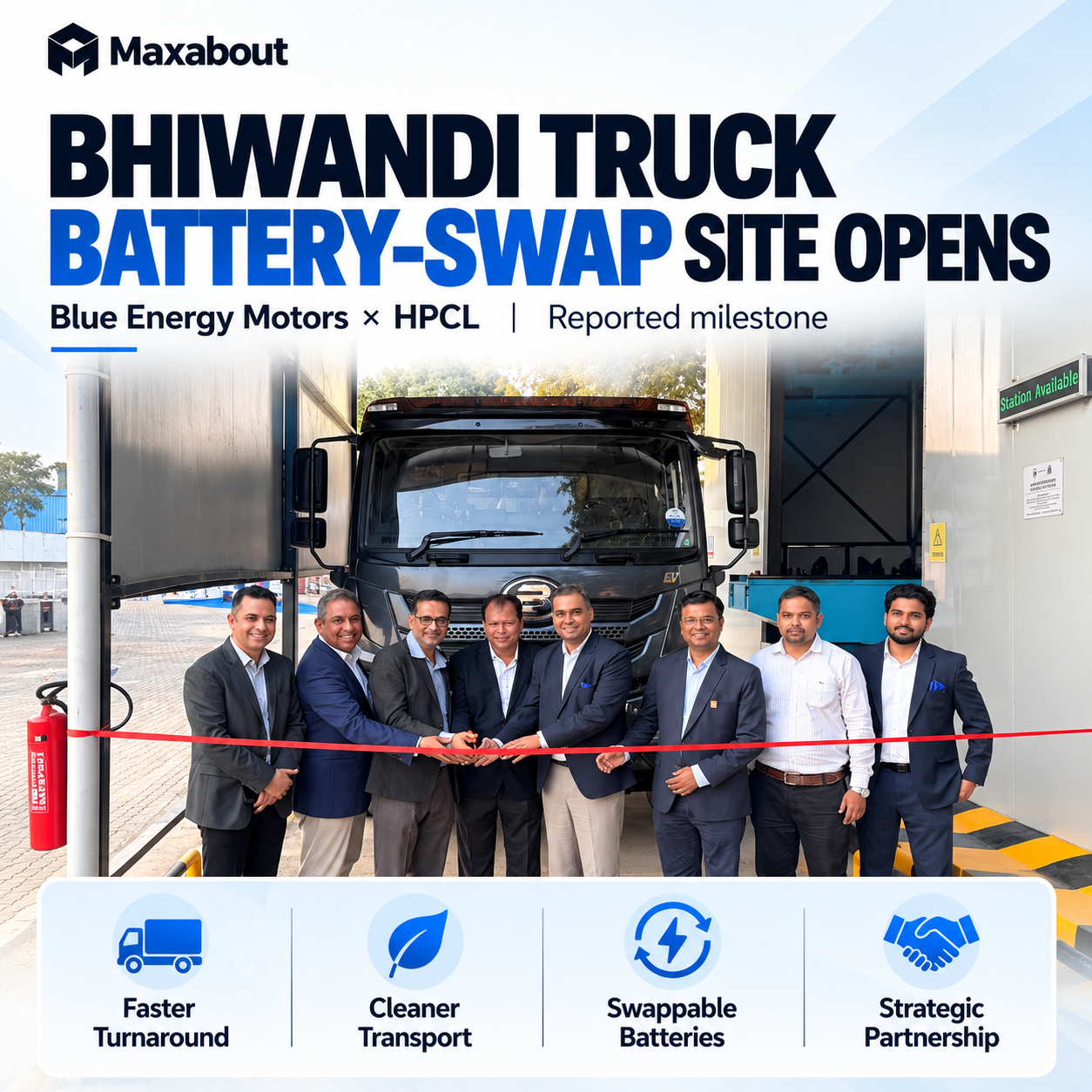
Blue Energy Motors and HPCL have operationalised a battery-swapping site for heavy-duty electric trucks in Bhiwandi, according to current specialist reports. The company says the automated exchange can take under five minutes. That is a company-reported swap-time claim, rather than an independently ...
Blue Energy Motors and HPCL have operationalised a battery-swapping site for heavy-duty electric trucks in Bhiwandi, according to current specialist reports. The company says the automated exchange can take under five minutes. That is a company-reported swap-time claim, rather than an independently measured guarantee of a truck's total stop time.
What is known about the Bhiwandi site?
Use case: battery swapping for heavy-duty electric trucks.
Status: reported operational in Bhiwandi, Maharashtra.
Partnership: Blue Energy Motors and Hindustan Petroleum Corporation Limited.
Additional service: public plug-in charging for multiple EV categories is also reported.
Why Bhiwandi matters to the freight story
Bhiwandi is a logistics and warehousing hub in the Mumbai region. The new site is described as an extension of the Mumbai–Pune Electric Freight Corridor, which Blue Energy launched in October 2025. The reported opening is an operating milestone following the companies' partnership announced in January 2026.
For an electric freight route, an energy stop needs to fit the actual duty cycle. A site near regular cargo activity can be useful when the truck, battery system and operating arrangements are compatible. Its existence alone does not show that every fleet can use it or that a continuous nationwide network is available.
Under five minutes: what the claim does and does not measure
A battery swap replaces a depleted pack with a charged compatible one, moving much of the charging process away from the vehicle's immediate stop. That can reduce the time a truck is attached to a plug, but it requires the appropriate pack inventory and exchange equipment.
The reported under-five-minute figure concerns the exchange process. It should not be stretched into a guarantee covering arrival queues, safety checks, positioning, payment and departure. Nor does it establish the site's daily throughput or availability under sustained demand.
For a fleet manager, the useful comparison is a full operating plan: scheduled arrival, pack availability, service access, the onward leg and an alternative if the site is unavailable. A fast individual exchange is only one part of that plan.
Public charging is not universal swapping access
The reports describe public plug-in charging for electric two-wheelers, four-wheelers and commercial vehicles at the energy hub. That public charging statement should not be interpreted as permission for every electric truck to swap batteries.
Swapping depends on compatible mechanical, electrical and control interfaces, as well as the operator's commercial arrangements. The checked material does not provide a supported-model list, published tariffs or a complete access policy. It also does not establish the power and connector details of every charger at the site.
| Fleet question | Position in the checked reports |
|---|---|
| Is a Bhiwandi site operating? | Yes, reported operational by the companies through current coverage. |
| How long is a swap? | Under five minutes is the company's claim for the exchange. |
| Can any electric truck use it? | Universal compatibility is not established. |
| What are the price and access rules? | A complete published schedule was not established. |
| Is actual daily availability independently measured? | No independent operating dataset was verified. |
What to check before routing a truck through it
Confirm the exact vehicle and pack compatibility, operating hours, service agreement, booking requirements, payment terms and contingency arrangements. Check the site's current location and access instructions directly before dispatching a vehicle; this report is not a navigation or availability service.
The milestone is useful because it moves heavy-truck electrification beyond a vehicle announcement into supporting infrastructure. Its commercial value will become clearer with documented utilisation, reliability and route-specific operating results. Those results should be measured, rather than assumed from the claimed swap speed.
FAQs
Is the five-minute figure independently tested?
No independent test was verified. It is a company-reported claim for the swap process.
Does public charging mean all trucks can swap batteries?
No. Plug-in charging access and battery-swap compatibility are different services.
Do the illustrations show the real station?
No. The illustrations are conceptual and do not reproduce the site's layout or a particular truck model.
Explore the story
Related news

Commercial Vehicles
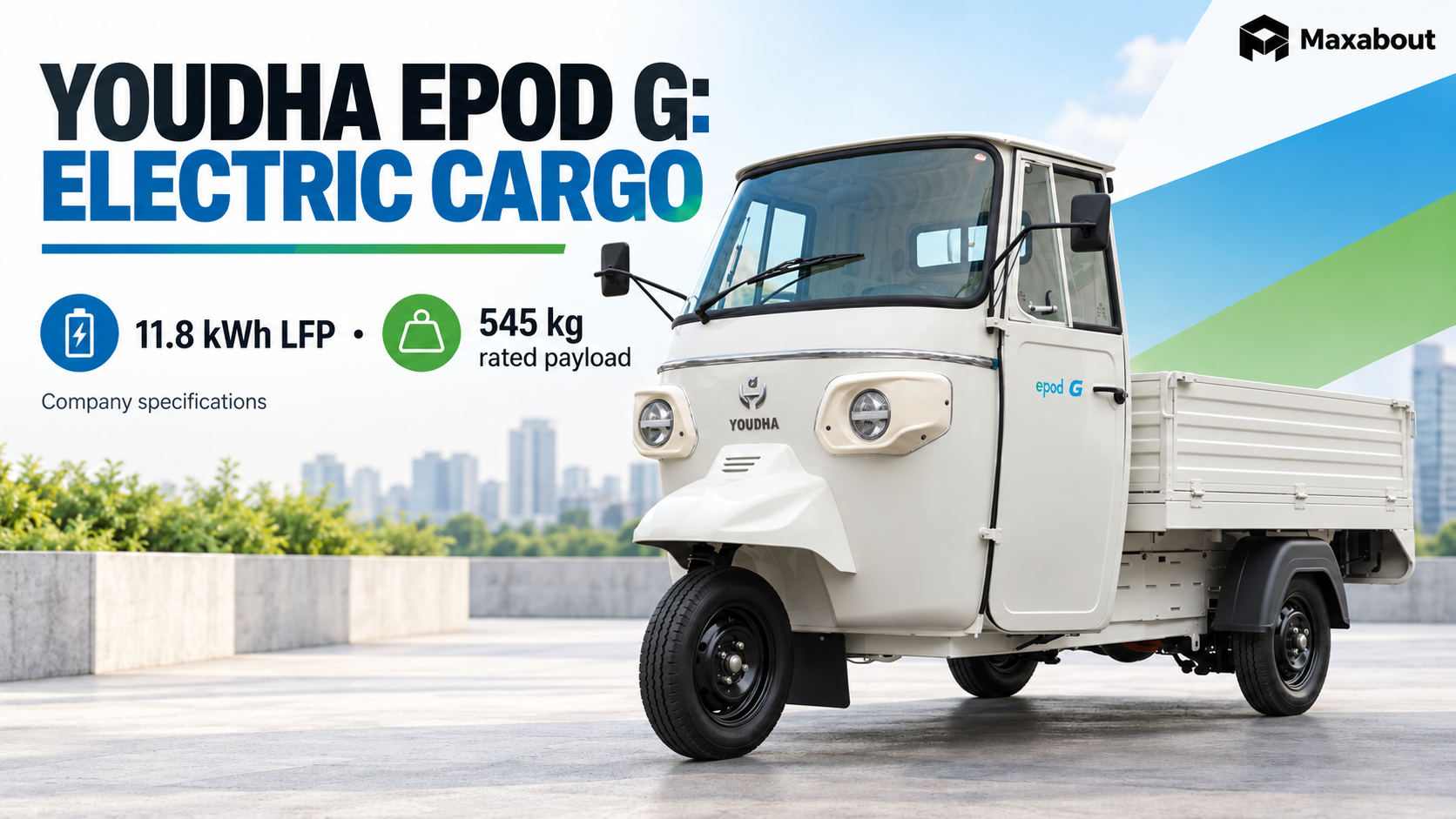
Youdha EPOD G: 11.8 kWh battery, 545 kg payload and fleet checks

Commercial Vehicles
Paradeep–JSW 100-electric-truck deal: route, cargo and what is still unknown


Share your view and join the discussion.
Earn reward points for every comment and get a chance to win ₹1,000 in our weekly lucky draw. Sign in with Google in one tap.
Start the conversation
No one has commented on this article yet. Be the first to share your view.
Want to read more automotive news?
Stay updated with the latest car launches, reviews, and industry insights.
Browse All News