₹50 lakh in India: one SUV or MPV or a two-car garage for city and highway use?
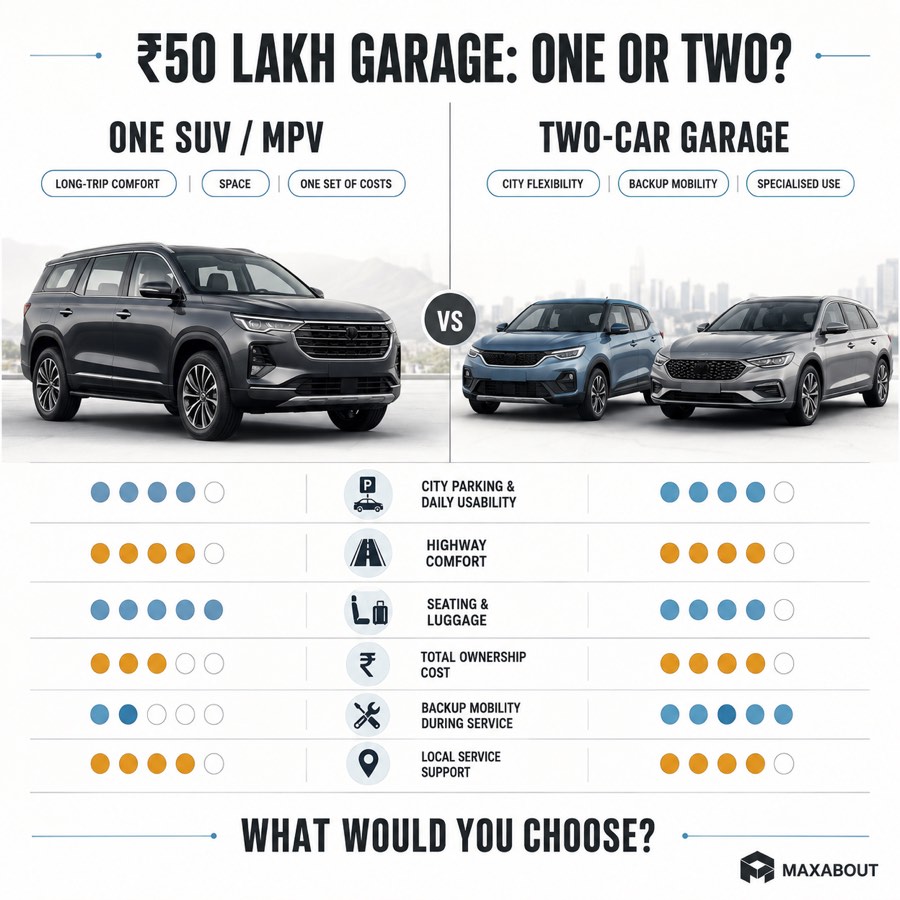
A ₹50 lakh new-car budget can solve two very different problems in India: one larger SUV or MPV that carries family and luggage in a single package, or two complementary cars that divide city and highway duties. The better fit depends on how often all seats are needed, who drives on a typical weekday, and whether parking and running costs can support two registrations.
What changes with each route?
- One SUV or MPV: simpler insurance, servicing, parking and resale decisions; assess seating, long-trip comfort, boot space and local support before treating it as the all-purpose choice.
- Two-car garage: can separate an easy city car from a roomier highway vehicle; assess the second parking space, duplicate fixed costs, usage split and whether both cars will be exercised regularly.
Questions worth answering before booking
- How many adults and bags must the vehicle carry on the longest regular trip?
- Would a smaller city car reduce daily parking and running-cost friction enough to justify a second set of fixed costs?
- Is backup mobility valuable when one vehicle is at a workshop, or would occasional rentals and cabs cover that need?
- Which nearby service options can support the shortlisted brands without long downtime?
For a ₹50 lakh household budget, would you put the full amount into one SUV or MPV, or build a two-car mix? Please share the use case, parking situation, city-versus-highway split, and the safety, space, running-cost or service factor that would decide it.
Join the Discussion
Add a useful reply, help other readers, and earn points for a quality contribution.
Comments (3)
Start a Discussion & Win!
Ask questions, share insights, or start conversations about cars. Win ₹1,000 every week for engaging discussions.
Available Models
Currently available for purchase