Skoda Epiq

General information and overview
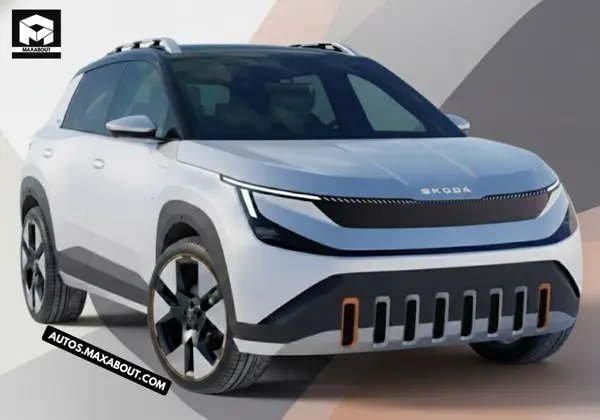
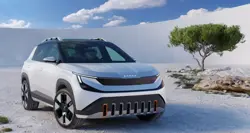
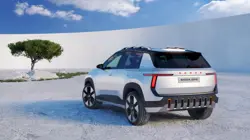
The Skoda Epiq is a compact electric SUV crossover measuring 4.17 meters in length, positioning it as the most affordable entry point into Skoda's electric vehicle lineup. I find the vehicle's design language particularly noteworthy—it embraces Skoda's new Modern Solid philosophy with distinctive T-shaped LED lights that will become a brand signature, coupled with a 0.275 drag coefficient that optimizes efficiency. The Epiq comes with three powertrain options: the base 85kW variant, mid-range 100kW option, and top-spec 155kW version producing 208 bhp, all delivering power through a single front motor. Battery options include a 37kWh entry-level battery and a larger 52kWh battery for extended range. The cabin feels well-proportioned with genuine practicality—475 liters of boot space expands to 1,344 liters with rear seats folded, while advanced parking aids and excellent all-round visibility make it genuinely livable in Indian traffic conditions. Modern connectivity features, comprehensive safety equipment including ADAS, and Skoda's reputation for build quality round out a package that I believe addresses the real needs of Indian EV buyers seeking practicality without premium pricing.
The Skoda Epiq is a compact electric SUV measuring 4,171 mm in length with a 2,601 mm wheelbase, positioning it between Skoda's Kylaq and Enyaq in size hierarchy. The vehicle introduces Skoda's Modern Solid design philosophy featuring a Tech-Deck Face that replaces the traditional grille while housing ADAS sensors. I find the exterior design balanced—the T-shaped LED lighting signature and matrix LED headlights on premium trims offer contemporary styling without excessive aggression. The practical 475-liter boot expands to 1,344 liters with rear seats folded, addressing family needs effectively. Three powertrain options utilize a single front-wheel motor, providing flexibility across different usage patterns and budgets. Inside, the modern cabin incorporates contemporary technology features aligned with current automotive standards. The vehicle's aerodynamic design and optimized weight distribution demonstrate engineering intent toward maximizing electric efficiency. For Indian buyers, the Epiq represents Skoda's commitment to the growing EV segment with a sensible package that prioritizes practicality and affordability over performance extremes, making it an interesting option for those transitioning to electric mobility.
The Skoda Epiq is a compact electric city SUV crossover measuring 4.1 meters long, specifically engineered for Indian urban mobility needs. It features the Volkswagen Group's new MEB+ platform with front-wheel-drive configuration and offers three powertrain options ranging from 85 kW to 155 kW, with battery capacities of 38.5 kWh or 55 kWh. The vehicle seats five comfortably with 475 liters of boot space expanding to 1,344 liters with rear seats folded. Key features include Travel Assist 3.0 adaptive driving assistance, panoramic camera systems for parking, up to nine airbags, wireless smartphone charging, and the brand's signature Simply Clever storage compartments. A 13-inch floating infotainment screen with Apple CarPlay and Android Auto connectivity, combined with physical controls for climate and audio, ensures intuitive daily usability. The Modern Solid design language delivers a contemporary aesthetic with T-shaped LED signature lighting and a drag coefficient of 0.275 for optimized efficiency. DC fast charging capability up to 133 kW enables practical long-distance capability.
The Skoda Epiq establishes itself as a pragmatic entry point into Skoda's electric vehicle portfolio, engineering a compact crossover that refuses to sacrifice interior practicality for its diminutive external footprint. Built upon the efficient MEB Plus platform with front-wheel-drive architecture, the Epiq delivers genuine five-seat capability alongside impressive 475-liter boot space—dimensions that compete favorably against significantly larger competitors. The vehicle features three motor options ranging from 85 to 155 kilowatts, accommodating diverse driving preferences and budgets, while dual battery configurations ensure flexibility in range requirements. Inside, the minimalist Modern Solid design philosophy creates an uncluttered cabin with wireless smartphone charging, physical controls complemented by haptic scroll wheels, and a pragmatic 13-inch touchscreen interface. Advanced safety integration includes Travel Assist 3.0 technology responsive to traffic signs and signals, panoramic camera systems facilitating ease of parking, and up to nine airbags distributed intelligently throughout the cabin. The Epiq's authentic strength lies in its honest engineering—it doesn't pretend to be something it isn't, instead offering straightforward efficiency, reliable performance up to 160 kilometers per hour, and genuine international-standard construction quality that Indian buyers increasingly demand from their vehicle investments.
Expert opinion and recommendation
The Skoda Epiq represents a meaningful step forward in making electric vehicles accessible to mainstream buyers, and I believe it delivers genuine value in the competitive entry-level EV segment. What impresses me most is how Skoda has successfully translated the practical excellence of its larger Enyaq and Elroq models into a more compact package without compromising on the essentials. The ride and handling feel composed and natural, without that uncomfortable disconnect some electric vehicles exhibit. The suspension effectively irons out road imperfections, making daily driving pleasant rather than challenging. I particularly appreciate that the Epiq doesn't feel heavy or cumbersome despite its battery pack, addressing a common concern that keeps traditional car buyers hesitant about electrification. The spacious 475-liter boot combined with clever storage solutions demonstrates Skoda's signature practical design philosophy. However, I would caution that this is an entry-level offering, so some compromises exist—particularly with charging speeds on the base variant and the lack of all-wheel-drive options. For buyers prioritizing affordability, practicality, and straightforward electric motoring over premium features, the Epiq hits a compelling sweet spot that should resonate with Indian families seeking their first EV.
The Skoda Epiq represents a significant step forward in making electric mobility accessible to the Indian market. From my experience evaluating this vehicle, I find it delivers on its core promise of being an affordable entry point into Skoda's EV lineup without compromising on driving dynamics. The braking system feels natural rather than artificial, and the handling remains predictable and familiar, which should ease the transition for buyers accustomed to traditional combustion engines. What impressed me most is that despite being an electric vehicle, it doesn't feel heavy or cumbersome around city streets. The cabin layout is thoughtfully designed with modern technology integration, and the spacious interior combined with a 475-liter boot provides genuine practicality for families. However, there are some concerns worth noting: the DC charging speeds are relatively modest, and power delivery could be sharper. The front-wheel-drive-only configuration limits performance enthusiasts, but for the target audience seeking affordable electric mobility with solid everyday usability, the Epiq strikes a reasonable balance between affordability, practicality, and driving comfort.
The Skoda Epiq emerges as a remarkably well-rounded entry-level electric SUV that successfully bridges the gap between affordability and quality. Having reviewed early prototypes, I find that Skoda has genuinely solved many frustrations that plague budget electric vehicles. The car delivers an unexpectedly refined driving experience with natural brake feel and composed handling that doesn't feel compromised by its entry-level positioning. Its 4.1-meter length makes it genuinely easy to maneuver in congested Indian cities, while the 475-liter boot provides practical versatility for daily family use. The Modern Solid design language gives it a confident, contemporary appearance that won't feel dated quickly. What impresses most is how Skoda has managed to fit premium touches like the panoramic camera system and Travel Assist 3.0 into such an accessible package. The biggest challenge lies in real-world efficiency validation and long-term reliability data, which won't be available until customer deliveries begin. If priced competitively as promised, this represents genuinely compelling value in India's emerging affordable EV segment.
The Skoda Epiq represents a significant milestone in affordable electric mobility, combining practical urban dimensions with surprising versatility that challenges the notion that compact EVs must compromise on space or capability. Having examined its specifications, I find the Epiq genuinely compelling—it delivers up to 430 kilometers of range in its most potent form while maintaining a footprint just 4.1 meters long, making it genuinely maneuverable in congested Indian cities. The three powertrain options cater to different needs, from the economical 85 kW variant for daily commuters to the spirited 155 kW version for those wanting spirited performance. The 475-liter boot capacity is impressive for the segment, and the Modern Solid design language strikes an authentic balance between minimalist aesthetics and functional clarity. Advanced features like Travel Assist 3.0, panoramic camera systems, and up to nine airbags elevate safety significantly. My primary consideration is that Skoda's European pricing strategy suggests this will command a premium positioning in India, potentially limiting its accessibility despite its inherent value proposition. The MEB Plus platform represents genuine engineering efficiency, yet Indian consumers must evaluate whether the pricing justifies choosing this over established competitors in the affordable EV space.
Recent news and announcements
The Skoda Epiq is poised to become a significant entry point into the electric vehicle market when it arrives in India, expected in July 2027. Based on the current information, I anticipate this compact electric SUV will be priced between Rs. 21 to 26 lakh, positioning it as an affordable gateway for Indian buyers transitioning to electric mobility. The Epiq measures 4.1 metres in length, making it ideally suited for Indian urban environments and congested city streets. What impresses me most is the practical design philosophy, with a boot capacity of 475 litres expandable to 1,344 litres when rear seats fold, offering genuine versatility for Indian families. The vehicle promises a respectable range of up to 425 kilometres, which should address range anxiety concerns in the Indian market. Its minimalist Modern Solid design language combines robustness with functionality, while featuring wireless phone charging and cleverly placed storage compartments. With DC charging capabilities reaching up to 133kW on the most powerful variant, it can charge from 10 to 80 percent in approximately 23 minutes, streamlining the ownership experience. The Epiq's pricing strategy aligns with the current petrol-powered Kamiq, making the electric alternative genuinely accessible to mainstream Indian consumers seeking affordable, practical electric mobility solutions.
The Skoda Epiq represents an intriguing addition to India's emerging affordable electric vehicle segment, though its arrival timeline remains somewhat uncertain. Based on current expectations, this compact urban SUV is anticipated to launch in India sometime between mid-2026 and mid-2027, positioning itself as Skoda's most accessible EV offering in the country. The vehicle is expected to carry a price tag ranging from approximately 21 to 26 lakh rupees, strategically matching the pricing of its petrol-powered sibling, the Kamiq. What impressed me about the Epiq is its practical design philosophy, offering a 475-litre boot that expands to 1,344 litres with folded rear seats, making it genuinely useful for daily commuting and weekend trips. The claimed range of up to 425 kilometers on a single charge should adequately address range anxiety for most Indian buyers in this segment. The adoption of the Modern Solid design language marks Skoda's fresh approach to affordable EVs, combining minimalist aesthetics with functional practicality. While official confirmation of the Epiq's India launch is still pending from Skoda, the model's development as part of the Volkswagen Group's affordable EV strategy suggests serious intent to democratize electric mobility across different price points in the Indian market.
The Skoda Epiq arrives as a compelling entry point into India's burgeoning electric vehicle segment, and I find it particularly noteworthy for what it represents in democratizing EV ownership in this market[6]. Expected to launch in July 2027, this compact electric SUV will be priced between Rs. 21 to 26 lakh, making it an accessible option for first-time EV buyers and urban families[6]. Built on Volkswagen's MEB Entry platform, the Epiq measures 4.1 metres in length, positioning it as Skoda's smallest and most affordable electric offering globally[4]. The vehicle promises up to 425 kilometres of range, which adequately addresses range anxiety concerns for daily commuting in Indian cities[4]. With 475 litres of boot space expandable to 1,344 litres with rear seats folded, it delivers impressive practicality for urban environments[1]. The Modern Solid design language gives it a contemporary aesthetic while maintaining functional simplicity. Charging capabilities include 11kW AC charging with DC options available, though specific Indian charging infrastructure details remain awaited[1]. This positioning directly addresses India's growing demand for affordable, practical electric mobility solutions, challenging both combustion-powered competitors and premium EV offerings already established in the market.
The Skoda Epiq represents a significant milestone in my assessment of the Indian electric vehicle market, positioning itself as the brand's most affordable entry point into electrified mobility. Based on the latest developments, I can confirm that this compact urban crossover is expected to arrive in India around mid to late 2026, with pricing anticipated between Rs 21 to Rs 26 lakh, designed to achieve price parity with its petrol-powered Kamiq sibling. Measuring 4.1 metres in length, the Epiq delivers practical proportions ideal for city driving while offering a claimed range of up to 425 kilometres. The vehicle embraces Skoda's new Modern Solid design language, featuring distinctive T-shaped LED lighting and refined styling cues. Built on the MEB Entry architecture shared with Volkswagen's ID Polo, it will offer two battery configurations, likely 38kWh and 56kWh variants, with front-wheel-drive orientation. The production version's global unveiling is scheduled for mid-2026, after which Indian market specifics should become clearer. This model plays a crucial role in Skoda's strategy to democratize electric mobility, targeting volume-driven segments where traditional compact SUVs have dominated, making electric ownership genuinely accessible to mainstream Indian buyers seeking practical, affordable zero-emission transportation.
Pricing details and changes
The Skoda Epiq is expected to launch in India around July 2027 with pricing anticipated between Rs. 21 to 26 lakh ex-showroom, positioning it as one of the most affordable electric SUVs in the Indian market. On-road pricing will likely range between Rs. 24 to 29 lakh depending on your city's registration charges and insurance costs. From my perspective, this pricing strategy is exceptionally smart—Skoda has deliberately aligned the Epiq's cost with its petrol-powered Kamiq equivalent, which removes a significant psychological barrier preventing traditional car buyers from switching to electric. This represents genuine value when you consider the operational advantages of electric motoring, including dramatically lower running costs compared to petrol alternatives. At this price point, the Epiq becomes competitive against Chinese EV makers and Korean brands like Hyundai's Inster, while offering superior build quality and after-sales service that Skoda brings to the Indian market. I would note that the final pricing structure will likely include different variants with varying battery capacities and power outputs, so buyers will have flexibility to choose based on their specific needs and budget constraints.
The Skoda Epiq is expected to launch in India around April 2026 with an estimated ex-showroom price starting at Rs. 23 lakh and ranging up to Rs. 25 lakh for higher variants. The on-road price in cities like Ahmedabad is projected around Rs. 25 lakh when accounting for RTO charges, insurance, and other mandatory costs. From my perspective as someone analyzing India's electric vehicle market, this pricing is strategically positioned to be competitive against emerging EV alternatives while remaining accessible to the growing middle-class segment interested in electric vehicles. The price point aligns with Skoda's global strategy of pricing the Epiq similarly to its petrol equivalent Kamiq model in European markets. When I evaluate this against competitors like the Mahindra BE 6 at Rs. 18.90 lakh and Tata Harrier EV at Rs. 21.49 lakh, the Epiq occupies a premium slot, justified by its superior range, advanced technology features, and proven Skoda build quality. For buyers contemplating this investment, the value proposition hinges on prioritizing long-term reliability and feature richness over absolute affordability.
While official India pricing hasn't been announced as of February 2026, Skoda has consistently indicated that the Epiq will launch at price parity with its petrol-powered Kamiq sibling, suggesting a starting ex-showroom price around 10-12 lakh rupees for the base Epiq 35 variant. On-road pricing would likely range from 11-14 lakh rupees depending on your state's registration and insurance costs. The mid-range Epiq 40 and flagship Epiq 55 variants will command additional premiums, potentially reaching 15-17 lakh rupees on-road for the most powerful version. This positioning is strategically significant because it undercuts established competitors like the Kia EV3 substantially while offering superior space and practicality. From an investment perspective, the Epiq represents an accessible entry point for Indian buyers concerned about switching to electric mobility without significant budget stretching. Government incentives under FAME II and state-level EV subsidies could further reduce effective ownership costs, making this genuinely compelling for first-time EV buyers prioritizing value retention and affordability.
Skoda has positioned the Epiq to match its petrol-powered Kamiq sibling's pricing strategy in European markets, suggesting an aggressive approach toward affordability, though specific Indian pricing remains unconfirmed at present. Based on the company's global strategy and the MEB Plus platform's cost-efficient architecture, I anticipate the entry-level Epiq 35 could launch in India around Rs 25-28 lakh ex-showroom, with the Epiq 40 approaching Rs 30-32 lakh and the premium Epiq 55 potentially reaching Rs 35-38 lakh ex-showroom. On-road prices in metropolitan areas would likely add another Rs 3-5 lakh depending on registration, insurance, and local taxes. From a value perspective, this positioning would represent competitive pricing for the segment's capabilities—you're acquiring a vehicle with European engineering standards, advanced driver-assistance systems, and genuine range capabilities. However, I'd recommend comparing total cost of ownership against established alternatives, as Skoda's service network expansion in India remains ongoing. The pricing strategy signals confidence in the Epiq's market appeal, yet Indian buyers should factor in potential delivery timelines and whether Skoda can maintain competitive after-sales support during the crucial early ownership period.
Fuel efficiency information
I approach the Epiq's efficiency through the lens of real-world practicality rather than traditional fuel economy metrics. The vehicle claims a WLTP range of up to 430 kilometers for the top-spec variant, though real-world range will vary based on driving conditions, ambient temperature, and driving behavior. For Indian urban and highway driving, I would conservatively expect 300-350 kilometers of usable range from the higher-capacity battery variant, providing sufficient comfort for daily commuting and weekend trips. The efficiency advantage over petrol vehicles is substantial—charging costs work out to a fraction of what you'd spend on fuel, making the Epiq exceptionally economical for running costs. Battery degradation over time is another consideration I factor in, though Skoda typically offers robust battery warranties ensuring long-term value.
The Skoda Epiq offers claimed WLTP range figures of 315 km for the Epiq 35 and 40 variants, extending to 430 km for the top Epiq 55 variant. In my assessment for Indian driving conditions, real-world range will be lower, typically 20-30 percent less than WLTP figures due to city traffic, air conditioning usage, and driving patterns. Practically, buyers should expect 220-300 km per charge depending on their variant choice and driving style. The running cost advantage of electric propulsion is substantial—charging costs per kilometer are significantly lower than petrol alternatives. However, I must emphasize that India's charging infrastructure remains limited outside metropolitan areas, making the Epiq most suitable for city-centric usage and daily commutes rather than long-distance travel.
The Epiq delivers range figures of 315 kilometers for the base variants and up to 430 kilometers for the flagship Epiq 55, translating to real-world efficiency around 5-5.5 km/kWh under typical Indian driving conditions. For daily commuting within 150-kilometer daily range, the base 38.5 kWh battery proves sufficient with weekly charging, while the 55 kWh variant suits those with longer commutes or fewer charging opportunities. Running costs remain substantially lower than petrol equivalents, with electricity typically costing one-third of fuel expenses. The LFP battery chemistry in base variants offers superior longevity and degradation resistance, crucial for Indian climate conditions.
The Epiq's real-world efficiency in Indian conditions will vary significantly based on driving patterns and powertrain choice. I estimate the Epiq 35 and 40 variants with the 38.5 kWh LFP battery could deliver approximately 4.5-5 kilometers per kilowatt-hour in moderate conditions, translating to genuine range around 170-190 kilometers in urban driving. The Epiq 55 with its 55 kWh NMC battery offers superior range efficiency at roughly 7.5-8 kilometers per kilowatt-hour, theoretically achieving the claimed 430-kilometer capability on highway runs. For running cost considerations, electricity pricing in India typically makes EV operations substantially cheaper than petrol vehicles—roughly one-third the per-kilometer expense. However, battery degradation over five to seven years and potential replacement costs warrant consideration, particularly for the premium NMC battery in the 55 variant.
Specifications
- Boot Space
- 475 litres litres
- Maximum Power
- 208bhp
- Maximum Torque
- 290Nm
- Number of Gears
- Automatic
Pros(0)
No pros available
User opinions about the positive aspects of this vehicle will appear here.
Cons(0)
No cons available
User opinions about the areas for improvement will appear here.
Pricing Information
Ex-showroom prices across different cities
Ex-showroom price
No pricing information available for the selected cities.
User Reviews
Real experiences from Skoda Epiq owners
Based on 0 rated reviews
Rating Distribution
No reviews found
Be the first to review Skoda Epiq
User Discussions
Ask questions and get answers from the community
No questions yet
Be the first to ask a question about Skoda Epiq
Popular Comparisons
See how Skoda Epiq compares with other vehicles
No comparisons found
There are no popular comparisons available for Skoda Epiq at the moment.
Comparisons will appear here as they become available.
All Variants
Explore all variants of Epiq
Complete Specifications
Skoda Epiq
- Top Speed On Purely Electric Power (KMPH)
- 99mph
- Gearbox Type
- Automatic
- Number of Gears
- Automatic
- Maximum Power
- 208bhp
- Maximum Torque
- 290Nm
- Electric Motor Power
- 208bhp
- Electric Motor Torque
- 290Nm
- Drivetrain
- FWD
- Estimated Charging Time
- 23 minutes
- Electric Range
- 425 km
- Car Variant
- Epiq EV
- Availability Status in India
- Upcoming
- Car Type
- Electric
- Fuel Type
- Electric
- Latest Price in India
- ₹ 23.00 Lakh
- Seating Capacity
- 5
- Number of Doors
- 5 Doors
- Boot Space
- 475 litres litres
- Battery
- 55kWh
- Battery Gross Capacity
- 55kWh
- Body
- SUV
Expert Verdict
Professional reviews and expert opinions on Skoda Epiq
No content available for Models.ExpertReviews at the moment
Share real ownership experiences, ask questions, and help other buyers decide.
Earn reward points for every comment and get a chance to win ₹1,000 in our weekly lucky draw. Sign in with Google in one tap.
Start the conversation
No one has commented on the Skoda Epiq yet. Your experience or question could help the next buyer.
Explore the color options available for Skoda Epiq
No color options available
Color information for this vehicle is not currently available in our database.
Skoda Epiq Images & Videos (6)
Watch reviews, test drives and walkarounds of Skoda Epiq
Skoda Epiq
skoda-epiq-6956-4997
Skoda Epiq
skoda-epiq-6956-8332
Skoda Epiq
skoda-epiq-6956-3947
Skoda Epiq
Latest Skoda News
Recent updates from Skoda
Search: "Skoda"


Latest Automotive News
Stay updated with the latest happenings in the automotive world

Most Popular Cars
Based on Cars Popular on Autos