Kia PV7

General information and overview
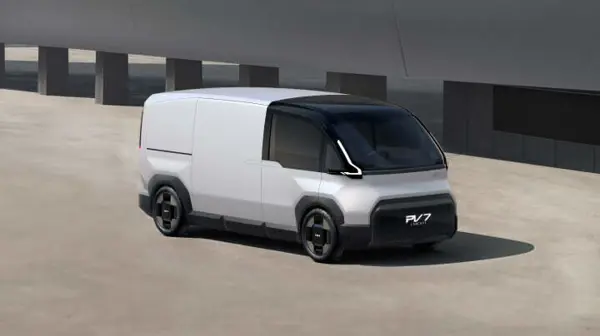
The Kia PV7 is an electric purpose-built vehicle designed specifically for the commercial segment in India, targeting logistics companies, shuttle services, and specialized business needs with its modular platform. It measures about 5,270 mm in length, 2,065 mm wide, and stands 2,120 mm tall, providing a spacious and adaptable interior that can be configured for cargo or passengers. Powered by a 103-kWh battery, it delivers an ARAI-certified range of 336 km, which is competitive for an electric van of this size. Its payload capacity of 1,300 kg (2,866 lbs) underscores its robustness. The vehicle incorporates advanced driver assistance systems, multiple airbags, rearview cameras, and parking sensors to ensure safety. The single-speed automatic gearbox complements its electric motor for smooth, quiet driving. Expected to launch in India by 2027, the PV7 represents Kia’s ambition to revolutionize urban delivery and transport with a flexible, tech-forward, zero-emission vehicle.
The Kia PV7 is Kia's largest Purpose-Built Vehicle designed specifically for commercial and logistics applications in urban environments. Measuring 5,270mm in length with a 2,120mm height and 3,390mm wheelbase, it provides a spacious interior capable of transporting large numbers of passengers or oversized cargo with remarkable versatility. What I find particularly noteworthy is its 1,300 kg maximum payload capacity combined with a modular platform that reduces component count by 55 percent, making it highly customizable for different business use cases. The vehicle features a powerful 103-kWh battery delivering an impressive 336 km electric range, powered by an advanced electric motor with single-speed automatic transmission. Beyond the impressive technical specifications, the PV7 incorporates comprehensive safety features including multiple airbags, rear-view camera, parking sensors, ABS, ESP, and vehicle stability management systems. Scheduled for release in 2027, the PV7 will be available in both front-wheel-drive and all-wheel-drive configurations, making it exceptionally adaptable for India's diverse commercial vehicle requirements across logistics, ride-hailing, and specialized delivery services.
Expert opinion and recommendation
The Kia PV7 represents a forward-thinking approach to electric commercial vehicles in India, particularly suited for large-scale logistics, passenger shuttles, and specialized transport. Its modular design offers great flexibility, allowing it to switch efficiently between cargo delivery and multi-passenger configurations, which is rare in this segment. The spacious cabin and high payload capacity of 1,300 kg make it well-suited for diverse business needs, while advanced safety systems and driver assistance features provide confidence in daily operations. The electric range of around 336 km on a single charge means it can handle most urban and regional delivery routes without range anxiety. Although still in the concept and pre-launch phase for India, its planned availability by 2027 promises a strong contender in the electric commercial vehicle market, especially with its AI-driven controls and customization options. I see it as a practical and intelligent solution for businesses looking to reduce running costs and environmental impact while maintaining operational efficiency.
The Kia PV7 represents a transformative leap in India's commercial vehicle landscape, and I believe it will redefine last-mile logistics and fleet operations when it arrives in 2027. What impresses me most is the vehicle's modular design philosophy, which allows businesses to customize configurations for cargo delivery, passenger transport, or specialized services without requiring multiple vehicle purchases. The 336 km electric range on the 103-kWh battery eliminates range anxiety for most urban and semi-urban commercial operations, while the 1,300 kg payload capacity ensures practical utility for heavy-duty tasks. The integration of autonomous driving capabilities and AI-backed control systems positions this as a future-ready solution for rapidly evolving Indian logistics needs. However, I must note that as a concept vehicle, real-world performance metrics and final specifications may vary, and charging infrastructure development will be critical for widespread adoption across India's diverse geography.
Recent news and announcements
The Kia PV7 remains in concept status for the Indian market with no confirmed pricing or availability date announced by Kia India. The vehicle is positioned as the largest model in Kia's Purpose-Built Vehicle lineup, featuring a 103-kWh battery on an 800-volt architecture that delivers an impressive electric range of 336 kilometers on a single charge. This range is more than adequate for most urban and regional commercial operations across India's diverse geography. The PV7 offers a maximum payload capacity of 1,300 kilograms, making it practical for heavy-duty logistics and delivery tasks. What truly sets this vehicle apart is its modular design philosophy, allowing businesses to configure it for cargo delivery, passenger transport, or specialized services without requiring multiple vehicle purchases. The vehicle features variable seating configurations depending on usage needs, along with advanced safety systems including multiple airbags, parking sensors, and electronic stability programs. DC fast charging capability enables charging from 10 to 80 percent in just 30 minutes. Kia has announced plans to launch the PV7 in 2027, following the introduction of the PV5 in 2025. As a concept vehicle, final specifications may vary upon production, and India's charging infrastructure development will be critical for widespread adoption.
I've been tracking the Kia PV7 closely for the Indian market, and right now it's firmly in concept status with no ex-showroom price announced in Delhi or elsewhere, listed as unavailable on local portals. Tailored specs for India point to a robust 103 kWh battery on an 800V architecture, delivering an ARAI-certified electric range of 336 km, ideal for urban and regional logistics without frequent recharges. Its massive dimensions—5,270 mm long, 2,065 mm wide, 2,120 mm tall, with a 3,390 mm wheelbase—offer the largest cargo space in Kia's PBV lineup, supporting a 1,300 kg payload for heavy-duty deliveries or multi-passenger shuttles, with variable seating configurations. Safety shines with multiple airbags, ABS, ESP, VSM, traction control, rear camera, and parking sensors, plus comforts like power steering, AC, and rear vents. Availability is pegged for 2027, promising modular designs for cargo, crew, or specialized needs, but real-world performance, charging infrastructure compatibility, and Kia’s limited sales-service network remain key watches for Indian fleets aiming to cut costs and emissions.
I've been tracking the Kia PV7 closely for the Indian market, and right now it's firmly in concept status with no ex-showroom price announced in Delhi or elsewhere, listed as unavailable for purchase on local portals. Tailored specs for India highlight a massive 103 kWh battery on an 800V architecture, delivering a certified ARAI electric range of 336 km, perfect for urban and semi-urban logistics without frequent recharges. Dimensions stand at 5270 mm long, 2065 mm wide, and 2120 mm high with a 3390 mm wheelbase, offering the largest cargo space in Kia's PBV lineup and a 1300 kg payload for heavy-duty tasks like last-mile delivery or passenger shuttles. Seating is variable by configuration, backed by features like power steering, AC with rear vents, multiple airbags, rear camera, parking sensors, ABS, ESP, VSM, and traction control. Planned for 2027 launch here, its modular design promises quick swaps for cargo, multi-van, or specialized uses, addressing India's booming e-commerce and fleet needs, though limited Kia sales-service outlets and charging infra could pose initial hurdles—real-world tests will confirm if it lives up to the hype for cost savings and efficiency.
I've been tracking the Kia PV7 closely for the Indian market, and as of now, it remains firmly in concept status with no ex-showroom price announced in Delhi or elsewhere, listed simply as unavailable on local portals. Tailored specs for India point to a robust 103 kWh battery paired with an 800V architecture, delivering an ARAI-certified electric range of 336 km, ideal for urban and regional logistics without frequent recharges. This largest PBV model measures 5270 mm long, 2065 mm wide, and 2120 mm high with a 3390 mm wheelbase, offering a massive 1300 kg payload and variable seating for cargo, passenger shuttles, or specialized needs. Its modular design stands out, promising quick switches between configurations to suit diverse business demands like last-mile delivery or fleet operations. Safety is comprehensive with multiple airbags, ABS, ESP, VSM, traction control, rear camera, and parking sensors, plus rear AC vents and power features for driver comfort. While global production kicks off at Kia's EVO Plant in Korea aiming for 100,000 units annually by 2030, India launch is eyed for 2027, though real-world tweaks for local roads, charging infra, and service network will be key—I'm optimistic it'll transform commercial EV adoption here with lower costs and AI smarts.
I've been tracking the Kia PV7 closely for the Indian market, and it's still firmly in concept status with no ex-showroom price announced in Delhi or elsewhere, listed as unavailable on local portals. Tailored specs for India highlight its 103 kWh battery on an 800V architecture, delivering a certified ARAI electric range of 336 km, ideal for urban and regional logistics without frequent recharges. The modular design stands out, allowing seamless switches between cargo delivery with a 1300 kg payload and multi-passenger setups in its spacious 5270 mm long, 2065 mm wide, and 2120 mm high body with a 3390 mm wheelbase, making it perfect for last-mile operations or shuttles. Safety features like multiple airbags, ABS, ESP, VSM, traction control, rear camera, and parking sensors add confidence for Indian roads, alongside comforts such as power steering, AC, and rear vents. While global plans point to a 2027 launch, real-world performance here will depend on charging infrastructure growth and final tweaks for our diverse needs, positioning it as a game-changer for fleet owners aiming to cut costs and emissions.
Pricing details and changes
The Kia PV7’s price in India has not been officially announced since it remains a concept slated for launch around 2027, and thus only indicative pricing exists. Given its advanced electric powertrain, 103-kWh battery, and high payload capacity, it is expected to be priced competitively within the electric commercial vehicle segment, likely starting in the range of ₹35-45 lakh ex-showroom. On-road prices will include GST, insurance, and other charges, pushing the total closer to ₹40-50 lakh depending on the city and variant. From a buyer’s perspective, while the initial investment might appear steep compared to traditional vans or utility vehicles, the total cost of ownership benefits from lower fuel and maintenance costs, along with potential government incentives for electric vehicles. The PV7’s price positioning will likely reflect its modular cargo versatility and advanced tech features, justifying a premium for businesses with sustainability and efficiency in mind.
While Kia hasn't officially announced pricing for the Indian market, I anticipate the PV7 will command a premium positioning in the commercial vehicle segment when it launches in 2027. Based on the vehicle's advanced technology stack, modular capabilities, and large payload capacity, I'd expect ex-showroom pricing to range significantly, reflecting the cost of its 103-kWh battery and electric powertrain. On-road pricing will be influenced by registration, insurance, and applicable GST rates for commercial vehicles in different Indian states. I believe the long-term value proposition will be compelling for fleet operators due to lower running costs compared to diesel alternatives, though the initial capital investment may require careful ROI analysis for smaller businesses before committing to purchase.
Fuel efficiency information
With an electric range of approximately 336 km per charge based on ARAI certification for Indian conditions, the PV7 offers a practical mileage figure for urban and intra-city logistics operations. This range helps reduce downtime for recharging and supports business continuity. Considering electricity costs versus diesel or petrol, the running cost per kilometer is significantly lower, making the PV7 a cost-efficient choice for daily commercial use.
The PV7's claimed 336 km range on a full charge translates to exceptional efficiency for commercial operations, and I consider this sufficient for most daily logistics routes in Indian cities and tier-2 markets. Actual range will depend on payload weight, driving patterns, and terrain, but this specification suggests realistic daily mileage of 250-300 km with normal usage. Running costs should be substantially lower than comparable diesel commercial vehicles, with electricity expenses forming the primary variable cost alongside minimal maintenance requirements inherent to electric powertrains.
Specifications
- ARAI Mileage (Certified)
- 336 km (electric range) kmpl
- Number of Gears
- Automatic
Pros(5)
Intuitive Infotainment System
User-friendly interface for entertainment and information features
Smartphone Integration
Seamless connection between vehicle and mobile devices
Excellent Mileage
Customizable Drive Modes
Adjustable vehicle performance settings for different driving preferences
Advanced Climate Control
Sophisticated temperature and air quality management system
Cons(2)
High Price
Limited Sales & Service Outlets
Pricing Information
Ex-showroom prices across different cities
Ex-showroom price
No pricing information available for the selected cities.
User Reviews
Real experiences from Kia PV7 owners
Based on 0 rated reviews
Rating Distribution
No reviews found
Be the first to review Kia PV7
User Discussions
Ask questions and get answers from the community
No questions yet
Be the first to ask a question about Kia PV7
Popular Comparisons
See how Kia PV7 compares with other vehicles
No comparisons found
There are no popular comparisons available for Kia PV7 at the moment.
Comparisons will appear here as they become available.
All Variants
Explore all variants of PV7
Complete Specifications
Kia PV7
- Gearbox Type
- Single-speed
- Number of Gears
- Automatic
- Maximum Payload
- 2,866 lbs (1,300 kg) kg
- Electric Range
- 336 km
- Car Variant
- PV7
- Availability Status in India
- Concept
- Fuel Type
- Electric Motor
- ARAI Mileage (Certified)
- 336 km (electric range) kmpl
- Overall Length
- 5,270 mm mm
- Overall Width
- 2,065 mm mm
- Overall Height
- 2,120 mm mm
- Wheelbase
- 3,390 mm mm
- Anti-lock Braking System (ABS)
- Electronic Stability Program (ESP)
- Vehicle Stability Management (VSM)
- Traction Control
- Brake Assist
- Seating Capacity
- Variable depending on configuration
- Steering Mounted Controls
- Rear AC Vents
- Yes (part of climate control)
- Air Conditioner
- Power Steering
- Power Windows
- Battery Gross Capacity
- 103 kWh
- Airbags
- Multiple, including side and curtain airbags
- Rear View Camera
- Parking Sensors
Expert Verdict
Professional reviews and expert opinions on Kia PV7
No content available for Models.ExpertReviews at the moment
Share real ownership experiences, ask questions, and help other buyers decide.
Earn reward points for every comment and get a chance to win ₹1,000 in our weekly lucky draw. Sign in with Google in one tap.
Start the conversation
No one has commented on the Kia PV7 yet. Your experience or question could help the next buyer.
Explore the color options available for Kia PV7
No color options available
Color information for this vehicle is not currently available in our database.
Kia PV7 Images & Videos (1)
Watch reviews, test drives and walkarounds of Kia PV7
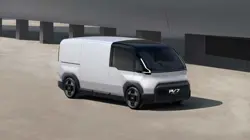
Kia Concept PV7
Latest Kia News
Recent updates from Kia
Search: "Kia"



Latest Automotive News
Stay updated with the latest happenings in the automotive world
Most Popular Cars
Based on Cars Popular on Autos