
Volkswagen Cites Rival Import Practices in $1.2 Billion India Customs Dispute
Volkswagen argues it was singled out over car-part imports. The Bombay High Court listed its challenge for judgment on 30 November 2026.
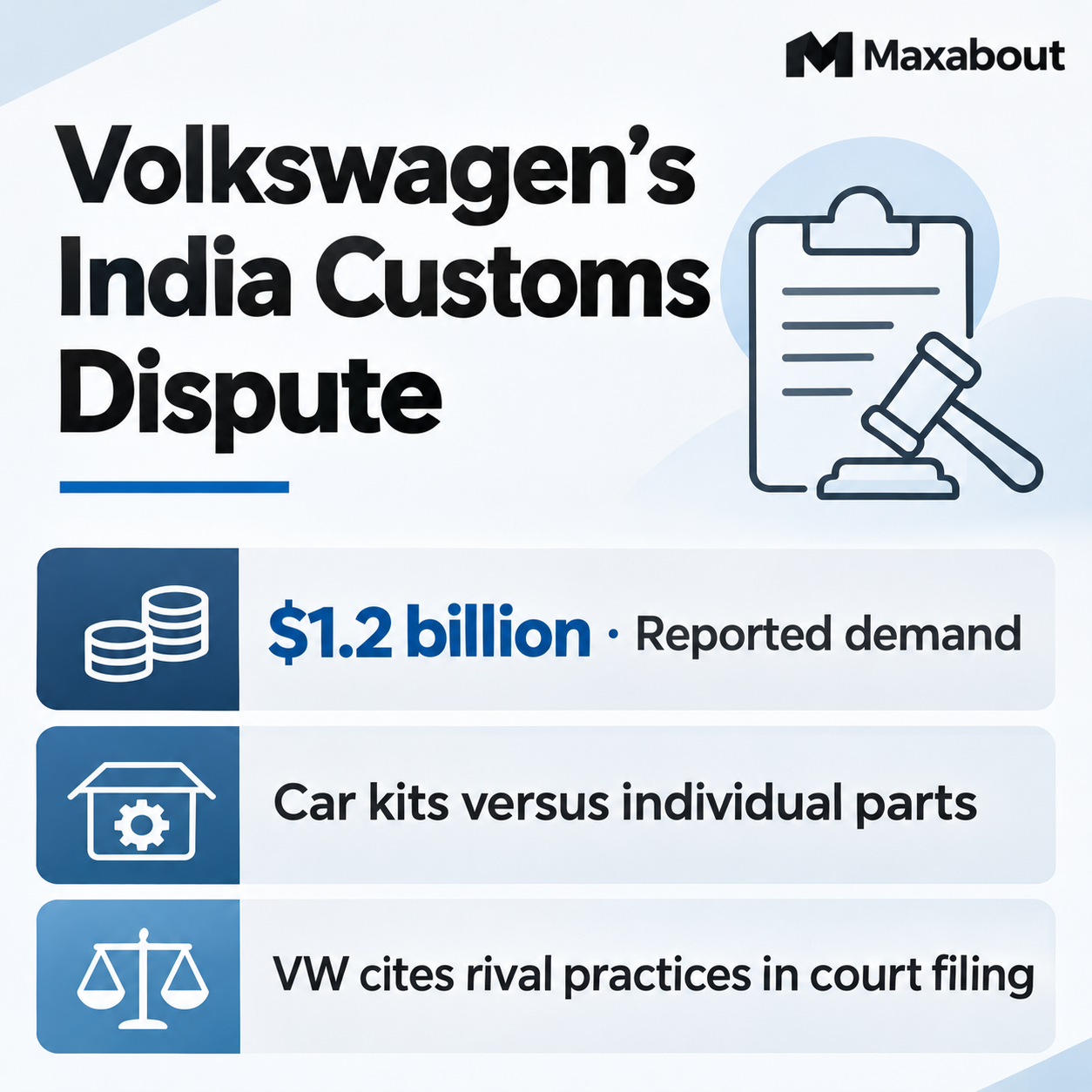
Skoda Auto Volkswagen India is fighting a reported US$1.2 billion customs demand and has argued in a Mumbai court filing that rivals import comparable car components at the same lower duty rate it used. The company wants the demand quashed. The Bombay High Court has listed the petition for pronouncement of judgment on 30 November 2026.
Why India’s customs authorities and Volkswagen disagree
The authorities contend that Volkswagen imported the components of nearly complete Audi, Skoda and Volkswagen cars in separate consignments and then assembled them in India. They argue the goods should have attracted the higher duty for car kits. Volkswagen disputes the classification and says its imports were individual components.
A completely knocked down kit is a disassembled vehicle intended for assembly. Individual parts can also arrive for assembly or other purposes. The disputed question is how to classify these shipments under the applicable rules. The reported rates of around 30% for kits and 10% for components describe positions in this dispute; they do not establish the duty on every car part or kit.
What Volkswagen’s comparison with rivals shows
In its reported 10 November submission, Volkswagen cited shipments by other companies, including Mercedes-Benz, BMW and Kia, to argue that comparable manufacturers also use the lower-duty component route. Shipment counts alone do not establish that the companies imported the same sets of parts, in the same form, for the same purpose. Kia declined to comment on the submission and said its component imports comply with applicable law.
What to look for in the judgment
Read the scope of the order when it is issued. A ruling on how far back the authorities could examine imports can answer a different question from a ruling on whether the shipments qualify as kits. The next court order will show which issues the judges actually decided.
For India’s auto industry, the issue matters because classification can change the landed cost of components and how manufacturers plan assembly. The dispute has yet to establish an effect on retail prices or a duty liability for the other companies Volkswagen cited.
Explore the story
Related news

Share your view and join the discussion.
Earn reward points for every comment and get a chance to win ₹1,000 in our weekly lucky draw. Sign in with Google in one tap.
Start the conversation
No one has commented on this article yet. Be the first to share your view.
Want to read more automotive news?
Stay updated with the latest car launches, reviews, and industry insights.
Browse All News