
Maharashtra Licence Suspension After Five Traffic Offences: How the Rule Works
Maharashtra RTOs have reportedly been told to act on repeat offences. Here is how the five-offence threshold, annual count and challan deadlines work.
Maharashtra’s regional transport offices have reportedly been directed to act on repeat traffic offences under a central rule that sets the threshold at five or more offences or contraventions in one year. Reaching that count can lead to driving licence proceedings. A Maharashtra RTO would still need to verify the case, including which offences were recorded against the licence holder.
How the five-offence count works
The amendment adds clause (25) to Rule 21(1) of the Central Motor Vehicles Rules. The first one-year period starts on 1 January 2026. Offences recorded in a previous one-year period do not carry into the next one. For example, three offences in 2026 and two in 2027 fall in separate periods.
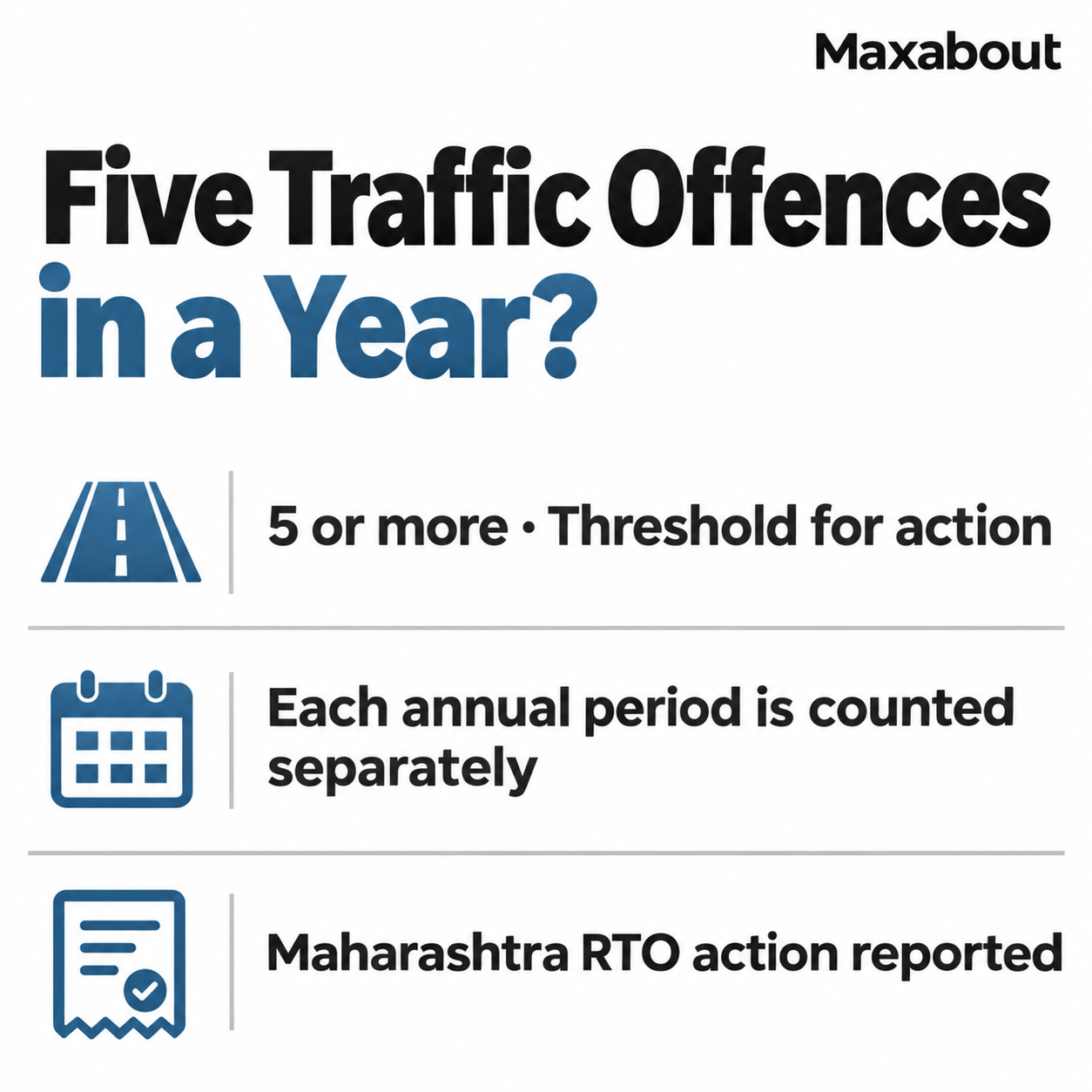
What Maharashtra RTOs have reportedly been asked to do
The reported Maharashtra direction asks RTOs to review challan records, identify drivers who meet the threshold and verify the cases before starting licence proceedings. The available evidence gives no fixed suspension length for every case.
Check whether a challan is recorded against your driving licence or your vehicle registration. A camera-generated notice can be sent to the registered vehicle owner. If someone else was driving or the notice appears to identify the wrong vehicle, check the notice and gather the documents you would need to dispute it.
What to do if a challan looks wrong
Under Rule 167, a person issued a challan has 45 days from issue to accept and pay it or contest it through the portal with documentary evidence. Keep payment receipts and any dispute acknowledgement. If a dispute is rejected, the rule allows 30 days from receipt or portal upload of the order to pay or to approach a court after depositing 50% of the amount in the prescribed manner.
Can unpaid challans hold up vehicle paperwork?
Under the central rules, a challan that remains unresolved after the applicable payment periods can hold up specified applications associated with the offender’s licence or the vehicle registration mentioned on the challan. Tax-related vehicle applications are excepted. If you are about to transfer a vehicle, check both the amount and status of any pending challan before starting the paperwork.
For the five-offence rule, start with the dates and the licence record. For an unpaid or disputed fine, use the challan notice and its own deadlines.
Explore the story
Related news




Share your view and join the discussion.
Earn reward points for every comment and get a chance to win ₹1,000 in our weekly lucky draw. Sign in with Google in one tap.
Start the conversation
No one has commented on this article yet. Be the first to share your view.
Want to read more automotive news?
Stay updated with the latest car launches, reviews, and industry insights.
Browse All News