
Tata expects EV supply catch-up in 2–3 months as bookings rise
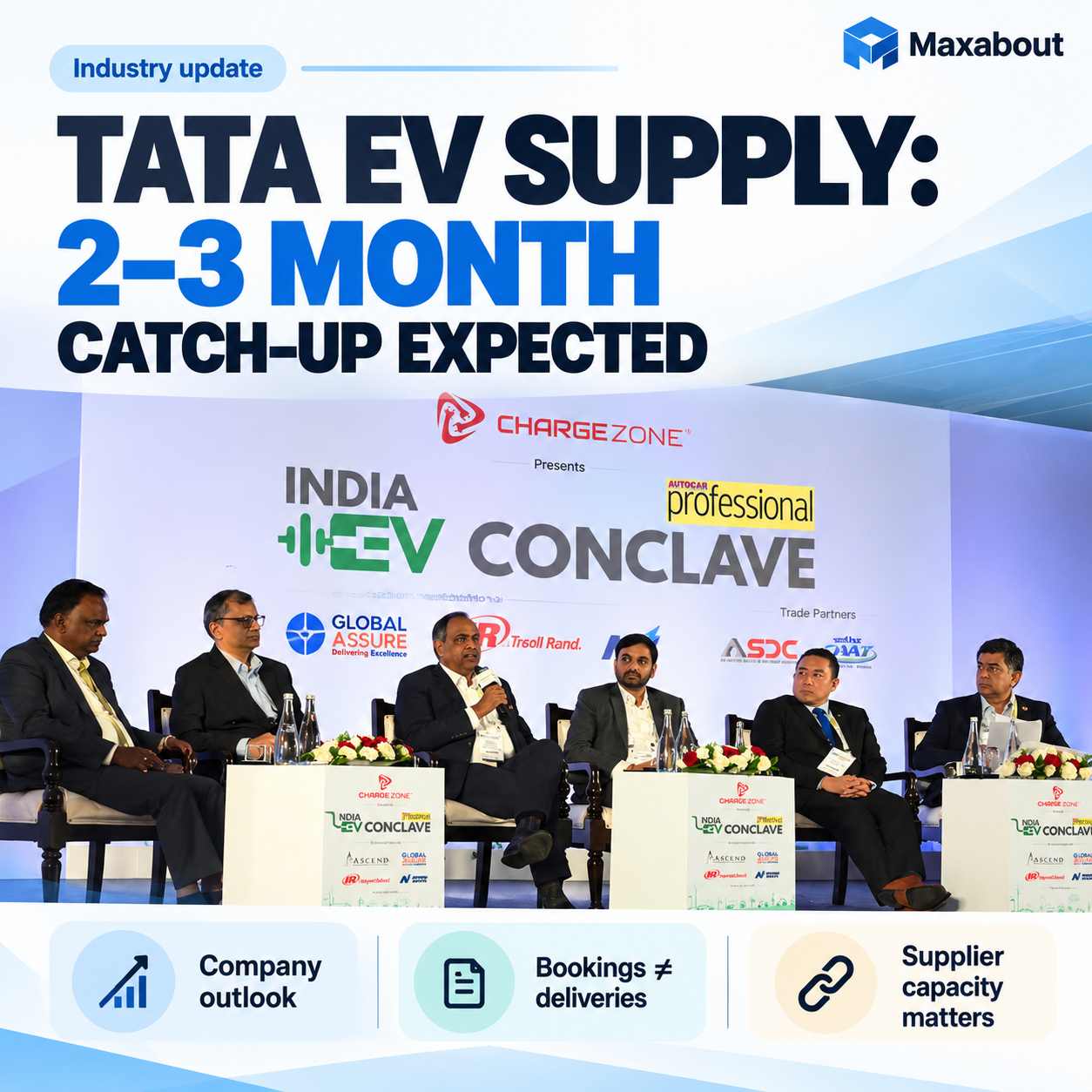
Tata EV supply is expected to catch up with demand in two to three months, according to company chief Shailesh Chandra's remarks at an industry conclave on 27 October 2026. He said EV bookings had risen threefold since February, while component suppliers needed time to expand capacity. The forecast ...
Tata EV supply is expected to catch up with demand in two to three months, according to company chief Shailesh Chandra's remarks at an industry conclave on 27 October 2026. He said EV bookings had risen threefold since February, while component suppliers needed time to expand capacity. The forecast concerns the company's supply-demand balance; it is not a delivery promise for every pending order. For buyers, the important distinction is between an order being booked, a vehicle leaving the manufacturer and a customer receiving it.
Why a booking surge does not immediately become deliveries
Vehicle assembly capacity is only one part of supply. Chandra explained that component production plans had been prepared well before the recent jump in demand. Increasing the supply of battery cells, power electronics and other critical inputs can require equipment, testing and additional manufacturing capacity.
The company can shift some capacity between internal-combustion and electric vehicles, but that flexibility does not instantly increase every supplier's output. The reported two-to-three-month outlook reflects the expectation that the wider chain will respond.
Bookings, dispatches and registrations measure different things
| Measure | What it describes | What it does not establish |
|---|---|---|
| Bookings | Orders placed with the company or retail network | Completed sales or a guaranteed delivery date |
| Dispatches | Vehicles supplied by the manufacturer to the distribution chain | The same number of customer registrations in the same month |
| Retail registrations | Vehicles registered through the retail process | Every outstanding order or future demand |
The report puts Tata's July–September 2026 electric passenger-vehicle dispatches at 47,150 units. It also cites FADA data showing electric vehicles at 8.45% of passenger-vehicle retail sales in September. These figures describe different scopes and stages, so they should not be used as interchangeable proof of booking conversion.
What the inventory comments suggest—and their limits
Chandra described EV inventory as below ten days, compared with roughly 35–40 days for internal-combustion vehicles. He used that contrast to argue that underlying EV demand was stronger than current market penetration suggested.
That remains a company assessment. Low inventory can signal pressure on supply, but it does not reveal model-wise waiting periods, order cancellations or the availability of a particular battery, colour or variant. Those details require a specific retailer or manufacturer update.
What buyers should confirm now
People comparing electric cars should treat the company-wide outlook as context and ask for information relevant to their own order.
Confirm the exact variant, colour and battery configuration on the booking record.
Ask whether a vehicle has been allocated or whether the quoted date is still an estimate.
Request written clarification on any revised delivery expectation.
Check applicable price and offer conditions before assuming they remain unchanged until delivery.
Localisation is a longer-term issue
The same discussion addressed deeper localisation of EV components. Domestic capacity can improve resilience over time, but establishing it is different from resolving the current supply imbalance. The near-term catch-up forecast should not be presented as a claim that all imported components will be replaced within three months.
FAQs
Will every Tata EV booking be delivered within three months?
The remarks do not promise that. They describe an expected improvement in overall supply. Individual allocations and delivery dates can differ.
Do tripled bookings mean Tata delivered three times as many EVs?
No. Bookings and deliveries are different measures, and an order can convert later or be cancelled.
The Tata EV supply outlook points to a capacity response following stronger bookings. Buyers should watch for model-specific allocation and delivery updates, while keeping company forecasts separate from confirmed individual order status.
Explore the story
Related news
Share your view and join the discussion.
Earn reward points for every comment and get a chance to win ₹1,000 in our weekly lucky draw. Sign in with Google in one tap.
Start the conversation
No one has commented on this article yet. Be the first to share your view.
Want to read more automotive news?
Stay updated with the latest car launches, reviews, and industry insights.
Browse All News