
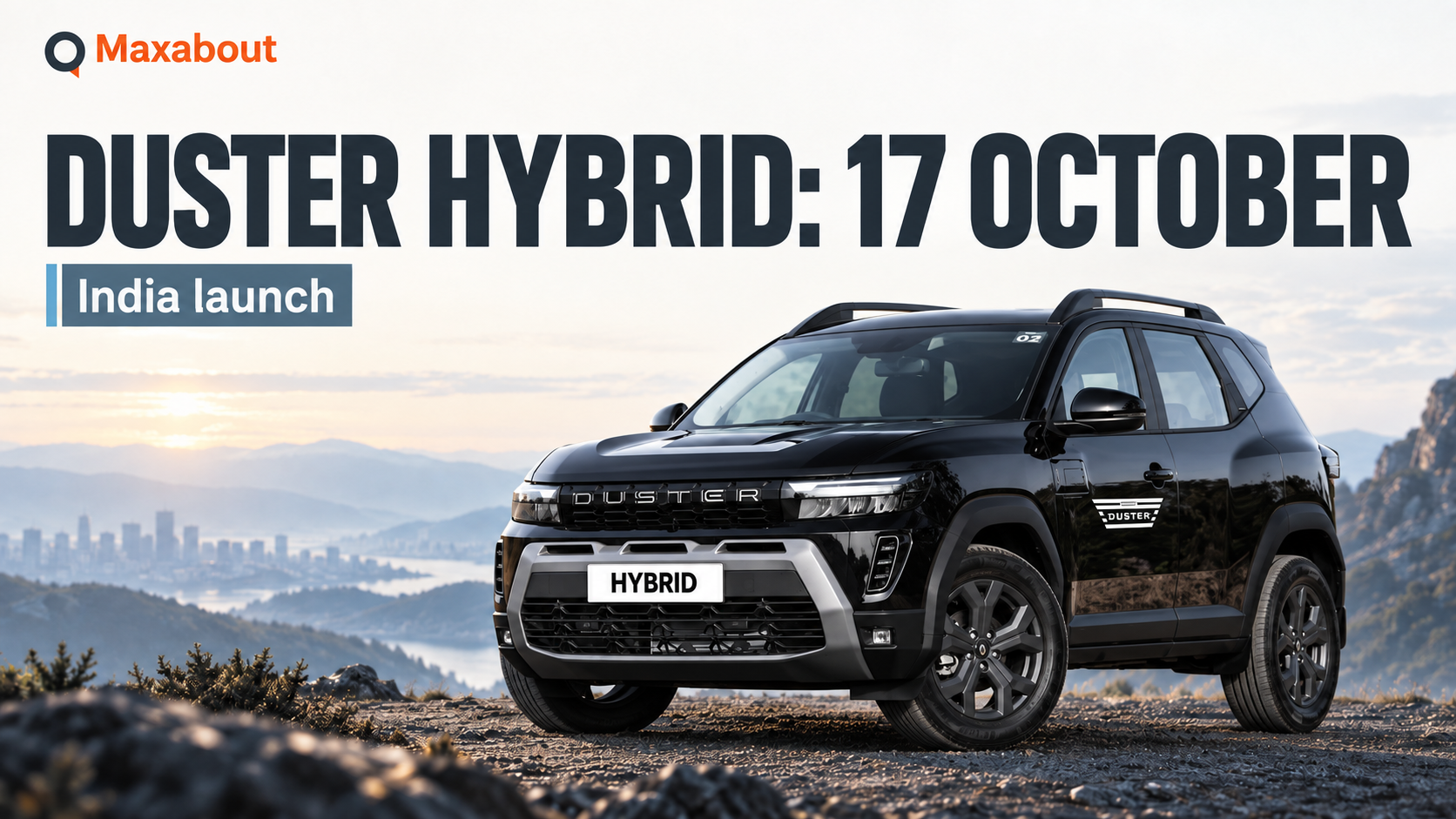
Renault Duster Hybrid launched from ₹16.99 lakh: 160 PS, 29 kmpl claim explained
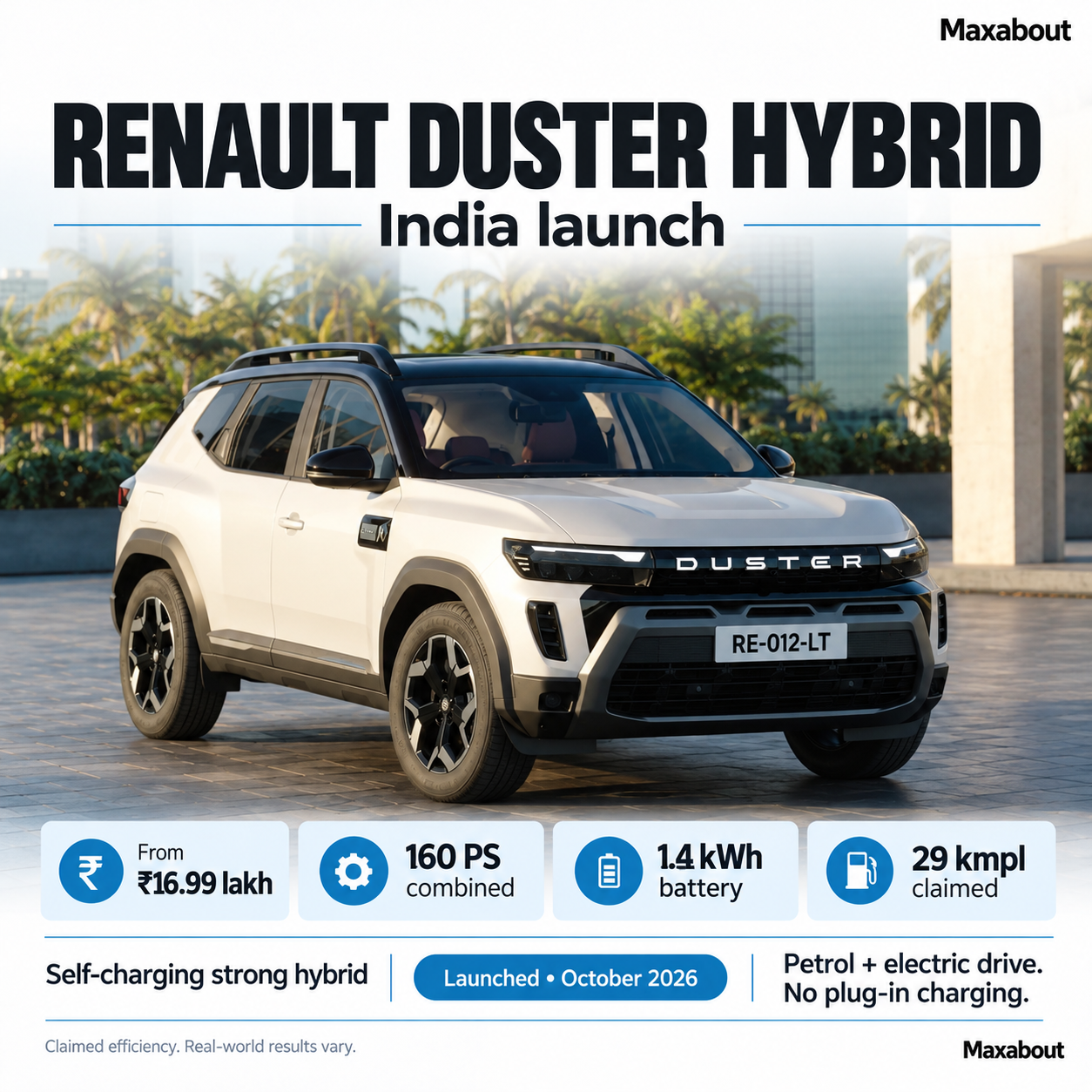
The Renault Duster Strong Hybrid E-Tech 160 is now listed in India from ₹16.99 lakh, giving midsize-SUV shoppers another way to combine petrol power with electric assistance. Its headline figures are 160 PS of combined output, a 1.4 kWh self-charging battery and claimed fuel efficiency of 29 kmpl. T...
The Renault Duster Strong Hybrid E-Tech 160 is now listed in India from ₹16.99 lakh, giving midsize-SUV shoppers another way to combine petrol power with electric assistance. Its headline figures are 160 PS of combined output, a 1.4 kWh self-charging battery and claimed fuel efficiency of 29 kmpl. The useful distinction for buyers is how those numbers fit together: this is a strong hybrid that manages its battery while driving, rather than an electric SUV that needs routine plug-in charging.
What you need to know
Starting price: ₹16.99 lakh is the advertised entry point; obtain a variant-specific on-road quote before comparing offers.
Powertrain: A 1.8-litre petrol engine works with two electric motors for 160 PS combined output.
Battery: The 1.4 kWh pack supports the hybrid system and does not make this a long-range battery-electric SUV.
Efficiency: 29 kmpl is a claimed figure, not a promise for every commute.
Renault Duster hybrid: the key numbers
| Detail | Advertised specification |
|---|---|
| Powertrain name | Strong Hybrid E-Tech 160 |
| Starting price | ₹16.99 lakh |
| Petrol engine | 1.8 litres |
| Electric motors | Two |
| Combined output | 160 PS |
| Hybrid battery | 1.4 kWh |
| Claimed fuel efficiency | 29 kmpl |
These figures describe the hybrid system as a whole. The 160 PS number is combined output; it should not be treated as the petrol engine's standalone power figure. Likewise, the battery capacity should be understood in the context of a hybrid that frequently charges and uses energy, rather than compared directly with the much larger pack in a battery-electric car.
What self-charging means for everyday driving
The Duster combines its petrol engine and electric drive within one powertrain. Buyers get electric assistance without arranging the regular external charging routine associated with a plug-in vehicle. Petrol remains part of the ownership equation, so the car should not be described as a zero-fuel alternative.
For someone choosing between a conventional petrol SUV, a strong hybrid and an electric SUV, that difference matters as much as the peak output. The right choice depends on driving pattern, access to charging, purchase price and the ownership costs in the actual quote. The hybrid's headline economy alone cannot settle that decision.
How to read the 29 kmpl claim
29 kmpl is the advertised fuel-efficiency claim. It provides a reference point, but traffic conditions, journey length, load, air-conditioning use and driving style can affect a buyer's actual result. A short test drive also cannot establish a reliable long-term average.
Compare vehicles using equivalent published test figures, then consider independent longer-distance testing when it becomes available. Avoid calculating guaranteed monthly savings from the headline figure alone. A useful ownership comparison needs the final price difference, expected annual distance, fuel price and a realistic efficiency estimate for both vehicles.
What Indian buyers should check before booking
Exact variant: Confirm which equipment is included in the quoted hybrid trim. Features shown in model imagery are not automatically standard on the entry version.
Full price: Separate the vehicle price from registration, insurance, accessories and optional ownership packages.
Warranty: Ask for the written terms covering the hybrid battery and associated components, including exclusions.
Delivery: Get the dealer's current allocation and delivery estimate rather than assuming a date from the launch.
Test drive: Assess low-speed response, braking feel, cabin space and the engine's behaviour on the routes you actually use.
The advertised entry price is useful for shortlisting. A signed quotation and the correct variant specification are more useful for the final purchase decision. This launch summary does not treat unverified trim prices, booking amounts or delivery dates as confirmed facts.
FAQs
What is the Renault Duster hybrid starting price in India?
The advertised starting price is ₹16.99 lakh. The amount payable on the road depends on the chosen variant, location and the final quotation.
Does the Duster Strong Hybrid need plug-in charging?
No routine plug-in charging is required for its self-charging hybrid system. It combines a petrol engine with electric motors and a 1.4 kWh battery.
Will every owner get 29 kmpl?
No. The 29 kmpl figure is a claim used to describe fuel efficiency; actual results depend on operating conditions and driving pattern.
The Renault Duster hybrid brings a clear entry-price and efficiency proposition to India's midsize-SUV market. Its practical appeal should be judged through the exact trim, written ownership terms and a representative test drive, with the claimed figures used as a starting point for comparison.
Explore the story
Related news

Share your view and join the discussion.
Earn reward points for every comment and get a chance to win ₹1,000 in our weekly lucky draw. Sign in with Google in one tap.
Start the conversation
No one has commented on this article yet. Be the first to share your view.
Want to read more automotive news?
Stay updated with the latest car launches, reviews, and industry insights.
Browse All News