
Hyundai Venue vs Kia Syros 2025: Feature-Packed Top Trims Compared
IntroductionThe compact SUV segment in India has become increasingly competitive, with numerous options vying for attention. Two standouts in this category are the Hyundai Venue and Kia Sonet - both offering impressive features, modern styling, and competitive pricing. As someone who's been followin...
Introduction
The compact SUV segment in India has become increasingly competitive, with numerous options vying for attention. Two standouts in this category are the Hyundai Venue and Kia Sonet - both offering impressive features, modern styling, and competitive pricing. As someone who's been following the automotive industry closely, I've noticed these two models frequently appear on potential buyers' shortlists.
In this comparison, I'll focus specifically on the top-trim variants of both models to see which one offers better value for money. The Hyundai Venue's top variant is the SX(O), while Kia's range-topping Sonet comes in the GTX+ trim. Let's dive into what makes each of these compact SUVs tick and which might be the better choice for your specific needs.
Exterior Design and Dimensions
When parked side by side, both the Hyundai Venue and Kia Sonet showcase distinct design philosophies despite sharing the same parent company.
Hyundai Venue Design Elements
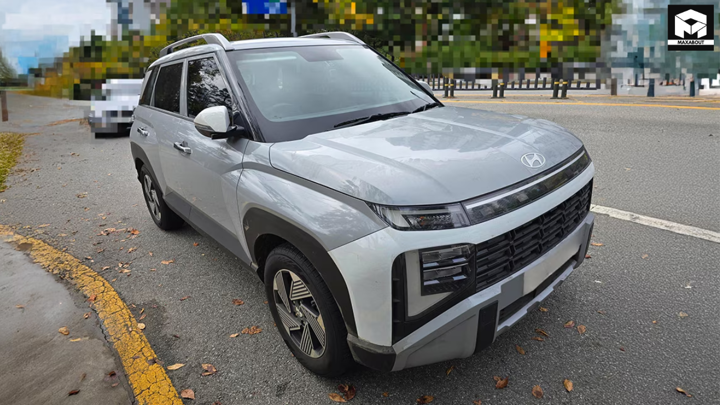
The Venue features Hyundai's sensuous sportiness design language with a bold front fascia. Its top trim comes with:
- Split LED headlamps with LED DRLs
- 16-inch diamond-cut alloy wheels
- Chrome front grille with dark chrome accents
- Roof rails and shark fin antenna
- LED tail lamps
The overall design is more squarish and upright, giving it a traditional SUV stance despite its compact dimensions.
Kia Sonet Design Elements
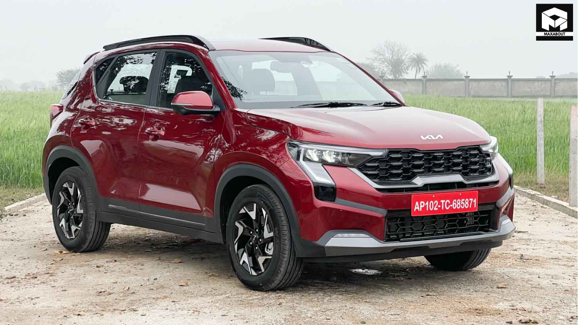
The Sonet, on the other hand, showcases Kia's dynamic design language featuring:
- Signature tiger-nose grille with red accents (in GT Line)
- Crown jewel LED headlamps with heartbeat LED DRLs
- 16-inch crystal-cut alloy wheels with red caliper (GT Line)
- Heartbeat LED tail lamps
- Dual-tone roof option
The Sonet has a more aggressive and sporty appearance, especially in its GT Line trim.
Dimensional Comparison
Both vehicles have similar footprints, being compact SUVs designed for urban environments:
| Dimension | Hyundai Venue | Kia Sonet |
|---|---|---|
| Length | 3,995 mm | 3,995 mm |
| Width | 1,770 mm | 1,790 mm |
| Height | 1,605 mm | 1,610 mm |
| Wheelbase | 2,500 mm | 2,500 mm |
| Ground Clearance | 195 mm | 211 mm |
While the overall dimensions are comparable, the Sonet is slightly wider and taller, with a marginally better ground clearance, which could be advantageous on rough roads.
Engine Options and Performance
Both SUVs come with multiple powertrain options, but I'll focus on what's available in their top-spec variants.
Hyundai Venue Powertrain
The top-trim Hyundai Venue SX(O) offers three engine options:
- 1.0L Turbo GDi Petrol: 120 PS power, 172 Nm torque, 7-speed DCT or 6-speed iMT
- 1.2L MPi Petrol: 83 PS power, 114 Nm torque, 5-speed manual
- 1.5L CRDi Diesel: 100 PS power, 240 Nm torque, 6-speed manual
Kia Sonet Powertrain
The Kia Sonet GTX+ trim comes with:
- 1.0L Turbo GDi Petrol: 120 PS power, 172 Nm torque, 7-speed DCT or 6-speed iMT
- 1.5L CRDi Diesel: 115 PS power, 250 Nm torque, 6-speed manual or 6-speed automatic
The Sonet's diesel engine produces 15 PS more power and 10 Nm more torque than the Venue's diesel unit. Additionally, the Sonet offers a diesel-automatic combination, which is not available in the Venue.
Driving Experience
Based on industry reviews and driving impressions reported by automotive journalists, both cars offer refined driving experiences. The 1.0L turbo-petrol engines are identical in output, delivering peppy performance and good urban drivability. The Sonet's more powerful diesel and the availability of a diesel-automatic combination gives it a slight edge for those who prefer diesel power.
The DCT gearbox in both vehicles has been reported to offer smooth shifts, though some reviewers have noted occasional hesitation during quick accelerations. The iMT (intelligent Manual Transmission) available in both cars provides a clutchless manual shifting experience that has been generally well-received for combining the control of a manual with the convenience of not having to operate a clutch pedal.
Interior Features and Technology
This is where the real differences start to emerge between these two closely matched competitors.
Hyundai Venue Interior Highlights
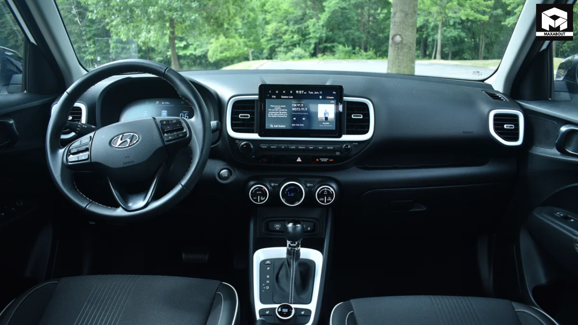
The Venue SX(O) comes equipped with:
- 8-inch touchscreen infotainment system with wireless Apple CarPlay and Android Auto
- Digital driver display
- Wireless phone charger
- Air purifier
- Single-pane sunroof
- Automatic climate control
- Cooled glove box
- Leatherette upholstery
- 60:40 split rear seats
- BlueLink connected car technology
Kia Sonet Interior Highlights
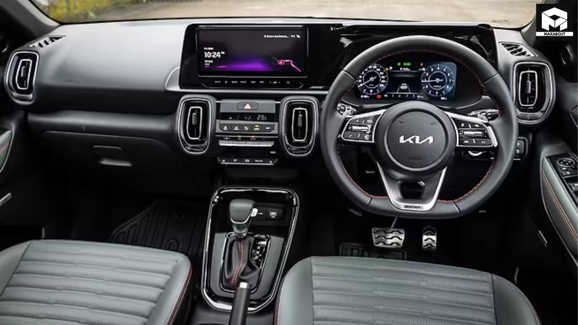
The Sonet GTX+ offers:
- 10.25-inch HD touchscreen infotainment system with Apple CarPlay and Android Auto
- 4.2-inch digital instrument cluster
- Wireless phone charger with cooling function
- Bose premium 7-speaker sound system with LED sound mood lighting
- Air purifier with virus protection
- Single-pane sunroof
- Ventilated front seats
- Smart key with push-button start and remote engine start
- UVO connected car technology with 57+ features
- Multi-drive and traction modes (in automatic variants)
The Sonet clearly offers more premium features in its top trim, with the larger touchscreen, premium sound system, ventilated seats, and more comprehensive connected car features giving it an edge in terms of technology and comfort.
Safety Features
Safety is increasingly becoming a priority for buyers, and both manufacturers have equipped their top variants with various safety features.
Hyundai Venue Safety Package
- 6 airbags
- Electronic Stability Control (ESC)
- Vehicle Stability Management (VSM)
- Hill Assist Control (HAC)
- ISOFIX child seat mounts
- Tire Pressure Monitoring System (TPMS)
- Rear parking sensors with camera
- Emergency Stop Signal
Kia Sonet Safety Package
- 6 airbags
- Electronic Stability Control (ESC)
- Vehicle Stability Management (VSM)
- Hill Assist Control (HAC)
- ISOFIX child seat mounts
- Tire Pressure Monitoring System (TPMS)
- All-wheel disc brakes
- Front parking sensors
- Rear parking sensors with camera
- Brake Assist
The Sonet edges ahead with all-wheel disc brakes and front parking sensors, which are not available on the Venue. Both vehicles offer comprehensive safety packages, but Kia's offering is slightly more extensive.
Pricing and Value Proposition
When it comes to pricing, both vehicles are positioned as premium compact SUVs with their top variants commanding a significant premium over base models.
The Hyundai Venue SX(O) trim is typically priced slightly lower than the Kia Sonet GTX+. However, considering the additional features offered in the Sonet's top trim - like ventilated seats, larger touchscreen, premium sound system, and all-wheel disc brakes - the price difference seems justified.
For buyers prioritizing value for money with decent features, the Venue might make more sense. However, if you're looking for a more premium experience with all the bells and whistles, the Sonet's top trim offers more features that enhance comfort and convenience.
Frequently Asked Questions
Which has better fuel efficiency - Hyundai Venue or Kia Sonet?
Both vehicles offer similar fuel efficiency figures when comparing the same engine types. The 1.0L turbo-petrol versions deliver approximately 18-19 km/l (as per ARAI), while the diesel variants offer around 22-23 km/l. Real-world efficiency typically varies based on driving conditions.
Do both vehicles offer a sunroof in their top trim?
Yes, both the Hyundai Venue SX(O) and Kia Sonet GTX+ come equipped with a single-pane sunroof.
Which has a better warranty package?
Kia offers a standard 3-year/unlimited kilometer warranty on the Sonet, which can be extended. Hyundai provides a 3-year/100,000 km warranty for the Venue, also with extension options. Both manufacturers have good service networks across the country.
Are there any exclusive features in either vehicle?
The Sonet GTX+ offers ventilated front seats, Bose premium sound system, and drive/traction modes that aren't available in the Venue. The Venue offers similar core features but lacks some of these premium additions.
Conclusion
After comparing these two compact SUVs in detail, it's clear that both offer compelling packages with their own strengths. The Hyundai Venue provides a well-rounded experience with good features at a slightly lower price point. It's a sensible choice that covers all the basics well.
The Kia Sonet, particularly in its top GTX+ trim, pushes the envelope further by offering features typically found in larger, more expensive SUVs. With its ventilated seats, premium sound system, larger touchscreen, and comprehensive safety package, it delivers a more upscale experience.
For buyers who want the most feature-loaded compact SUV and don't mind paying the premium, the Sonet GTX+ is hard to beat. However, if you're looking for a balance between features and price, the Venue SX(O) represents good value.
Ultimately, your choice should depend on which features matter most to you and your budget considerations. I recommend taking both for a test drive to experience their driving dynamics firsthand before making your decision.
Explore the story
Related news




Share your view and join the discussion.
Earn reward points for every comment and get a chance to win ₹1,000 in our weekly lucky draw. Sign in with Google in one tap.
Start the conversation
No one has commented on this article yet. Be the first to share your view.
Want to read more automotive news?
Stay updated with the latest car launches, reviews, and industry insights.
Browse All News