
Hero Warns Two-Wheeler CAFE Norms Could Raise Prices: Impact on Bikes & Scooters Explained
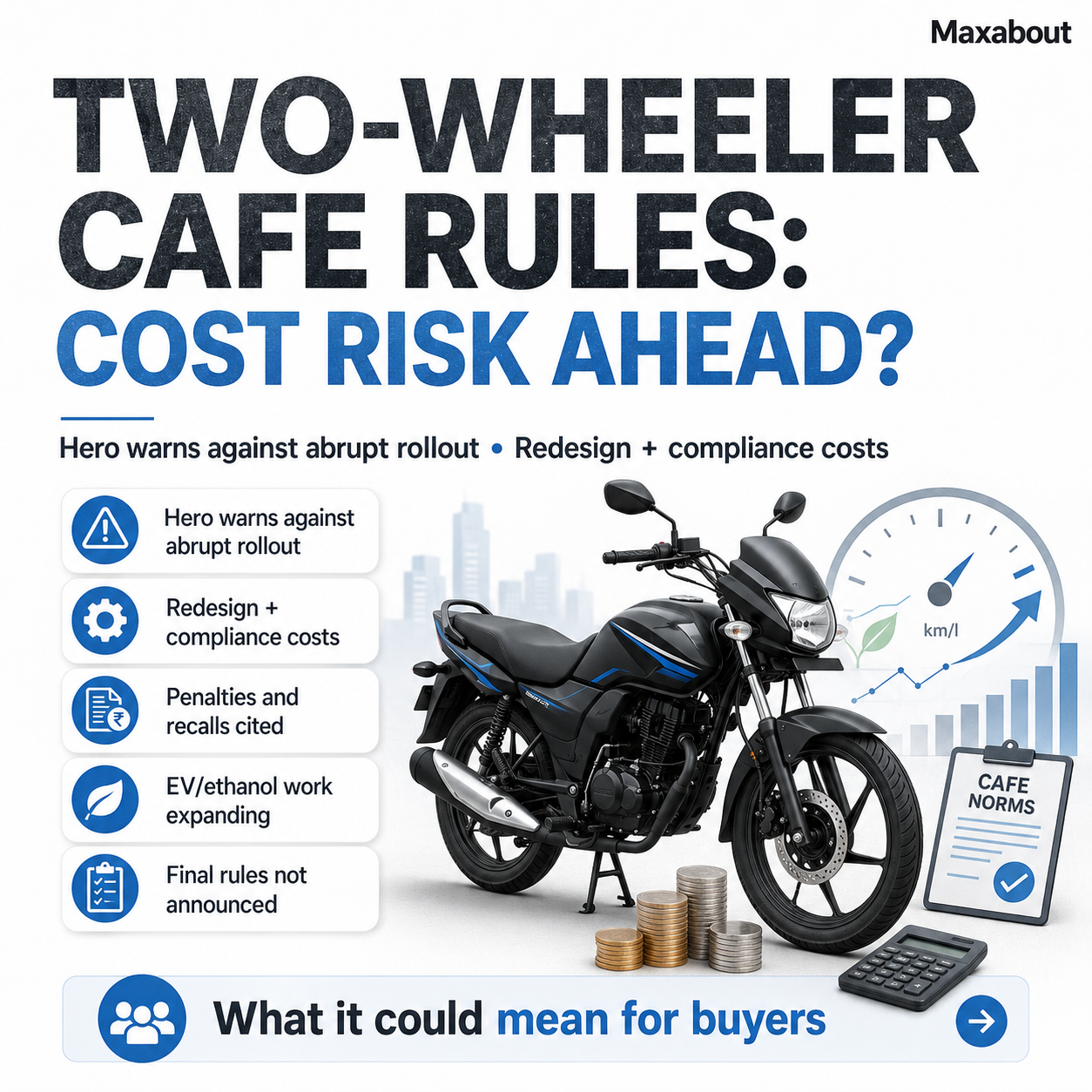
Hero MotoCorp has identified the proposed extension of Corporate Average Fuel Economy (CAFE) rules to two-wheelers as a business risk if implementation is abrupt. The company says a short preparation window could force hurried redesigns, raise compliance costs and pressure profitability in India’s p...
Editorial Team
Hero MotoCorp has identified the proposed extension of Corporate Average Fuel Economy (CAFE) rules to two-wheelers as a business risk if implementation is abrupt. The company says a short preparation window could force hurried redesigns, raise compliance costs and pressure profitability in India’s price-sensitive motorcycle market. The final regulation, implementation date and per-bike cost impact have not been announced, so this is a risk warning—not confirmation of an immediate price increase.
What you need to know
Policy status: Two-wheeler CAFE expansion is expected/proposed; final rules are not cited.
Hero’s concern: An abrupt rollout could increase costs and disrupt product development.
Compliance risks: Penalties, recalls and reputational damage are among the risks listed.
Preparation: Hero says it is improving engines, reducing weight and expanding EV and higher-ethanol powertrains.
Buyer impact: No quantified per-bike price effect is available.
What CAFE rules would do
CAFE standards set fleet-wide efficiency or emissions targets rather than judging only one model. For a two-wheeler manufacturer, compliance could depend on the mix of commuter motorcycles, premium bikes, scooters, electric vehicles and alternative-fuel products it sells. The mechanism can encourage more efficient technology, but targets and lead time determine how quickly engineering and manufacturing plans must change.
Why rollout timing matters
Motorcycles are highly price-sensitive in India, especially in commuter categories. If companies must redesign engines or platforms quickly, development and component costs may rise before economies of scale are available. Hero argues that passing all additional cost to customers could be difficult, while incomplete compliance could create penalties or recall risk.
| Issue | Current position |
|---|---|
| Final two-wheeler CAFE text | Not available in the cited report |
| Implementation date | Not announced |
| Hero’s stated risks | Redesign cost, penalties, recalls and profitability pressure |
| Mitigation work | Engine upgrades, lightweight materials, EVs and higher-ethanol powertrains |
| Policy engagement | Hero says it is working through SIAM for realistic targets |
| Per-bike price impact | Not quantified |
What it could mean for buyers
Well-designed efficiency standards can reduce fuel use and ownership costs over time, but rushed implementation could also affect prices, model cycles or feature decisions. Buyers should not assume that every motorcycle will immediately become more expensive. The practical outcome will depend on the final targets, calculation method, phase-in period, incentives and each manufacturer’s fleet mix.
What to watch next
Publication of draft or final two-wheeler CAFE rules.
Lead time given to manufacturers.
Whether targets vary by category or engine class.
How electric and flex-fuel models are counted.
Official manufacturer estimates of cost and efficiency benefits.
FAQs
Are CAFE rules already final for Indian two-wheelers?
The cited update discusses an expected expansion and Hero’s risk assessment. It does not provide final rule text or an implementation date.
Will bike prices rise because of CAFE?
No quantified impact is available. Costs could rise if rapid redesign is required, but the final effect depends on the policy design and lead time.
How is Hero preparing?
Hero says it is upgrading engines, using lightweight materials, expanding electric and higher-ethanol powertrains, and engaging policymakers through SIAM.
The debate around two-wheeler CAFE rules India is therefore about balancing long-term efficiency gains with realistic engineering timelines and affordability. Buyers should watch the final regulation rather than treating today’s risk warning as a confirmed price announcement.
Explore the story
Related news

Share your view and join the discussion.
Earn reward points for every comment and get a chance to win ₹1,000 in our weekly lucky draw. Sign in with Google in one tap.
Start the conversation
No one has commented on this article yet. Be the first to share your view.
Want to read more automotive news?
Stay updated with the latest car launches, reviews, and industry insights.
Browse All News