
EMO Energy and e-Sprinto Plan 8,000 Electric Scooters for Delivery Fleets
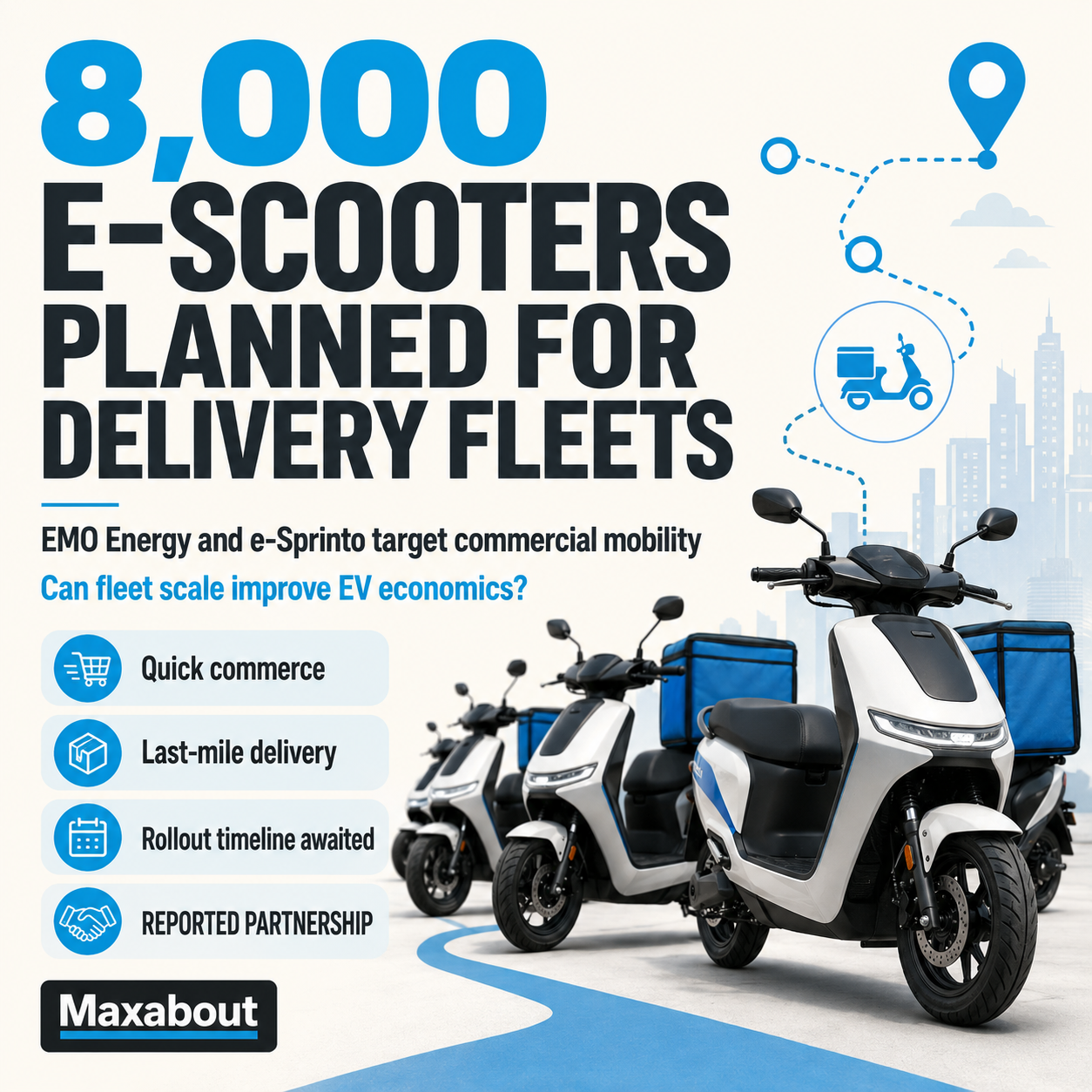
EMO Energy and e-Sprinto reportedly plan to deploy 8,000 electric scooters for commercial mobility in India. The partnership is aimed at quick-commerce and last-mile delivery fleets, where daily utilisation, charging uptime and total operating cost matter more than consumer-style headline features.W...
Editorial Team
EMO Energy and e-Sprinto reportedly plan to deploy 8,000 electric scooters for commercial mobility in India. The partnership is aimed at quick-commerce and last-mile delivery fleets, where daily utilisation, charging uptime and total operating cost matter more than consumer-style headline features.
What has been announced
ETAuto reports that the two companies intend to place 8,000 electric scooters into commercial operations. e-Sprinto brings vehicle and fleet-management capabilities, while EMO Energy focuses on battery and energy technology. The detailed rollout calendar, city list and customer allocation were not confirmed in the material reviewed.
The 8,000-unit number is therefore best treated as a planned deployment target rather than completed deliveries. Progress should be measured through verified fleet handovers, operating cities and utilisation data.
Why delivery fleets are a strong EV use case
Quick-commerce and last-mile vehicles often cover predictable urban routes and accumulate high daily kilometres. Electricity can reduce energy cost per kilometre, while centralised fleet management makes scheduled charging and maintenance easier than in a scattered private-owner network.
High utilisation also exposes weaknesses quickly. Range loss, charging delays, tyre wear, battery overheating or service downtime can erase the theoretical savings. Successful fleet electrification depends on reliable operations, not simply the purchase price.
Battery and charging questions
EMO Energy’s role suggests that battery performance and charging operations will be central to the programme. The companies will need to show how packs are monitored, charged and serviced under intensive commercial use.
Important metrics include usable range with cargo, charge time, battery cycle life, thermal performance, warranty coverage and the percentage of vehicles available for work each day. Without those figures, it is too early to calculate the project’s operating economics.
Fleet-management requirements
e-Sprinto promotes EV fleet-management solutions. For delivery operators, useful software should cover vehicle location, state of charge, route allocation, rider behaviour, maintenance alerts and downtime reporting.
Data quality and integration will matter. A dashboard is valuable only if dispatch teams can use it to assign vehicles, avoid depleted batteries and schedule preventive maintenance. The partnership should also disclose how rider privacy and operational data are handled.
Can scale improve EV economics?
An 8,000-scooter programme could improve purchasing leverage, spare-parts planning and service density. Larger fleets can standardise training and accumulate enough data to refine routes and charging schedules.
Scale also concentrates risk. A common component failure or software problem can affect many vehicles at once. Phased deployment with measurable performance gates is safer than treating the full target as a single rollout.
What remains unconfirmed
The deployment start date and completion timeline.
Cities, fleet customers and vehicle allocation.
Exact scooter models and battery specifications.
Charging or swapping infrastructure.
Commercial terms and ownership model.
Verified real-world range, uptime and cost savings.
Metrics worth watching
The strongest evidence will come after vehicles enter service. Operators should report average kilometres per vehicle per day, energy cost per kilometre, charging downtime, maintenance cost, rider satisfaction and battery health over time.
Those numbers would make the partnership relevant beyond its headline scale. They could show whether electric scooters can sustain the rapid delivery cycles demanded by India’s quick-commerce market.
Bottom line
The reported EMO Energy and e-Sprinto partnership targets a meaningful 8,000-scooter commercial fleet. It addresses a segment where predictable routes and high utilisation can make electrification financially attractive.
For now, the rollout schedule and operational specifications remain awaited. The programme’s success will be judged by verified deployments, vehicle uptime and lower total cost—not the target number alone.
Explore the story
Related news

Share your view and join the discussion.
Earn reward points for every comment and get a chance to win ₹1,000 in our weekly lucky draw. Sign in with Google in one tap.
Start the conversation
No one has commented on this article yet. Be the first to share your view.
Want to read more automotive news?
Stay updated with the latest car launches, reviews, and industry insights.
Browse All News