
E20 Fuel Does Not Automatically Void Motor Insurance: Key Clarification
E20 fuel insurance coverage has become a practical concern for Indian car and bike owners, but the latest clarification says E20 petrol use should not automatically void motor insurance. The key point is simple: fuel type alone is not the deciding basis for claim rejection, while claims still depend...
Editorial Team
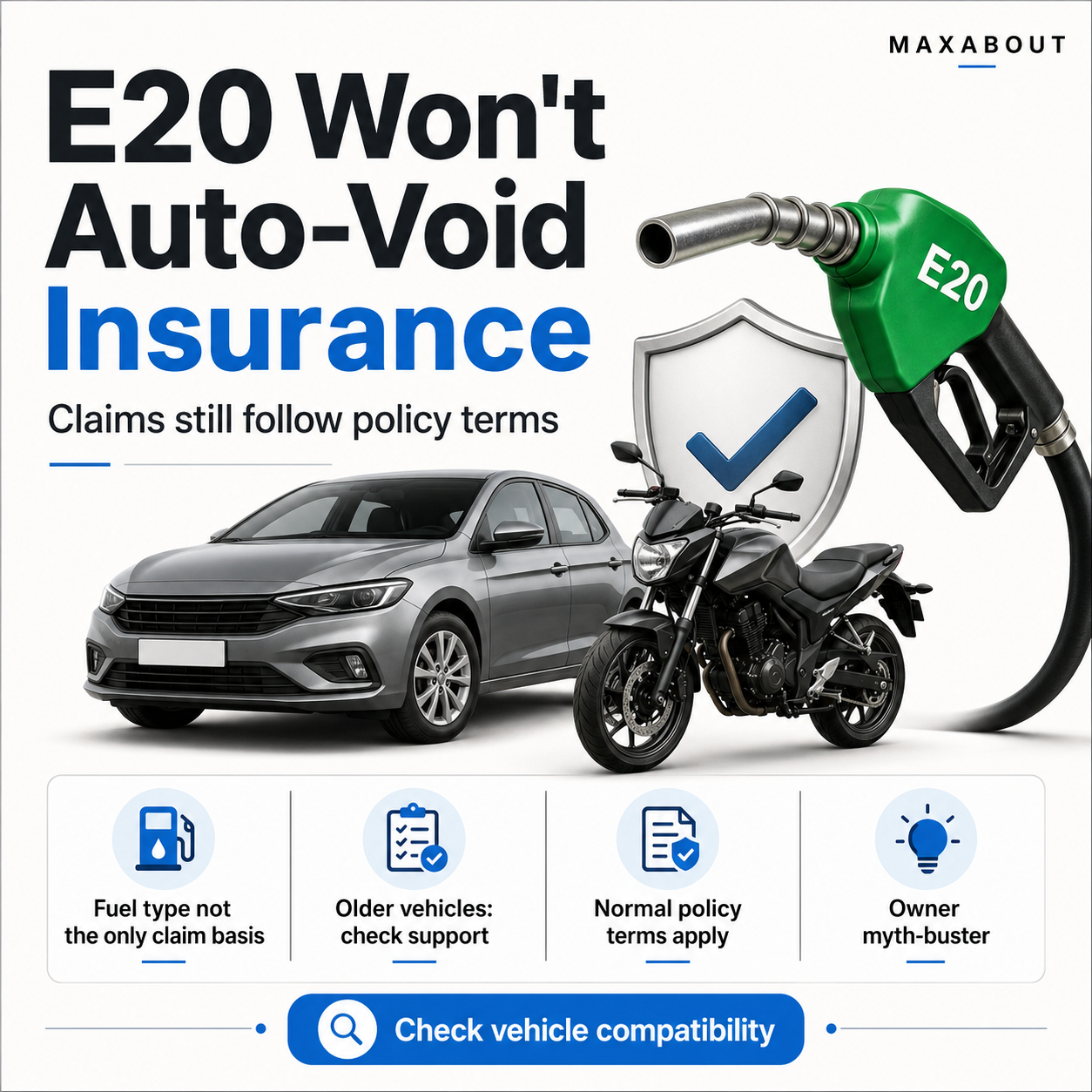
E20 fuel insurance coverage has become a practical concern for Indian car and bike owners, but the latest clarification says E20 petrol use should not automatically void motor insurance. The key point is simple: fuel type alone is not the deciding basis for claim rejection, while claims still depend on the insured event, policy terms, and the condition of the vehicle.
What you need to know
E20 fuel use does not by itself make a motor insurance policy invalid.
Fuel type is not the only basis for deciding claim admissibility.
Claims still depend on normal policy terms and insured events.
Older-vehicle compatibility and gradual wear are separate practical concerns.
Owners should check whether their car or bike is officially E20-compatible.
What the clarification means
The clarification is important because online discussions around E20 petrol have created confusion about insurance claims. For owners, the useful distinction is between insurance coverage and vehicle compatibility. A vehicle using E20 fuel is not automatically treated as negligent use just because it is older, but any claim still has to satisfy the policy's normal conditions.
Insurance claim vs vehicle compatibility
| Question | Practical answer |
|---|---|
| Does E20 use automatically void insurance? | No, fuel type alone should not be treated as the deciding factor. |
| Can a claim still be rejected? | Yes, if it fails normal policy terms or does not relate to an insured event. |
| Should older-vehicle owners worry? | They should check E20 compatibility and maintenance guidance, but that is separate from automatic insurance invalidation. |
| What should owners keep handy? | Policy document, service records, manufacturer guidance, and repair diagnosis if a claim arises. |
What owners should do now
Check the owner's manual or manufacturer communication for E20 compatibility.
Ask the service centre if your model year has any fuel-system guidance.
Keep regular service records, especially for older cars and bikes.
Read policy exclusions instead of relying on social-media claims.
If a dispute arises, ask the insurer for the exact written reason for claim rejection.
Why this matters for India
As E20 petrol becomes more common, many owners will use it simply because it is what is available at fuel pumps. A clear insurance clarification reduces panic, but it does not remove the need for compatibility awareness. The best approach is balanced: do not assume insurance is void, and do not ignore your vehicle's fuel-system requirements.
FAQs
Does E20 petrol automatically void car insurance?
No. The clarification says E20 use by itself should not automatically affect coverage or be treated as negligence.
Can bike insurance claims be rejected because of E20 fuel?
Fuel type alone should not be the deciding factor, but claims still depend on policy terms, insured events, and the facts of the case.
Should older vehicles avoid E20 fuel?
Owners of older vehicles should check manufacturer guidance and service-centre advice because compatibility and gradual wear are separate from insurance validity.
What should I do if an insurer questions fuel use?
Ask for the exact written basis of the claim decision, keep service records, and compare the reason with your policy wording and vehicle compatibility guidance.
The E20 fuel insurance coverage clarification should calm one major fear: E20 use does not automatically void motor insurance. The smarter owner response is to understand policy terms, check vehicle compatibility, and maintain clear service records.
Explore the story
Related news


Share your view and join the discussion.
Earn reward points for every comment and get a chance to win ₹1,000 in our weekly lucky draw. Sign in with Google in one tap.
Start the conversation
No one has commented on this article yet. Be the first to share your view.
Want to read more automotive news?
Stay updated with the latest car launches, reviews, and industry insights.
Browse All News