
Delhi-NCR ICE Vehicle Exit Proposal: What the 2030, 2031, 2035 and 2040 Dates Mean
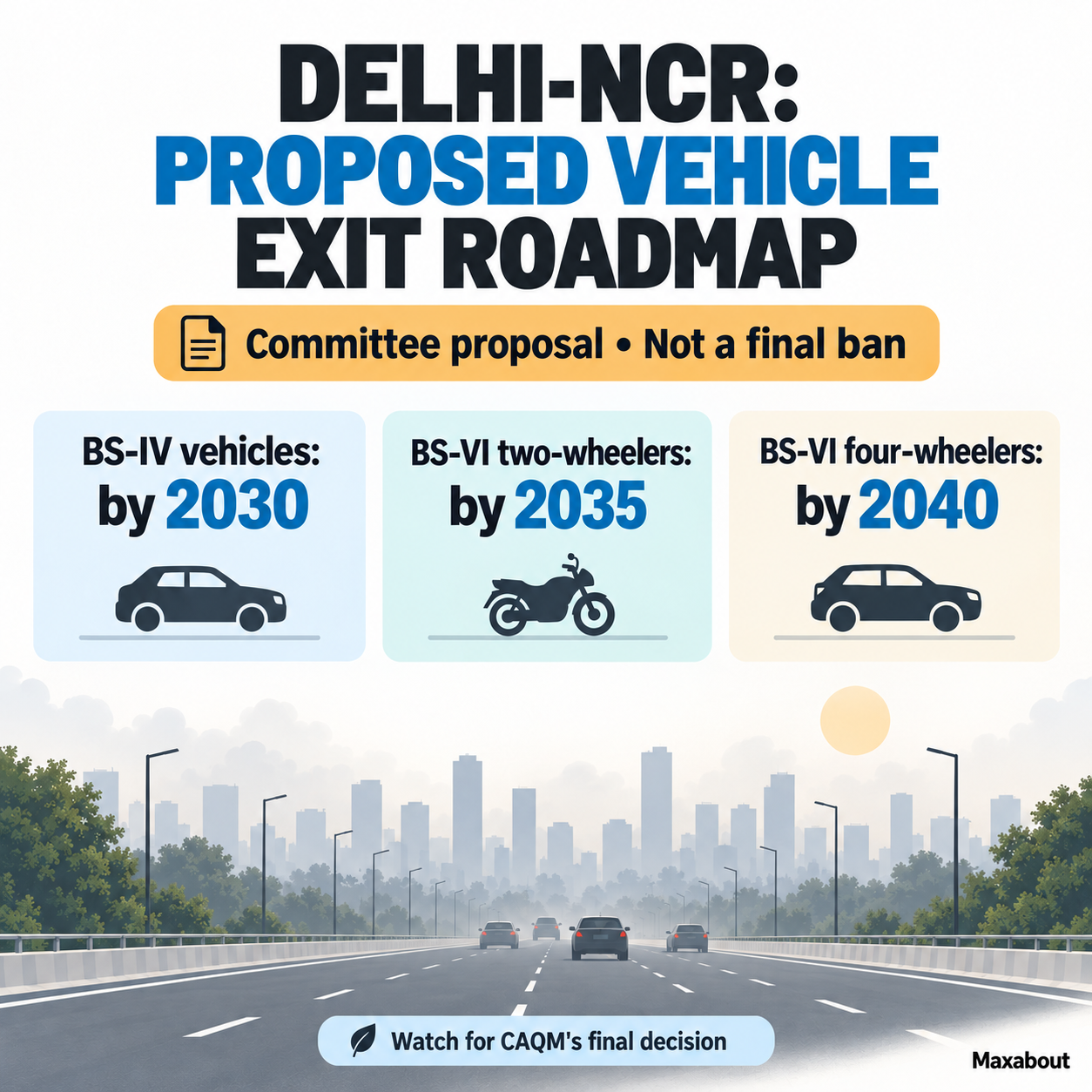
A Delhi-NCR ICE vehicle exit proposal has put future ownership and registration rules in focus. A CAQM-appointed expert committee reportedly recommends phased retirement of existing combustion-engine vehicles, including BS-IV vehicles by 2030, BS-VI two-wheelers by 2035 and BS-VI four-wheelers by 20...
A Delhi-NCR ICE vehicle exit proposal has put future ownership and registration rules in focus. A CAQM-appointed expert committee reportedly recommends phased retirement of existing combustion-engine vehicles, including BS-IV vehicles by 2030, BS-VI two-wheelers by 2035 and BS-VI four-wheelers by 2040. It also proposes a separate restriction on new ICE private four-wheeler registrations from 1 January 2031. These are committee recommendations under consideration, not a final adopted ban. Owners and buyers should distinguish the reported roadmap from rules that authorities actually notify.
What the reported proposal covers
Existing vehicles: Phased exit dates linked to emissions standards and vehicle categories.
New registrations: A proposed restriction on new ICE private four-wheelers from January 2031.
New sales: A separate proposed increase in zero-tailpipe-emission sales shares.
Status: Final acceptance, exemptions and enforcement details have not been established in this update.
Proposed exit dates for existing vehicles
ICE means internal combustion engine. BS-I, BS-II, BS-III, BS-IV and BS-VI refer to successive Bharat Stage emissions standards. The committee's reported recommendations distinguish between these standards and, for BS-VI vehicles, between two-wheelers and four-wheelers.
| Vehicle group | Reported committee recommendation | How to read it |
|---|---|---|
| BS-I, BS-II and BS-III vehicles | Immediate exit recommended | A recommendation, not evidence of a newly enforced rule. |
| BS-IV vehicles | Exit by 2030 | Proposed existing-fleet milestone. |
| BS-VI two-wheelers | Exit by 2035 | Separate from the four-wheeler milestone. |
| BS-VI four-wheelers | Exit by 2040 | Proposed existing-fleet milestone, not the new-registration date. |
Why 2030, 2031 and 2040 describe different things
The reported roadmap contains three different policy mechanisms. An existing-vehicle exit proposal concerns vehicles already in the fleet. A new-registration restriction concerns vehicles being added to that fleet. A sales mandate concerns the mix of vehicles manufacturers sell. Treating all three as one deadline would misstate what the committee reportedly recommended.
For private four-wheelers, the proposed zero-tailpipe-emission sales shares are 20% in 2027, 45% in 2028, 70% in 2029 and 100% in 2030. Separately, the committee proposes no new ICE private four-wheeler registrations from 1 January 2031. Its reported BS-VI four-wheeler exit milestone is 2040. None of those recommendations, by itself, establishes a final rule applying to an individual vehicle today.
What zero-tailpipe-emission means here
Zero-tailpipe-emission, or ZTE, describes vehicles that produce no exhaust emissions at the vehicle's tailpipe. The committee's reported approach is technology-neutral: battery-electric vehicles are one route, while other technologies could qualify as they become viable. This is not a claim that a vehicle has no environmental impact across manufacturing, energy supply and disposal.
The wider reported recommendations also address charging access and public-sector fleets. Those ideas would require their own decisions and practical implementation arrangements. A proposed right to install a charger, for example, does not establish that every apartment parking space already has suitable electrical capacity or permission.
What buyers and owners should watch next
The useful next milestone is an authoritative decision setting out which recommendations are accepted, the legal mechanism, affected categories, geographical scope and any exemptions. A reported committee roadmap should not be used to assume a guaranteed resale value, a compulsory scrappage date or eligibility for an incentive.
Check the vehicle's registered emissions standard and category rather than relying only on its age.
Look for final notified dates and conditions, not a proposal headline.
For an electric purchase, assess home or workplace charging, service support and the intended driving pattern.
Do not assume proposed scrappage incentives are available until their eligibility and operation are confirmed.
FAQs
Has Delhi-NCR announced a final ban on all ICE vehicles?
This update describes a reported expert-committee proposal under CAQM consideration. It does not establish a final adopted ban on all combustion-engine vehicles.
Does the proposed 2031 date mean every existing car must leave the road then?
No. The reported 1 January 2031 recommendation concerns new ICE private four-wheeler registrations. The roadmap separately proposes exit milestones for existing vehicles, including BS-VI four-wheelers by 2040.
Are the dates the same for BS-VI motorcycles and cars?
No. The reported recommendations propose 2035 for BS-VI two-wheelers and 2040 for BS-VI four-wheelers. Final acceptance and implementation conditions remain to be established.
The Delhi-NCR ICE vehicle exit proposal signals the scale of transition the committee wants authorities to consider. Its immediate value for readers is understanding the separate fleet, registration and sales recommendations while waiting for a final, authoritative decision.
Explore the story
Related news
Share your view and join the discussion.
Earn reward points for every comment and get a chance to win ₹1,000 in our weekly lucky draw. Sign in with Google in one tap.
Start the conversation
No one has commented on this article yet. Be the first to share your view.
Want to read more automotive news?
Stay updated with the latest car launches, reviews, and industry insights.
Browse All News