
Delhi EV Policy 2026 Approved: EV Car Tax Breaks, Hybrid Exclusion and Two-Wheeler Shift Explained
Delhi EV Policy 2026 has been approved with a clear push toward battery-electric vehicles, new incentives for eligible EV buyers and a reported roadmap that could reshape two-wheeler purchases in the capital. The policy is reported to come into effect on July 1, 2026 and remain valid until March 31,...
Editorial Team
Delhi EV Policy 2026 has been approved with a clear push toward battery-electric vehicles, new incentives for eligible EV buyers and a reported roadmap that could reshape two-wheeler purchases in the capital. The policy is reported to come into effect on July 1, 2026 and remain valid until March 31, 2030, giving buyers and the industry a multi-year window to plan around the new rules.
What you need to know
Policy status: Delhi EV Policy 2026 has been approved, with implementation reported from July 1, 2026.
Validity: The policy is reported to run until March 31, 2030.
Electric car benefit: Battery-electric passenger cars priced up to Rs 30 lakh are reported to get full road tax and registration-fee exemption.
Hybrid cars: Hybrids are reported to be outside the subsidy and incentive framework.
Two-wheelers: Petrol two-wheeler transition restrictions are reported from 2028, subject to official policy wording.
What changes for electric car buyers?
The biggest buyer-facing headline is the reported 100 percent exemption on road tax and registration fees for eligible electric passenger cars with an ex-showroom price of up to Rs 30 lakh. That could make several mass-market EVs more attractive in Delhi, especially for buyers comparing running cost, registration cost and long-term ownership value.
The benefit is aimed at pure battery-electric vehicles. That distinction matters because many buyers see hybrids as a practical bridge technology, but the reported policy direction prioritises zero-tailpipe-emission EVs over hybrid powertrains.
Hybrids are not included
Hybrid vehicles are reported to be not eligible for the subsidies or incentives under the Delhi EV Policy 2026. For buyers comparing strong hybrids, mild hybrids and EVs, this means the policy advantage is expected to sit clearly with battery-electric cars rather than fuel-saving petrol-electric models.
Two-wheeler transition: what is reported
The policy is also reported to include a phased approach for electric two-wheelers, with restrictions around new petrol two-wheelers mentioned from 2028. This is the part buyers should treat carefully until official policy text is checked, because exact category definitions, timelines and implementation rules can affect purchase decisions.
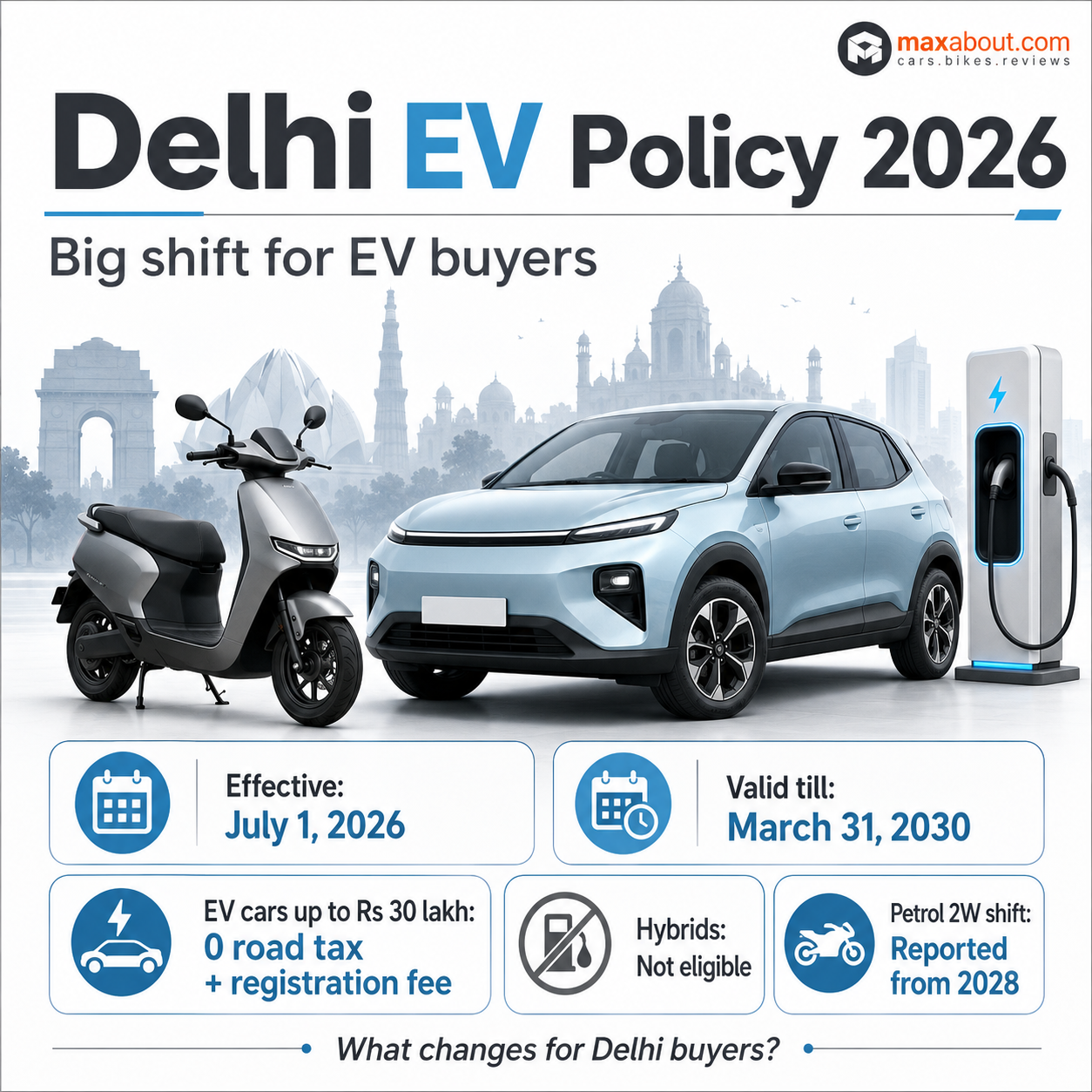
Delhi EV Policy 2026 key details
| Detail | What is known or reported |
|---|---|
| Policy start | Reported from July 1, 2026 |
| Policy validity | Reported until March 31, 2030 |
| Electric car benefit | Full road tax and registration-fee exemption for eligible EV cars up to Rs 30 lakh |
| Hybrid vehicles | Reported as not eligible for incentives |
| Two-wheeler shift | Reported transition restrictions from 2028 |
Why it matters for Delhi buyers
For EV buyers, the policy can reduce upfront ownership costs and make the switch from petrol or diesel more compelling. For hybrid buyers, it sends the opposite signal: Delhi is pushing incentives toward pure EVs rather than partial electrification. For two-wheeler buyers, the reported 2028 shift makes timing important, especially for families planning a petrol scooter or motorcycle purchase in the next couple of years.
FAQs
When does Delhi EV Policy 2026 start?
It is reported to start on July 1, 2026, with validity until March 31, 2030.
Do hybrid cars get benefits under Delhi EV Policy 2026?
Based on current reports, hybrid vehicles are not eligible for the policy incentives. The benefits are focused on pure battery-electric vehicles.
Which electric cars get the road tax and registration-fee exemption?
Reports say electric passenger cars with an ex-showroom price up to Rs 30 lakh are eligible for full road tax and registration-fee exemption.
Should buyers wait for the official policy text?
Yes. The broad policy direction is clear from reports, but exact legal wording, category definitions and implementation details should be checked before making a purchase decision.
The Delhi EV Policy 2026 is a strong signal that the capital wants faster EV adoption, especially for electric cars and two-wheelers. For buyers, the main takeaway is simple: pure EVs gain policy support, hybrids do not, and the two-wheeler market may face a major shift from 2028.
Explore the story
Related news

Share your view and join the discussion.
Earn reward points for every comment and get a chance to win ₹1,000 in our weekly lucky draw. Sign in with Google in one tap.
Start the conversation
No one has commented on this article yet. Be the first to share your view.
Want to read more automotive news?
Stay updated with the latest car launches, reviews, and industry insights.
Browse All News