
CNG and CBG Mobile Refuelling Rules: Approved Uses and Buyer Implications
India's CNG and CBG mobile refuelling rules have reportedly been updated to define who may operate a mobile unit, where it may dispense fuel and which safeguards it needs. The central point for motorists is that a mobile gas unit is not a general substitute for a public filling station: the reported...
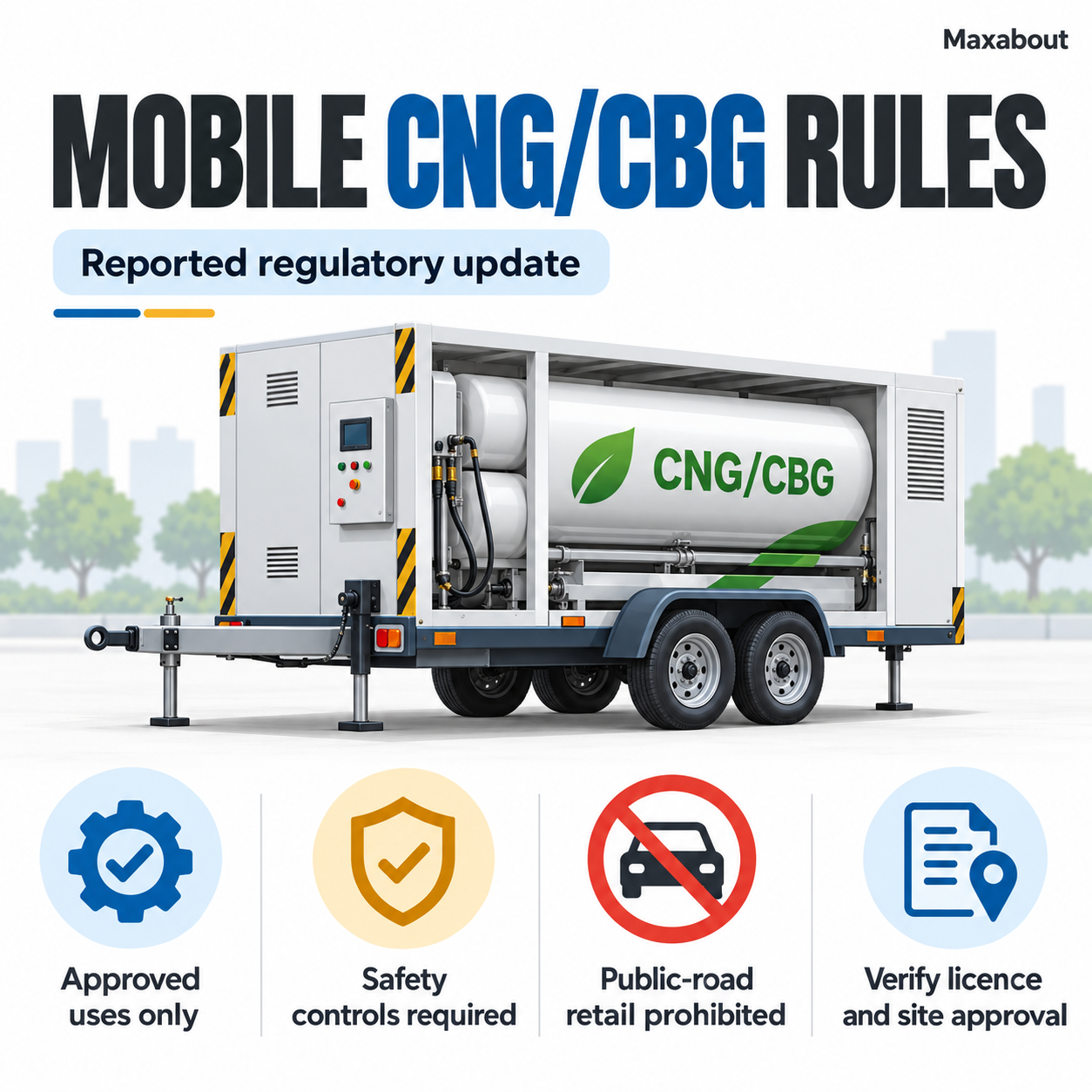
India's CNG and CBG mobile refuelling rules have reportedly been updated to define who may operate a mobile unit, where it may dispense fuel and which safeguards it needs. The central point for motorists is that a mobile gas unit is not a general substitute for a public filling station: the reported framework limits dispensing to approved applications and sites, and prohibits public retail refuelling on public roads and other unapproved locations.
What has changed?
The reported Gas Cylinder (Third Amendment) Rules, 2026 add conditions for mobile refuelling units, or MRUs. These combine gas storage, dispensing equipment and safety systems on a vehicle, trailer, skid or another mobile platform. The notification was reportedly issued on September 21, 2026, with commencement tied to final Gazette publication.
This is a news explanation of the reported framework. Operators need the final rules, their licence conditions and the relevant authority's approval before deciding whether a particular site or vehicle is eligible.
Approved applications versus ordinary retail
| Application | Reported position |
|---|---|
| Mines, notified ports and railway locomotives | Specified applications subject to approval and applicable conditions |
| Approved vessels and authorised engine-testing facilities | Included among the listed uses |
| Heavy equipment unable to reach a filling station | May require specific permission and additional safeguards |
| Public roads, residential areas and commercial parking | Public retail dispensing prohibited under the reported framework |
The distinction is between an approved special-use operation and selling fuel to the public wherever a mobile unit can park. A parking space does not become a licensed filling site merely because dispensing equipment is mobile.
Ownership and safety remain central
The report ties CNG-unit ownership to the authorised city-gas distributor for the geographical area and CBG ownership to the specified licensee category. It also describes approval of the complete assembly, including storage, piping, hoses, pressure regulation, emergency shutdown and operating arrangements.
Reported safeguards include trained supervision, leak checks, suitable equipment, emergency access, site-specific response planning and operating records. A unit's mobility does not remove the need for site approval or safe separation from surrounding hazards. Exact technical thresholds should be checked against the final legal text rather than inferred from this overview.
What operators should establish before deployment
Whether the owner and unit meet the applicable licence requirements.
Whether both the filling premises and dispensing location are approved.
Whether the receiving vehicle or equipment falls within an authorised application.
Which authority must approve the equipment list and site arrangements.
Whether the emergency plan, trained personnel and maintenance records meet the applicable conditions.
What this means for CNG vehicle owners
The reported change primarily concerns controlled industrial and specialist refuelling. It does not establish a nationwide doorstep-CNG service for private cars. Drivers should continue to use authorised public stations unless a lawful, specifically approved arrangement applies to their use.
FAQs
Can an MRU refuel private cars on a public road?
The reported amendment prohibits public retail dispensing on public roads. It should not be read as blanket permission for roadside retail.
Does a mobile unit need site approval?
Yes, the reported framework centres on specifically approved locations and applications, alongside equipment and operating requirements.
The practical takeaway from the CNG/CBG mobile refuelling update is controlled access for approved uses. Eligibility, licensing and the final Gazette conditions determine what an operator may actually do.
Explore the story
Related news





Share your view and join the discussion.
Earn reward points for every comment and get a chance to win ₹1,000 in our weekly lucky draw. Sign in with Google in one tap.
Start the conversation
No one has commented on this article yet. Be the first to share your view.
Want to read more automotive news?
Stay updated with the latest car launches, reviews, and industry insights.
Browse All News