
2 min read
287 views
Video: 1st Tata Harrier SUV Rolls Off the Production Line
The first unit of production-spec Tata Harrier SUV rolled out of the assembly line of the Indian brand in Pune. As Harrier was seen at various locations carrying complete camouflage on its body, this is the first time when the butch-looking SUV has shown the real life. The front comes with sharp day...
The first unit of production-spec Tata Harrier SUV rolled out of the assembly line of the Indian brand in Pune. As Harrier was seen at various locations carrying complete camouflage on its body, this is the first time when the butch-looking SUV has shown the real life. The front comes with sharp daytime running lights on the top and features headlight module in the bumper. The gloss black front grille is high mounted, resulting in a straight bonnet with a tank-like feel for the driver. The lower section of Harrier’s bumper includes black finish with prominent skid plate and impressive approach angle.
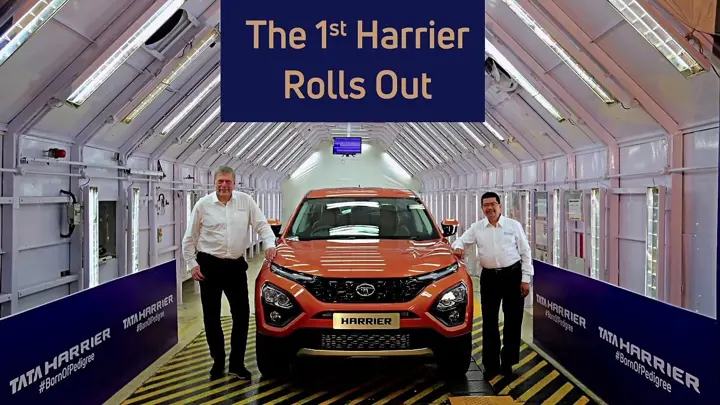 The glass section is perfectly sloping from the front, leaving buyers with huge doors and decent window area on all three sides. The alloy wheels are five-spoke for the typical car while one can expect diamond finished units on some other variant. With two executives standing around the car, one can get a perfect idea of the roof height. The rear end is more in-line with premium vehicles, leaving Jeep Compass behind in terms of head-turning appeal from the back. The commanding stance of the Harrier SUV is worth praising, undoubtedly leaving rivals in sweat before its official unveiling.
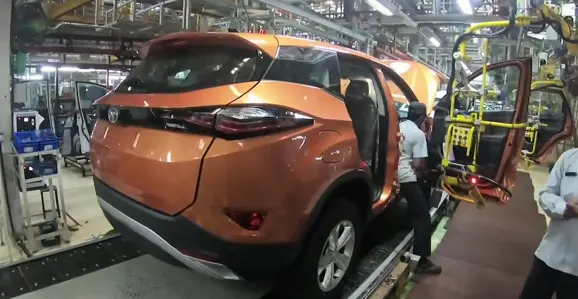 Tata Harrier is powered by a 2.0L, four-cylinder diesel engine, producing 140 HP of maximum power for class-leading performance. The expected pricing for the newcomer announces direct rivalry with every car priced above INR 15 lakh in India. Tata Motors may launch a limited number of variants for the car, keeping the premium tag alive for an even longer period. Tata will try keeping the price of top variant of Harrier SUV around INR 20 lakh (on-road) in all conditions. The most happening rival to Harrier is Jeep Compass itself. However, the 170 HP engine variant will enter later into the Indian market.
The glass section is perfectly sloping from the front, leaving buyers with huge doors and decent window area on all three sides. The alloy wheels are five-spoke for the typical car while one can expect diamond finished units on some other variant. With two executives standing around the car, one can get a perfect idea of the roof height. The rear end is more in-line with premium vehicles, leaving Jeep Compass behind in terms of head-turning appeal from the back. The commanding stance of the Harrier SUV is worth praising, undoubtedly leaving rivals in sweat before its official unveiling.
Tata Harrier is powered by a 2.0L, four-cylinder diesel engine, producing 140 HP of maximum power for class-leading performance. The expected pricing for the newcomer announces direct rivalry with every car priced above INR 15 lakh in India. Tata Motors may launch a limited number of variants for the car, keeping the premium tag alive for an even longer period. Tata will try keeping the price of top variant of Harrier SUV around INR 20 lakh (on-road) in all conditions. The most happening rival to Harrier is Jeep Compass itself. However, the 170 HP engine variant will enter later into the Indian market.
Video: 1st Tata Harrier SUV Rolls Off the Production Line

Ad
I
Immanuel Raja is an Automotive Writer with 8 years of experience covering the Indian automotive landscape. He specializes in Electric Vehicles and Hybrid Technology, with particular expertise in battery systems, charging infrastructure, and the integration of alternative powertrains in Indian road conditions. Raja has extensively tested over 200 vehicles across various segments, from entry-level EVs to premium hybrids, developing nuanced insights into their performance on India's diverse and challenging roads. His analysis encompasses both technical specifications and practical ownership considerations that matter to Indian consumers, including charging accessibility, maintenance costs, and performance in extreme weather conditions. With a finger on the pulse of India's evolving automotive preferences, Raja delivers clear, factual assessments that help readers navigate the transition to electrified mobility in the context of India's unique market dynamics.
About the Author
Explore the story
Related news

Comments
Share your view and join the discussion.
Start with:
Earn reward points for every comment and get a chance to win ₹1,000 in our weekly lucky draw. Sign in with Google in one tap.
Start the conversation
No one has commented on this article yet. Be the first to share your view.
Want to read more automotive news?
Stay updated with the latest car launches, reviews, and industry insights.
Browse All News