
BMW Vision CE India Patent Report: Self-Balancing Concept, Launch Still Unconfirmed
The BMW Vision CE self-balancing electric scooter concept has reportedly appeared in an India design filing, bringing its unusual protective-cage layout back into focus. The report does not establish an India launch, a production timetable or final specifications. For readers following BMW Motorrad’...
The BMW Vision CE self-balancing electric scooter concept has reportedly appeared in an India design filing, bringing its unusual protective-cage layout back into focus. The report does not establish an India launch, a production timetable or final specifications. For readers following BMW Motorrad’s electric two-wheelers, the important distinction is between the concept’s design ideas and a scooter that has been announced for customers to buy.
What the India filing report establishes—and what it does not
Reported development: an India design filing associated with the BMW Vision CE.
Concept focus: self-balancing operation and a cage-and-restraint layout around the rider.
Not established: production approval, India launch timing, pricing, battery capacity, range or performance.
The filing claim remains reported: a direct design-register record and application number were not available in the evidence checked for this article. The visible concept and design imagery are useful for understanding the idea, but they do not settle the specification of a future production model.
Why the BMW Vision CE looks different
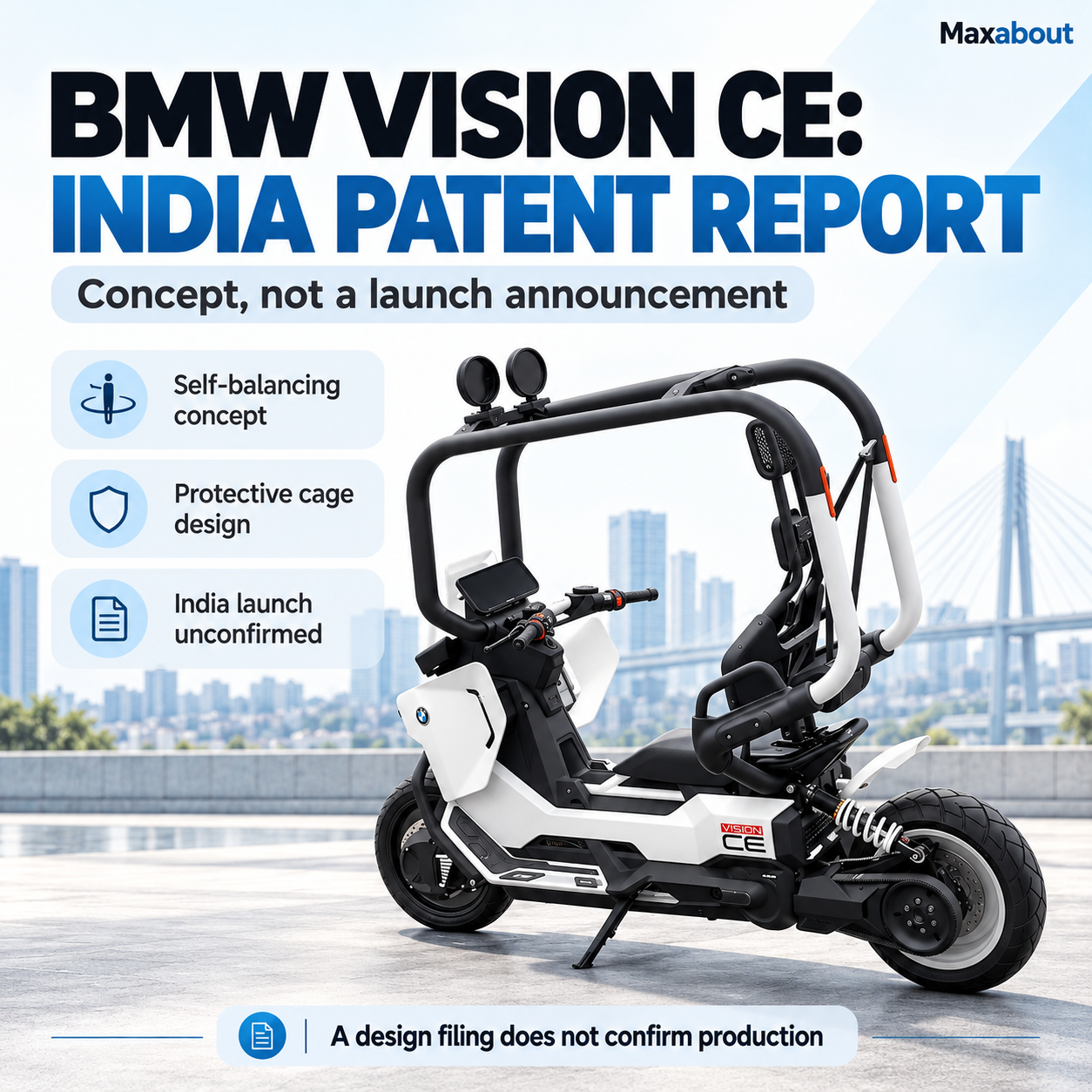
The Vision CE’s most distinctive feature is its tubular structure around and above the rider. The design imagery shows an open-sided scooter with an overhead cage, a tall seat back, restraint elements and a substantial front body shield. Its proportions are very different from a conventional step-through scooter.
The concept is described as self-balancing, alongside that protective structure. Those are the ideas being explored; they should not be converted into an assurance of production performance or a proven crash-protection result. The precise operating conditions, limits and final implementation of any production system remain questions for a future technical announcement.
Concept features versus customer-ready information
| Topic | Current evidence status | What readers should wait for |
|---|---|---|
| India design filing | Reported; direct register record not checked | Identifiable application or official confirmation |
| Self-balancing and cage layout | Described concept features and visible design structure | Production implementation and operating limits |
| Battery, range and performance | Final specifications not established | Model-specific technical information |
| India availability | No confirmed launch window or price | Official India product announcement |
Why other BMW scooter specifications should not be carried across
The presence of other BMW electric scooters does not provide a specification sheet for the Vision CE. Suggestions of a relationship with an existing platform remain speculation in the checked report. Battery capacity, power, top speed and range figures from a different model should therefore not be labelled as Vision CE figures.
This matters because the cage, restraint arrangement and balancing concept raise their own engineering questions. Without a confirmed technical specification, a range estimate or a weight comparison would require assumptions that the available evidence does not support.
What it means for Indian riders and buyers
The story broadens the discussion about future electric scooters, particularly how manufacturers might combine stability, rider support and a more enclosed riding position. It does not yet create a new purchase option or a reliable booking timeline.
The design report also supplies no basis for treating the concept as an approved alternative to riding equipment. Images of a cage and restraints do not establish an India helmet exemption or demonstrate safety in a crash. Any eventual customer model would need its own clear operating guidance and market-specific approvals.
The next useful milestones are therefore straightforward: a traceable filing record, a production announcement, final technical details and an India-specific availability decision. Until those arrive, the Vision CE is best understood as an unusual concept worth watching.
FAQs
Is the BMW Vision CE launching in India?
No India launch date or price is confirmed in the checked report. The reported filing should not be presented as a launch announcement.
Is the Vision CE a production version of another BMW scooter?
A final production relationship and specification have not been established. Figures from other models should not be used as Vision CE specifications.
Does the protective cage confirm helmet-free riding?
No such India approval is established by the evidence checked here. The concept’s design and a permission to ride without equipment are separate claims.
The BMW Vision CE India patent report is an intriguing design development. Its value lies in explaining the concept clearly while keeping production readiness, safety validation and India availability as unanswered questions.
Explore the story
Related news
Share your view and join the discussion.
Earn reward points for every comment and get a chance to win ₹1,000 in our weekly lucky draw. Sign in with Google in one tap.
Start the conversation
No one has commented on this article yet. Be the first to share your view.
Want to read more automotive news?
Stay updated with the latest car launches, reviews, and industry insights.
Browse All News