
2 min read
219 views
2018 Yamaha YZF-R125 & MT-125 Launched in UK
2018 Yamaha YZF-R125 was recently launched in the UK for £4649 (INR 4,33,500). Not just that, they even launched 2018 MT-125 for £4299 (INR 4,00,900). Both these bikes are loaded with class leading equipment and thus, riding them would bring true SuperSport and street specific feel into an A1 lic...
2018 Yamaha YZF-R125 was recently launched in the UK for £4649 (INR 4,33,500). Not just that, they even launched 2018 MT-125 for £4299 (INR 4,00,900).
Both these bikes are loaded with class leading equipment and thus, riding them would bring true SuperSport and street specific feel into an A1 license holding rider.
Yamaha R125 comes with a single cylinder, 124.7cc engine carrying fuel injection and liquid cooling as standard. The motor is good for 15 HP at 9000 rpm and 12.4 Nm at 8000 rpm. It uses a refined 6-speed gearbox and claims 46.9 kmpl of mileage.
[caption id="attachment_206699" align="aligncenter" width="600"]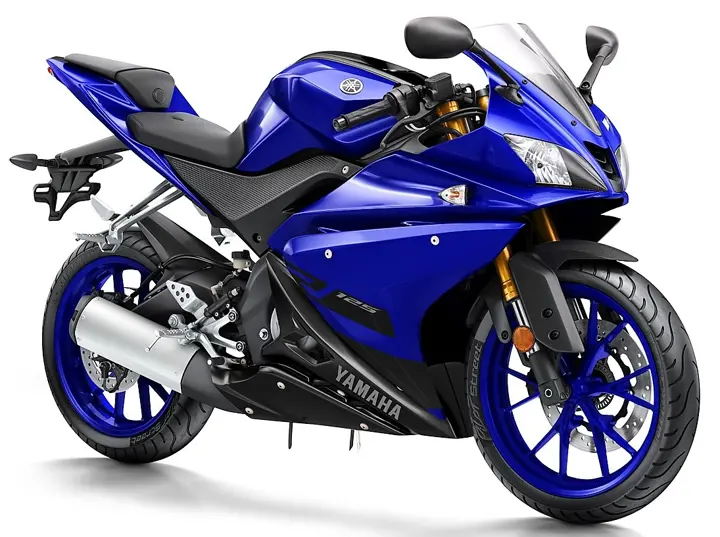 2018 Yamaha YZF-R125[/caption]
Claimed CO2 emission for Yamaha R125 is just 49 g/km. Deltabox frame serves R125 and thus, one can imagine sharp track specific handling when paired with its USD front forks. They measure 41mm and offer 130mm of wheel travel. Front comes with 100/80 while rear uses 130/70 tyres on 17 inch alloy wheels.
Hydraulic disc for front measures 292mm while rear gets 230mm disc brake for efficient speed cutting on regular roads. It weighs 142 kg and carries 11.5 liter fuel tank. Yamaha MT-125 shares the same platform and thus, brings everything smoothly into a different design.
[caption id="attachment_206700" align="aligncenter" width="601"]
2018 Yamaha YZF-R125[/caption]
Claimed CO2 emission for Yamaha R125 is just 49 g/km. Deltabox frame serves R125 and thus, one can imagine sharp track specific handling when paired with its USD front forks. They measure 41mm and offer 130mm of wheel travel. Front comes with 100/80 while rear uses 130/70 tyres on 17 inch alloy wheels.
Hydraulic disc for front measures 292mm while rear gets 230mm disc brake for efficient speed cutting on regular roads. It weighs 142 kg and carries 11.5 liter fuel tank. Yamaha MT-125 shares the same platform and thus, brings everything smoothly into a different design.
[caption id="attachment_206700" align="aligncenter" width="601"]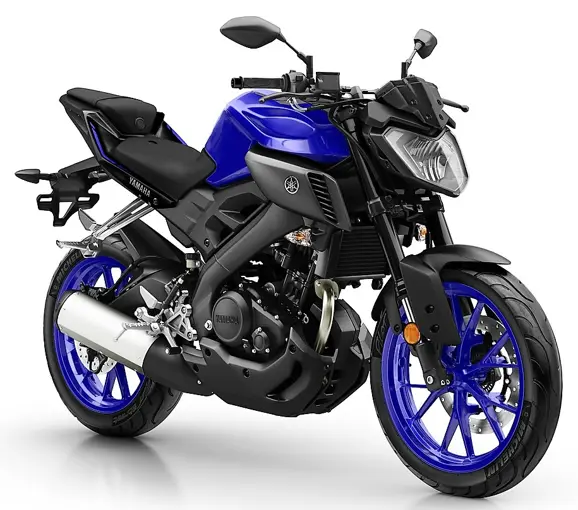 2018 Yamaha MT-125[/caption]
The only difference is loss of 2 kg body weight and aerodynamic panels. Both the bikes are specific to license restricted markets as buyers have to go through different tests to earn their license for motorcycle riding. A1, the smallest motorcycle category, brings the least powered motorcycles into a rider’s reach.
Engine size is limited to 125cc while power above 15 PS is not allowed. When riders use this license for 2 years, they can apply for A2 with more power and again after two years, shifting to A becomes a reality. This helps riders learn motorcycling in the best possible manner.
2018 Yamaha MT-125[/caption]
The only difference is loss of 2 kg body weight and aerodynamic panels. Both the bikes are specific to license restricted markets as buyers have to go through different tests to earn their license for motorcycle riding. A1, the smallest motorcycle category, brings the least powered motorcycles into a rider’s reach.
Engine size is limited to 125cc while power above 15 PS is not allowed. When riders use this license for 2 years, they can apply for A2 with more power and again after two years, shifting to A becomes a reality. This helps riders learn motorcycling in the best possible manner.
2018 Yamaha YZF-R125[/caption]
Claimed CO2 emission for Yamaha R125 is just 49 g/km. Deltabox frame serves R125 and thus, one can imagine sharp track specific handling when paired with its USD front forks. They measure 41mm and offer 130mm of wheel travel. Front comes with 100/80 while rear uses 130/70 tyres on 17 inch alloy wheels.
Hydraulic disc for front measures 292mm while rear gets 230mm disc brake for efficient speed cutting on regular roads. It weighs 142 kg and carries 11.5 liter fuel tank. Yamaha MT-125 shares the same platform and thus, brings everything smoothly into a different design.
[caption id="attachment_206700" align="aligncenter" width="601"] 2018 Yamaha MT-125[/caption]
The only difference is loss of 2 kg body weight and aerodynamic panels. Both the bikes are specific to license restricted markets as buyers have to go through different tests to earn their license for motorcycle riding. A1, the smallest motorcycle category, brings the least powered motorcycles into a rider’s reach.
Engine size is limited to 125cc while power above 15 PS is not allowed. When riders use this license for 2 years, they can apply for A2 with more power and again after two years, shifting to A becomes a reality. This helps riders learn motorcycling in the best possible manner.Ad
I
Immanuel Raja is an Automotive Writer with 8 years of experience covering the Indian automotive landscape. He specializes in Electric Vehicles and Hybrid Technology, with particular expertise in battery systems, charging infrastructure, and the integration of alternative powertrains in Indian road conditions. Raja has extensively tested over 200 vehicles across various segments, from entry-level EVs to premium hybrids, developing nuanced insights into their performance on India's diverse and challenging roads. His analysis encompasses both technical specifications and practical ownership considerations that matter to Indian consumers, including charging accessibility, maintenance costs, and performance in extreme weather conditions. With a finger on the pulse of India's evolving automotive preferences, Raja delivers clear, factual assessments that help readers navigate the transition to electrified mobility in the context of India's unique market dynamics.
About the Author
Explore the story
Related news
Comments
Share your view and join the discussion.
Start with:
Earn reward points for every comment and get a chance to win ₹1,000 in our weekly lucky draw. Sign in with Google in one tap.
Start the conversation
No one has commented on this article yet. Be the first to share your view.
Want to read more automotive news?
Stay updated with the latest car launches, reviews, and industry insights.
Browse All News