
2026 Hyundai Venue Achieves 5-Star Bharat NCAP Safety Rating
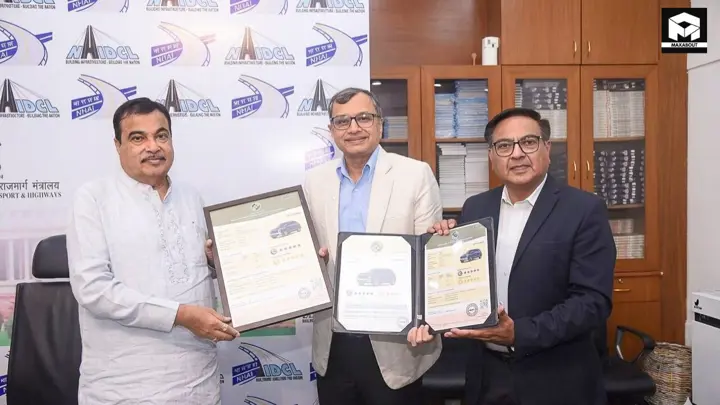
The Hyundai Venue's achievement of a 5-star safety rating from Bharat NCAP marks a significant milestone in India's automotive safety landscape. As one of India's most popular compact SUVs since its 2019 launch, the Venue has consistently ranked among the top choices in the competitive sub-4-meter s...
Editorial Team
The Hyundai Venue's achievement of a 5-star safety rating from Bharat NCAP marks a significant milestone in India's automotive safety landscape. As one of India's most popular compact SUVs since its 2019 launch, the Venue has consistently ranked among the top choices in the competitive sub-4-meter segment.
This safety certification comes at a crucial time when Indian consumers are increasingly prioritizing vehicle safety features alongside traditional buying factors like fuel efficiency and maintenance costs. The 2026 model's perfect score is particularly noteworthy as it aligns with Bharat NCAP's stringent new testing protocols, which are specifically designed for Indian road conditions and safety requirements.
The Venue, which competes in the highly contested compact SUV segment, has maintained strong monthly sales averaging 10,000+ units. This latest safety achievement could potentially reshape consumer preferences in a market segment where safety ratings have become increasingly influential in purchase decisions.
Market significance:
First Hyundai compact SUV to achieve 5-star Bharat NCAP rating
Sets new safety benchmarks in the sub-4-meter SUV category
Validates Hyundai's commitment to enhanced safety standards
Understanding the Bharat NCAP Test Protocol
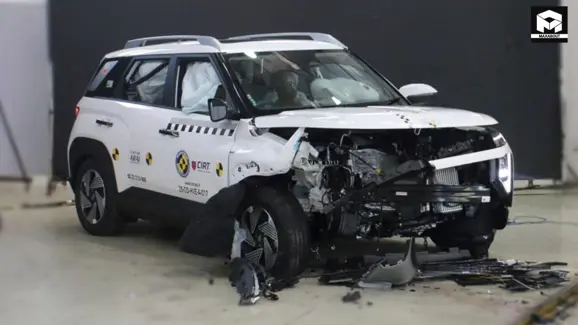
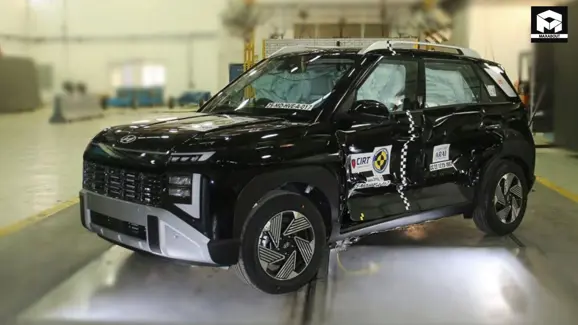
The Bharat NCAP assessment follows a comprehensive testing methodology that evaluates vehicles under controlled conditions. The protocol includes three main crash scenarios: frontal impact at 64 km/h, side impact at 50 km/h, and side pole impact testing. What's particularly noteworthy is how these parameters are specifically tailored for Indian driving conditions.
The 2026 Venue demonstrated exceptional performance across multiple safety criteria:
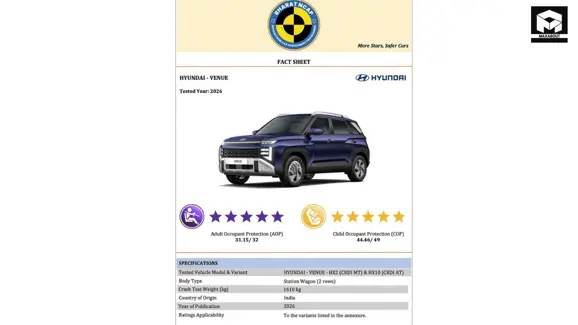
Adult Occupant Protection: 28.89 points out of 32 (90.3%)
Child Occupant Protection: 42.71 points out of 49 (87.2%)
Safety Assist Technologies: 12 points out of 13 (92.3%)
What sets Bharat NCAP apart from Global NCAP is its additional focus on pedestrian protection and safety assist features, reflecting the unique challenges of Indian roads. The Venue particularly excelled in structural integrity tests, with minimal cabin intrusion during frontal impact scenarios. The side impact performance showed excellent door structure stability, while the electronic stability control systems demonstrated precise intervention during emergency maneuvers.
Based on the detailed assessment reports, the vehicle's robust safety cell and advanced restraint systems played crucial roles in achieving these impressive scores.
Enhanced Safety Features and Structural Improvements
Looking at the 2026 Venue's safety package, I'm particularly impressed by the comprehensive upgrades Hyundai has implemented. The reinforced A-pillars and B-pillars now use advanced high-strength steel, while the floor structure features additional cross-members for better impact distribution.
The standard safety equipment now includes:
6 airbags (dual front, side, and curtain)
Advanced driver assistance systems (ADAS) with autonomous emergency braking
Lane keeping assist with haptic steering feedback
Blind spot monitoring with rear cross-traffic alert
360-degree camera system with enhanced night vision
What stands out to me is the new ultra-high-strength steel content, which has increased from 35% to 58% in critical areas. This improvement directly addresses the challenging road conditions we face in cities like Mumbai and Bangalore, where side impacts from two-wheelers are unfortunately common.
The upgraded electronic stability program now features a India-specific calibration that accounts for varied road surfaces and sudden obstacles - a thoughtful addition considering our diverse road conditions. From what I understand, this new system processes inputs 30% faster than the previous version.
Market Impact and Competition Analysis
The 5-star safety rating positions the 2026 Venue in a compelling spot within India's competitive compact SUV segment. This achievement puts it on par with the Tata Nexon's safety credentials, which has long been the segment benchmark for occupant protection.
I expect this development to particularly resonate with urban family buyers who prioritize safety. The timing seems strategic, especially when safety awareness is growing across metropolitan areas like Delhi, Chennai, and Pune. Based on market trends, Hyundai might implement a modest price increase of ₹30,000 to ₹50,000, which customers would likely accept given the enhanced safety package.
Looking at the competitive landscape, this rating creates interesting dynamics. While the Maruti Suzuki Brezza and Kia Sonet currently hold 3-star ratings, they might need to accelerate their safety improvements to maintain market share. From what I understand, Hyundai's decision to upgrade the Venue's safety features before regulatory requirements shows smart market reading.
The segment could see a broader shift toward enhanced safety standards, potentially making 5-star ratings the new normal in this price bracket. This would benefit consumers but might challenge manufacturers focused on maintaining lower price points.
What This Means for Indian Car Buyers
For Indian car buyers, the Venue's 5-star safety rating represents a significant shift in value proposition. I believe this development will make safety-conscious buyers reconsider the compact SUV segment, where previously they might have opted for larger vehicles purely for safety reasons.
The practical benefits extend beyond crash protection. Insurance companies often offer lower premiums for vehicles with higher safety ratings, potentially reducing long-term ownership costs. Based on industry trends, I expect a 5-star rated vehicle could see 10-15% lower insurance premiums.
More importantly, this raises the bar for entry-level SUVs in India. Families who previously felt compelled to stretch their budgets for safer vehicles now have a more accessible option. Consider the typical urban commute in cities like Bangalore or Mumbai - the enhanced structural integrity provides genuine peace of mind in challenging traffic conditions.
Key benefits for buyers include:
Better resale value retention
Potentially lower insurance costs
Improved occupant protection in urban driving conditions
Future-proof investment as safety standards continue to rise
Future Implications for Hyundai and Industry
The Venue's 5-star safety rating marks a significant turning point that will likely reshape Hyundai's approach to future model development. Based on industry observations, I expect Hyundai to implement similar structural enhancements across their entire lineup, potentially starting with the next-generation i20 and Creta.
This achievement puts pressure on competitors in the compact SUV segment. Manufacturers like Maruti Suzuki and Tata Motors will need to strengthen their safety engineering to remain competitive, especially considering the growing safety consciousness among Indian consumers. The ripple effect could lead to an industry-wide elevation of safety standards.
Long-term industry impacts may include:
Accelerated adoption of advanced safety features in sub-₹10 lakh vehicles
Greater investment in R&D for structural improvements
Standardization of 6 airbags across more affordable segments
The timing is particularly strategic as India strengthens its safety regulations. With Bharat NCAP gaining prominence, manufacturers who proactively enhance safety features will likely gain a significant competitive advantage in the evolving market landscape.
Explore the story
Related news

Share your view and join the discussion.
Earn reward points for every comment and get a chance to win ₹1,000 in our weekly lucky draw. Sign in with Google in one tap.
Start the conversation
No one has commented on this article yet. Be the first to share your view.
Want to read more automotive news?
Stay updated with the latest car launches, reviews, and industry insights.
Browse All News