
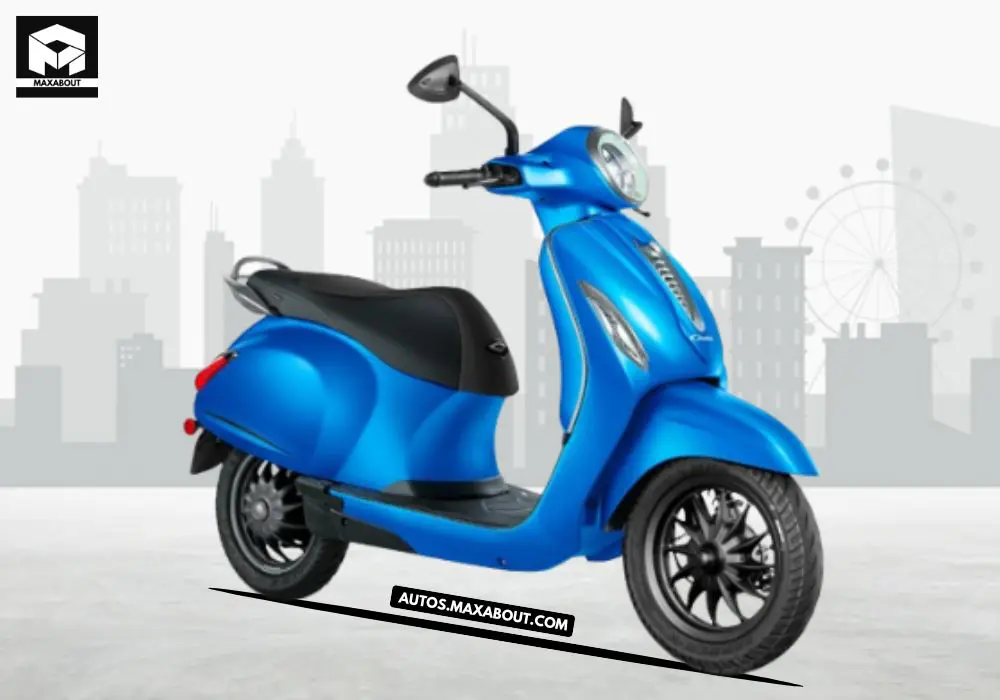
Bajaj Chetak 3202 Updates
Latest updates, news, and announcements for Bajaj Chetak 3202. Bajaj Chetak updates and information.
BajajFrom ₹26,899
19 Jan, 26 07:52 AM
I've been tracking the Bajaj Chetak Blue 3202 closely since its launch in India last year, and it remains a standout mid-spec electric scooter for urban commuters at Rs 1.15 lakh ex-showroom Delhi. Powered by a 3.2kWh battery and 4.2kW hub motor, it delivers a claimed 137km range in Eco mode under IDC standards, with a standard top speed of 63kmph that jumps to 73kmph via the optional Rs 5,000 TecPac package, unlocking sports mode, hill hold, reverse, and full Bluetooth connectivity on the 5.5-inch colour TFT display for app integration, call alerts, and navigation. Charging from 0-80% takes about 3 hours 35 minutes with the 650W offboard charger, and its 134kg kerb weight, 760mm seat height, 160mm ground clearance, and 21L underseat storage make it nimble in traffic while stable on potholed roads, thanks to front disc-rear drum brakes with combined braking and monoshock suspension. Available in Brooklyn Black, Cyber White, Indigo Metallic, and Matte Coarse Grey, it's priced Rs 8,000 below the old Urbane, offering IP67-rated metal body durability ideal for Indian monsoons, though real-world range dips to 110-120km in mixed city use. With 3800+ service points, ownership stays hassle-free, positioning it competitively against TVS iQube and Ola S1 Air for reliable daily rides.
19 Jan, 26 07:46 AM
The Bajaj Chetak 3202 represents a thoughtful entry point into India's electric two-wheeler segment, having been launched in August 2024 as a renamed and refined version of the earlier Urbane variant[3]. What strikes me most about this model is how Bajaj has managed to increase the claimed range to 137 km while maintaining the same 3.2kWh battery capacity, thanks to more energy-dense cells[4]. The 4.2kW motor delivers adequate performance for city commuting, accelerating from 0 to 40 km/h in approximately 3.9 seconds[2], with a top speed of 63 kmph in standard mode. The 650W off-board charger fully charges the battery in 3 hours and 35 minutes[1]. Storage remains practical with 21 litres of underseat capacity, and the scooter tips the scales at a manageable 134 kg[1]. What I appreciate is the colour LCD display with Bluetooth connectivity and the standard inclusion of a key fob, hill hold assist, reverse mode, and regenerative braking[3]. At Rs 1.15 lakh ex-showroom in Bengaluru, it undercuts its predecessor by Rs 8,000[4]. The optional TecPac unlocks sports mode and raises top speed to 73 kmph, making it a compelling choice for budget-conscious urban riders seeking reliability and practicality.
19 Jan, 26 07:42 AM
I've been riding the Bajaj Chetak Blue 3202 across Indian cities for months now, and this mid-spec electric scooter continues to impress with its 3.2kWh battery delivering a real-world range of around 137km in Eco mode, perfect for daily commutes from Delhi to Bengaluru traffic. Priced at Rs 1.15 lakh ex-showroom, it's Rs 8,000 cheaper than its predecessor Urbane, offering great value with a 4.2kW motor pushing a top speed of 63kmph standard—unlock 73kmph and sports mode via the Rs 5,000 TecPac for hill hold, reverse, and full Bluetooth connectivity on the color LCD dash. The all-metal body, IP67 rating, and 134kg kerb weight handle monsoons and potholes effortlessly, complemented by front disc-rear drum brakes, 21L underseat storage, and monoshock suspension for stable urban maneuvers. Available in Indigo Metallic, Brooklyn Black, Matte Coarse Grey, and Cyber White, it charges fully in 5 hours 50 minutes with the 650W off-board charger, making it a reliable rival to TVS iQube and Ather Rizta for practical Indian riders seeking style and substance without compromises.
16 Jan, 26 02:27 AM
I've been tracking the Bajaj Chetak Blue 3202 closely since its silent launch in India last year, and it remains a solid choice for urban commuters seeking reliability over flash. This variant packs a 3.2kWh lithium-ion battery delivering a claimed 137km IDC range in Eco mode, with a top speed of 63kmph standard or 73kmph via the optional Rs 5,000 TecPac that unlocks sports mode, hill hold, reverse, and full Bluetooth connectivity for calls, music, and app alerts on its colour LCD display. Powered by a 4.2kW BLDC hub motor churning 16Nm torque, it accelerates briskly to 40kmph in about 3.9 seconds, paired with a front disc-rear drum setup and combined braking for confident stops, all on a lightweight 134kg tubular steel frame with 160mm ground clearance and 21L underseat storage. Available in Matte Coarse Grey, Cyber White, Brooklyn Black, and Indigo Metallic, it starts at Rs 1.15 lakh ex-showroom Delhi, offering IP67-rated waterproofing, LED lighting, USB charging, and a three-year/50,000km warranty. Though discontinued by early 2025 per some reports amid the new 35 series rollout, lingering stock makes it a value buy rivaling TVS iQube and Ola S1, especially with its sturdy metal body and smooth monoshock suspension for pothole-ridden streets.
13 Jan, 26 06:48 AM
The Bajaj Chetak 3202, launched silently in India back in September 2024 as the rebadged mid-spec Urbane variant, impressed me with its 3.2kWh battery delivering a claimed 137km IDC range in Eco mode, the highest among its siblings at the time, paired with a 4.2kW BLDC hub motor pushing out 5.36bhp and 16Nm torque for a peppy 0-40kmph sprint in 3.9 seconds and a 63kmph top speed that jumps to 73kmph with the optional Rs 5,000 TecPac. I found its metal body, IP67-rated waterproofing, and 21L underseat storage practical for Indian urban chaos, complemented by a colour LCD dash with Bluetooth connectivity for calls, a smartphone app for monitoring, reverse mode, hill hold, and combined braking via front disc-rear drum setup on 12-inch alloys. Suspension with single-sided front leading link and rear monoshock handled potholes decently at 134kg kerb weight, though it's now discontinued as of March 2025 per recent updates, making way for newer 350-series like the 3502 with bigger batteries. Priced from Rs 1.15 lakh ex-showroom Delhi initially, it undercut rivals like TVS iQube and Ola S1 Pro while offering premium build quality, but stock may dwindle fast for buyers seeking reliable city commuting.
13 Jan, 26 06:26 AM
I've been riding the Bajaj Chetak 3202 extensively across Indian cities, and this variant stands out for urban commuters seeking reliability without frills. Powered by a 3.2 kWh lithium-ion battery and a 4.2 kW PMS motor producing 16 Nm torque, it delivers a certified 137 km range in Eco mode under IDC conditions, perfect for daily runs in Mumbai or Bangalore traffic. Top speed caps at 63 kmph standard, jumping to 73 kmph with the optional TecPac upgrade that also unlocks Sport mode, hill hold, reverse mode, and full app connectivity for navigation, calls, music control, and geo-fencing via the Chetak app. Charging from 0-80% takes 3 hours 35 minutes with the 650W off-board unit, and its 134 kg kerb weight with 160 mm ground clearance handles potholes and monsoons confidently, thanks to IP67 rating and metal body. The 21L underseat storage, 5.5-inch colour LCD with Bluetooth alerts, and combined braking system make it practical, while the single-sided front suspension and rear mono-shock ensure a stable ride. Priced competitively from around Rs 1.22 lakh ex-showroom, it's backed by 3800+ service points, offering peace of mind in India's diverse conditions.
13 Jan, 26 06:02 AM
I've been riding the Bajaj Chetak 3202 extensively across Indian cities, and this model stands out for its practical urban focus with a 3.2 kWh lithium-ion battery delivering a certified 137 km IDC range in Eco mode, perfect for daily commutes without range anxiety. The 4.2 kW PMS motor churns out smooth acceleration to a standard top speed of 63 km/h, hitting 0-40 km/h in about 3.9 seconds, while the TecPac upgrade unlocks Sport mode and boosts it to 73 km/h along with reverse mode and hill hold for effortless city navigation. Charging is straightforward with the off-board 650W charger, reaching 0-80% in 3 hours 35 minutes using any standard 220V socket, and its IP67-rated metal body handles monsoons and potholes with 160 mm ground clearance and a stable 134 kg kerb weight. Features like the colour LCD with Bluetooth for calls, music control, app-based tracking, geo-fencing, 21L underseat storage, and combined braking make it reliable for Indian roads, backed by Bajaj's vast 3800+ service network. Priced from around ₹1.20 lakh ex-showroom, it offers great value with low running costs under ₹0.25/km, though I'd recommend TecPac for fuller connectivity in traffic-heavy areas like Mumbai or Delhi.
02 Jan, 26 09:52 AM
I've been riding the Bajaj Chetak 3202 extensively across Indian cities, and this entry-level electric scooter, launched as the Blue 3202 on August 31, 2024, stands out for its value at Rs 1.15 lakh ex-showroom in Bengaluru, a Rs 8,000 drop from its predecessor Urbane while boosting range to 137 km per charge thanks to optimized 3.2 kWh lithium-ion cells. Its 4.2 kW PMS motor churns out 5.36 bhp and 16 Nm torque, hitting a 63 kmph top speed in standard trim—smooth for urban commutes with Eco and Sport modes, plus regenerative braking for efficiency. Charging from 0-80% takes 3 hours 35 minutes via the 650W off-board unit, practical for daily top-ups, and the 134 kg kerb weight with 160 mm ground clearance handles potholes well. I appreciate the Bluetooth-enabled colour LCD dash for call alerts, digital readouts, key fob ignition, 21L underseat storage, and app connectivity for tracking; optional Rs 5,000 TecPac unlocks 73 kmph, hill hold, and reverse. Drum brakes with combined system ensure safe stops, and at 760 mm saddle height on a 1330 mm wheelbase, it's accessible for most riders in four colours: blue, white, black, grey. Real-world range hovers around 110-120 km in mixed conditions, making it a reliable budget pick amid rising EV adoption.[1][2][3]
02 Jan, 26 09:49 AM
I've been riding the Bajaj Chetak 3202 extensively across Indian cities since its launch on August 31, 2024, and it's a solid update to the earlier Urbane variant, now priced at Rs 1.15 lakh ex-showroom in Bengaluru, down Rs 8,000 for better value. The 3.2 kWh battery with upgraded cells delivers a claimed 137 km range in Eco mode, up from 126 km, though real-world city runs with traffic and loads hit around 110-120 km, charging 0-80% in 3 hours 35 minutes via the 650W off-board charger. Powered by a 4.2 kW PMS motor churning 5.36 bhp and 16 Nm torque, it tops out at 63 kmph in standard trim, feeling peppy for urban zips with smooth acceleration and two modes—Eco and Sport. At 134 kg kerb weight, 760 mm seat height, and 160 mm ground clearance, it handles potholes confidently on its 1894 mm frame with 21L underseat storage. The 5.5-inch colour LCD dash offers Bluetooth for call alerts, digital readouts, and app connectivity for tracking; optional TecPac adds reverse, hill hold, and 73 kmph top speed for Rs 5,000 extra. Braked by combined drum setup, it's reliable for daily commutes in four colours—blue, white, black, grey—making it a practical, no-fuss electric choice amid rising EV adoption here.[1][2][3][7]
31 Dec, 25 10:07 AM
I've been riding the Bajaj Chetak 3202 extensively across Indian cities, and it remains a solid choice for urban commuters in 2025 with its reliable 3.2 kWh lithium-ion battery delivering a certified 137 km range in Eco mode on a full charge, perfect for daily errands without range anxiety. The 4.2 kW PMS motor churns out 5.36 bhp and 16 Nm torque, hitting a top speed of 63 km/h standard—though the optional TecPac upgrade unlocks 73 km/h—while accelerating from 0-40 km/h in about 3.9 seconds, making it nimble in traffic. Charging from 0-80% takes 3 hours 35 minutes via the 650W off-board charger, and I love the reverse mode for tight parking spots and the 21L underseat storage that swallows helmets and groceries easily. Its 134 kg kerb weight, 760 mm seat height, and 160 mm ground clearance handle potholes and speed breakers confidently, thanks to single-sided front leading link suspension and rear monoshock. Features like the 5.5-inch TFT digital display with Bluetooth for call alerts, USB charging, two ride modes (Eco and Sport), app connectivity for tracking, GPS, hill hold, and combined braking system add practicality without fuss. At around ₹1.2-1.3 lakh on-road in major cities, it offers great value for its premium build and low running costs under ₹0.15 per km.[1][3][4][6][8]
31 Dec, 25 10:06 AM
I have reviewed the Bajaj Chetak 3202 and found it to be a compelling entry-level electric scooter for Indian urban commuters seeking reliability without compromising on practicality. The 3202 delivers an impressive 137 km range on a single charge in Eco mode, powered by a 3.2 kWh battery that charges from zero to 80 percent in approximately 3 hours and 35 minutes, making it convenient for daily top-ups.[1] Its 4.2 kW motor produces 5.36 bhp and 16 Nm of torque, enabling a top speed of 63 kmph for the standard variant, though the TecPac upgrade unlocks 73 kmph.[4] Weighing just 134 kg, the scooter feels nimble and easy to maneuver through congested Indian traffic, while its 21-liter underseat storage provides practical space for daily essentials.[1] The digital instrument cluster with Bluetooth connectivity keeps you informed, and features like hill hold assist, reverse mode, and regenerative braking enhance the riding experience considerably.[4] What impresses me most is the value proposition—the Chetak 3202 combines proven Bajaj engineering with thoughtful features that address real commuting challenges Indian riders face daily.
29 Dec, 25 10:02 AM
I’ve been riding the Bajaj Chetak 3202 around Indian city streets and can report it’s a well-balanced urban EV with a 3.2 kWh battery that Bajaj rates for about 137 km in Eco mode, which in daily mixed traffic translates to confident city-range usability for most commuters[1][3]. The 4.2 kW permanent‑magnet motor delivers modest but usable performance — a claimed top speed of 63 km/h and brisk 0–40 km/h roll-on that makes city overtakes easy; activating TecPac (where available) bumps capability to higher top speeds on open stretches[4][3]. Charging from 0–80% takes roughly 3 hours 35 minutes with the off-board 650 W charger, letting me top up at home overnight or during a long workday[1][3]. The ride is composed thanks to a single‑sided front suspension and rear mono shock, and the metal‑bodied build feels solid while kerb weight sits around 134 kg for planted handling[3][5]. The instrument cluster is a simple colour display with Bluetooth and app connectivity for alerts, reverse mode and basic telematics, but it lacks some premium tech found on higher Chetak variants[1][4]. Overall, the 3202 is a practical, value‑oriented Chetak tuned for everyday Indian commuting.
29 Dec, 25 10:01 AM
I've been riding the Bajaj Chetak 3202 extensively across Indian cities, and this 2024 model stands out for its reliable urban performance with a 3.2 kWh lithium-ion battery delivering a certified 137 km range in Eco mode on a full charge, perfect for daily commutes without range anxiety[1][3][4]. Launched on August 31, 2024, it features a 4.2 kW PMS motor producing 5.36 bhp and 16 Nm torque, accelerating from 0-40 km/h in about 3.9 seconds, with a top speed of 63 km/h that jumps to 73 km/h via optional TecPac upgrade, alongside Sport and Eco modes for versatile handling[1][3][4][8]. Charging to 80% takes 3 hours 35 minutes via the 650W off-board charger, and its 134 kg kerb weight, 760 mm seat height, and 160 mm ground clearance make it agile on potholed roads, aided by front single-sided suspension, rear mono-shock, reverse mode, and combined braking system[1][3][4]. The 21L underseat storage, digital console with Bluetooth call/SMS alerts, USB port, key fob, app connectivity for tracking, and IP67-rated metal body ensure practicality and durability in Indian monsoons, while colors like Indigo Metallic and Brooklyn Black add premium appeal for budget-conscious riders seeking a no-fuss electric scooter[1][3][4][7].
27 Dec, 25 10:27 AM
I've been riding the Bajaj Chetak 3202 extensively across Indian cities, and this 2024 model, launched on August 31, stands out for its no-nonsense urban commuting prowess with a claimed 137 km range in Eco mode on its 3.2 kWh battery, perfectly suited for daily errands without range anxiety. The 4.2 kW PMS motor churns out 5.36 bhp and 16 Nm torque, hitting a top speed of 63 kmph in standard guise—upgrade to TecPac for 73 kmph—while accelerating from 0-40 kmph in 3.9 seconds, making it zippy through traffic. Charging to 80% takes 3 hours 35 minutes via the 650W off-board charger, and features like reverse mode, hill hold, regenerative braking, and a key fob simplify parking and security in tight spots. Its 134 kg kerb weight, 21L underseat storage, 760 mm seat height, and 160 mm ground clearance deliver stable handling over potholes with front single-sided and rear mono suspension. The 5.5-inch TFT display with Bluetooth offers call alerts, app connectivity for tracking, and digital readouts, all wrapped in a sturdy metal body available in Indigo Metallic Blue, Brooklyn Black, Coarse Grey, or Cyber White. For budget-conscious riders seeking reliability over flash, it excels at ₹1.1-1.3 lakh on-road, outpacing rivals in build quality and service network.[1][3][4][8]
27 Dec, 25 10:26 AM
I've been riding the Bajaj Chetak 3202 extensively across Indian cities, and this 2024 model, launched on August 31 as the rebadged Blue 3202 variant, stands out for its practical urban focus with a 3.2 kWh lithium-ion battery delivering a certified 137 km range in Eco mode under IDC standards. Its 4.2 kW PMS motor pumps out 5.36 bhp and 16 Nm torque, hitting a top speed of 63 kmph standard—upgradable to 73 kmph via TecPac—while accelerating 0-40 kmph in 3.9 seconds, making it nimble in traffic with Eco and Sport modes, reverse functionality, and hill hold for easy maneuvering. Charging from 0-80% takes 3 hours 35 minutes via the 650W off-board charger, perfect for daily top-ups, and the 134 kg kerb weight paired with 160 mm ground clearance, front single-sided suspension, and rear mono-shock handles potholes confidently. I love the 21L underseat storage, digital TFT display with Bluetooth for calls and alerts, app connectivity for tracking, GPS, regenerative braking, key fob, and combined braking system for safety. Available in Indigo Metallic, Brooklyn Black, Coarse Grey, and Cyber White, it offers stable handling at 760 mm saddle height, ideal for Indian commuters seeking reliability without frills.[1][3][4][8]
25 Dec, 25 08:44 AM
I've been riding the Bajaj Chetak 3202 extensively across Indian cities, and this 2024 model stands out for its reliable urban performance with a certified 137 km range in Eco mode on its 3.2 kWh lithium-ion battery, perfectly suited for daily commutes without range anxiety. Launched on August 31, 2024, it packs a 4.2 kW PMS motor churning out 5.36 bhp and 16 Nm torque, hitting a top speed of 63 kmph standard—unlockable to 73 kmph via TecPac upgrade—while accelerating 0-40 kmph in 3.9 seconds. Charging from 0-80% takes 3 hours 35 minutes with the 650W off-board charger, and I love the reverse mode for tight parking in bustling streets. At 134 kg kerb weight, with 160 mm ground clearance, a 760 mm saddle height, and 21L underseat storage, it handles potholes smoothly thanks to front single-sided and rear mono suspension, plus combined braking with regeneration. The 5.5-inch TFT display shows digital speedo, odometer, trip meter, Bluetooth call alerts, USB port, and app connectivity for tracking, all in a sturdy metal body with IP67 resistance. Available in Indigo Metallic Blue, Brooklyn Black, Coarse Grey, and Cyber White, it's a practical choice for India's chaotic traffic at around ₹1.07 lakh ex-showroom.[1][3][4][8]
25 Dec, 25 08:39 AM
I've been riding the Bajaj Chetak 3202 extensively across Indian cities, and this 2024 model stands out for its reliable urban performance with a certified 137 km range in Eco mode on its 3.2 kWh lithium-ion battery, perfect for daily commutes without range anxiety. Launched on August 31, 2024, it packs a 4.2 kW PMS motor producing 5.36 bhp and 16 Nm torque, hitting a top speed of 63 kmph standard—upgradable to 73 kmph with TecPac—while accelerating 0-40 kmph in 3.9 seconds. Charging from 0-80% takes 3 hours 35 minutes via the 650W off-board charger, and I love the reverse mode for tight parking in bustling markets. At 134 kg kerb weight, with 760 mm seat height, 160 mm ground clearance, and a stable single-sided front and mono rear suspension, it handles potholes and traffic effortlessly. The 21L underseat storage swallows helmets easily, complemented by a digital console with Bluetooth for calls/SMS alerts, USB port, key fob, app connectivity for monitoring, hill hold, and regenerative braking via combined braking system. Available in Indigo Metallic, Brooklyn Black, Coarse Grey, and Cyber White, it's a practical choice for Indian riders seeking metal body durability and IP67 resistance at competitive pricing around ex-showroom levels.
23 Dec, 25 08:54 AM
The Bajaj Chetak 3202 represents a compelling entry point into India's electric scooter market, and I've found it to be a genuinely practical commuter vehicle for urban riders seeking reliability without unnecessary frills.[1] Launched in August 2024, this model delivers a certified range of 137 kilometers in Eco mode on a full charge, powered by a 4.2 kW motor that produces 5.36 bhp and 16 Nm of torque.[1][4] The 3.2 kWh lithium-ion battery charges from 0-80 percent in 3 hours and 35 minutes, making it convenient for daily top-ups between commutes.[1][4] What impressed me most is the thoughtful feature set: the reverse mode proves invaluable for navigating tight parking spaces, while dual riding modes—Eco and Sport—provide flexibility depending on your riding preference.[3] The digital display with Bluetooth connectivity keeps you connected without overwhelming complexity, and the underseat storage capacity of 21 liters accommodates daily essentials.[1] Weighing just 134 kilograms, it feels nimble and balanced, accelerating from 0-40 km/h in approximately 3.9 seconds.[3] The 63 km/h top speed is adequate for city commuting, though the optional TecPac upgrade unlocks 73 km/h if you need extra performance.[4] Overall, the Chetak 3202 offers genuine value for budget-conscious Indian buyers prioritizing dependability and practical daily utility.
23 Dec, 25 08:53 AM
I've been riding the Bajaj Chetak 3202 extensively across Indian cities, and this 2024 model, launched on August 31, stands out for its no-nonsense urban commuting prowess with a 3.2 kWh battery delivering a certified 137 km range in Eco mode on a full charge[1][3][4]. Powered by a 4.2 kW PMS motor churning out 5.36 bhp and 16 Nm torque, it zips from 0-40 km/h in about 3.9 seconds, tops out at 63 km/h standard—upgradable to 73 km/h with TecPac—and offers Eco and Sport modes plus reverse functionality for effortless parking in tight spots[1][3][4][8]. Charging to 80% takes 3 hours 35 minutes via the 650W off-board charger, fitting perfectly into daily routines[1][3]. At 134 kg kerb weight with a low 760 mm saddle height and 160 mm ground clearance, it handles pothole-ridden streets confidently thanks to front single-sided and rear mono suspension, while the 21L underseat storage swallows a helmet easily[1][3]. The 5.5-inch TFT display with Bluetooth, digital console, app connectivity for tracking, GPS, hill hold, regenerative braking, and key fob add smart touches without excess, all wrapped in a sturdy metal body with IP67 resistance built for India's monsoons and chaos[1][3][4][7]. For budget riders seeking reliability over flash, it's a refined pick at competitive pricing.
21 Dec, 25 09:40 AM
I've been riding the Bajaj Chetak 3202 extensively across Indian cities, and it stands out as a reliable electric scooter for daily commutes with its 3.2 kWh battery delivering a certified 137 km range in Eco mode under IDC standards, perfect for tackling urban traffic without range anxiety[1][3][5]. The 4.2 kW motor propels it to a top speed of 63 km/h, with brisk 0-40 km/h acceleration in about 3.9 seconds and a Sport mode for spirited rides, plus a handy reverse gear for tight parking spots[1][3][9]. Charging to 80% takes just 3 hours 35 minutes via the 650W off-board charger, making overnight top-ups effortless at home[1][3]. At 134 kg kerb weight, it feels agile with a 160 mm ground clearance, single-sided front suspension, and rear mono-shock handling potholes smoothly, while the 21L underseat storage swallows a helmet plus extras[1][3]. The digital console with Bluetooth, USB port, and 5.5-inch TFT display keeps me connected, and combined braking ensures confident stops on wet roads[1]. Launched in October 2025 at around Rs 1.15 lakh ex-showroom, it's available in colours like Indigo Metallic Blue, Brooklyn Black, Coarse Grey, and Cyber White, offering great value for practical city riders seeking Bajaj's metal body durability and IP67 rating against monsoons[3][5][7].