
Toyota Patents Hydrogen Scooter Based on Suzuki Burgman for India
Toyota's Hydrogen Scooter: A Game-Changer for Indian Urban MobilityToyota's recent patent filing for a hydrogen-powered scooter based on the Suzuki Burgman platform could be exactly what our congested Indian cities need. In a country where air quality indexes regularly breach dangerous levels in met...
Editorial Team
Toyota's Hydrogen Scooter: A Game-Changer for Indian Urban Mobility
Toyota's recent patent filing for a hydrogen-powered scooter based on the Suzuki Burgman platform could be exactly what our congested Indian cities need. In a country where air quality indexes regularly breach dangerous levels in metros like Delhi, Mumbai, and Bengaluru, this development represents more than just another two-wheeler option.
Hydrogen fuel cell technology offers the perfect middle ground that our market craves - zero emissions with none of the range anxiety that comes with traditional electric vehicles. For Indian riders dealing with unpredictable traffic and limited charging infrastructure, this technology could solve multiple problems simultaneously.
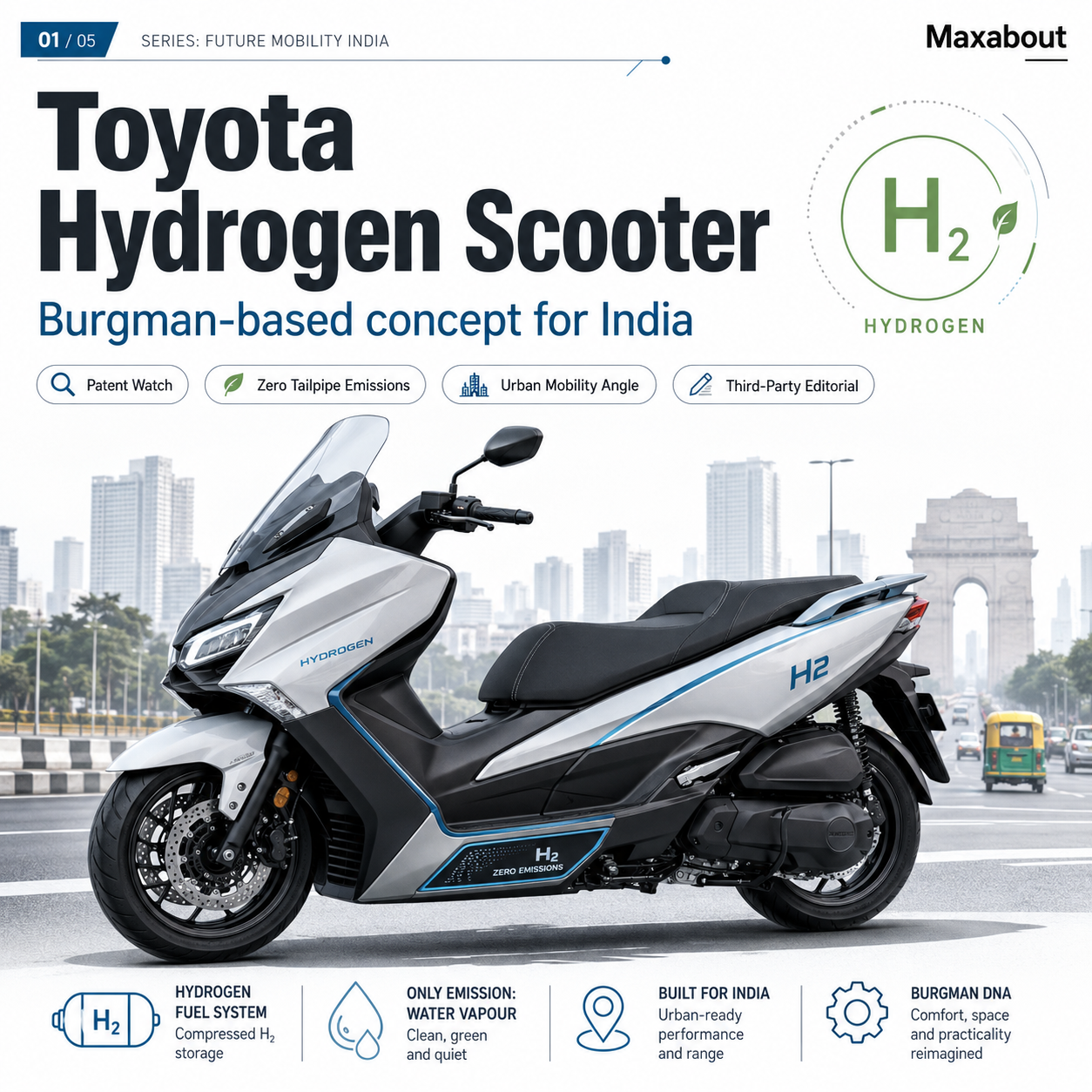 What makes this particularly interesting is the collaboration between two giants with complementary strengths. Toyota brings world-class hydrogen expertise from their Mirai program, while Suzuki's deep understanding of Indian two-wheeler preferences ensures the end product would be practical for our conditions. With fuel prices constantly fluctuating in India, a hydrogen alternative might offer much-needed economic relief for daily commuters in the long run.
Understanding Hydrogen Fuel Cell Technology in Two-Wheelers
At its core, a hydrogen fuel cell scooter works like a small power plant on wheels. Instead of storing electricity in batteries like EVs, it carries compressed hydrogen gas in a tank. This hydrogen reacts with oxygen from the air inside a fuel cell, producing electricity that powers an electric motor - with water vapor as the only emission.
Compared to our conventional petrol scooters, hydrogen fuel cell vehicles offer several differences. While petrol scooters can be refueled in minutes and typically give 40-60km/liter in Indian conditions, hydrogen scooters promise similar quick refueling (3-5 minutes) but with potentially longer ranges of 100-150km on a single tank.
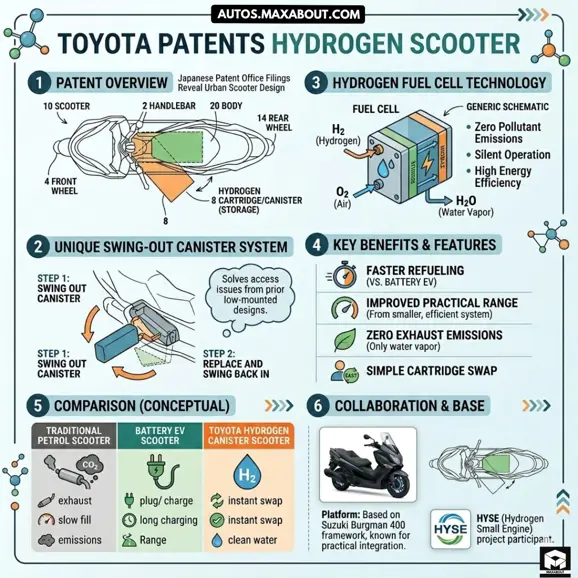 The advantages over battery electric scooters are compelling. Unlike EVs that might need 4-6 hours for a full charge, hydrogen refueling is nearly as quick as filling petrol. This solves a critical pain point for Indian riders who may not have overnight charging access in apartment complexes.
The technical aspects that would matter most include:
Power output: Typically comparable to 110-125cc petrol scooters
Range anxiety: Significantly reduced with hydrogen's energy density
Efficiency: Less energy lost during conversion than in petrol engines
Durability: Fewer moving parts suggest potentially lower maintenance
One challenge is that fuel cells operate best in controlled temperature ranges, which could be tested by India's extreme climate variations. However, Toyota's experience with the Mirai in various global conditions suggests these challenges aren't insurmountable.
Potential Benefits for Indian Riders
For Indian riders, hydrogen scooters could be revolutionary in several ways. First and foremost is the emissions angle – in cities like Delhi, Mumbai, and Kolkata where air quality regularly reaches hazardous levels, zero-emission vehicles aren't just nice-to-have but increasingly necessary for public health.
The quick refueling aspect strikes me as particularly valuable for the Indian context. Unlike EVs that might need hours to charge, hydrogen refueling takes minutes – a crucial advantage for delivery personnel, ride-share operators, and daily commuters who can't afford downtime.
I think about the delivery riders I see navigating through Bengaluru traffic all day – a hydrogen scooter could allow them to refuel once and complete their entire shift without interruptions. The same goes for the millions of people who use two-wheelers for their daily office commute.
While initial costs will likely be higher than conventional scooters, the long-term economics could make sense, especially if:
Government incentives are introduced (similar to current EV subsidies)
Fuel prices continue their upward trend
Maintenance costs prove lower over the vehicle's lifetime
The performance benefits shouldn't be overlooked either – consistent torque delivery and potentially lighter weight could provide excellent handling on India's varied road conditions, from crowded urban lanes to uneven rural pathways.
Challenges and Roadblocks for Hydrogen Adoption in India
While hydrogen technology shows promise, I think its adoption in India faces significant hurdles. The infrastructure gap is perhaps the most glaring issue – we currently have virtually no hydrogen refueling stations across the country. Even our electric charging network remains underdeveloped, so building a hydrogen ecosystem from scratch seems daunting.
The economics don't quite add up yet either. Initial costs for hydrogen vehicles typically exceed both conventional and electric alternatives. For price-sensitive Indian consumers, this presents a major barrier, especially when established electric scooters already offer lower running costs than petrol models.
Safety perceptions also pose challenges. Many consumers have concerns about hydrogen storage safety, particularly in our crowded urban environments and considering our varied climate conditions. These perceptions, whether technically justified or not, will influence adoption rates.
From a regulatory standpoint, India's policies currently favor battery electric vehicles. Without similar support for hydrogen technology, manufacturers may hesitate to invest heavily in this space. Additionally, hydrogen production itself remains energy-intensive and often relies on fossil fuels, undermining some environmental benefits.
Looking realistically at our market, widespread hydrogen adoption seems unlikely until:
Infrastructure development accelerates dramatically
Production costs decrease substantially
Public perception shifts through education and demonstration
Regulatory frameworks evolve to support the technology
The Suzuki Burgman Platform: Why It Makes Sense
Toyota's choice of the Suzuki Burgman as the foundation for their hydrogen scooter seems quite strategic when you examine it closely. The Burgman has established itself as a premium maxi-scooter known for its comfort and practicality in Indian cities.
The Burgman's spacious underseat storage presents an ideal location for hydrogen fuel cells without excessively compromising cargo space. Its larger body dimensions compared to conventional scooters provide additional room for the complex fuel system components while maintaining balance.
In Indian urban conditions, the Burgman's comfortable riding position and larger wheels already handle our notorious potholes and uneven roads better than smaller scooters. These characteristics would be particularly valuable when carrying the additional weight of hydrogen technology.
The platform would require significant modifications, particularly:
Reinforced frame to accommodate fuel cells and tanks
Redesigned thermal management systems
Completely new powertrain integration
From what I've observed, the Burgman's existing reputation for reliability in India also gives this hydrogen variant a better starting point for consumer acceptance than an entirely new model would.
Toyota-Suzuki Partnership: Implications for Indian Consumers
The Toyota-Suzuki partnership has deep roots in India, evolving significantly since their formal collaboration began in 2017. This alliance brings together Toyota's expertise in hydrogen fuel cell technology with Suzuki's strong two-wheeler market presence in India.
For Indian consumers, this collaboration offers several potential benefits:
Access to Suzuki's extensive service network across India (over 3,800 touchpoints) potentially supporting these hydrogen scooters
Toyota's quality standards combined with Suzuki's understanding of Indian pricing sensitivities
Faster rollout of hydrogen infrastructure through shared investment
I think the partnership significantly increases the viability of hydrogen technology in India's price-sensitive two-wheeler market. Toyota's global hydrogen expertise coupled with Suzuki's localization capabilities could help overcome the typical ₹2-3 lakh premium hydrogen vehicles might otherwise command.
The combined dealer networks across major metros and Tier-2 cities would address a critical challenge for any alternative fuel technology in India - accessible service points. Based on their existing models, we might expect initial launches in cities like Delhi, Bengaluru and Pune where early adoption trends are stronger.
Comparing with Current Electric and Petrol Options in India
When I look at the potential hydrogen Burgman against today's options in India, several interesting contrasts emerge. The conventional Suzuki Burgman 125 petrol variant currently costs around ₹1.2 lakh, while premium electric scooters like the Ather 450X and TVS iQube are priced between ₹1.5-1.8 lakh.
Running costs tell an interesting story. The Honda Activa and Suzuki Access cost roughly ₹2-2.5 per kilometer in fuel and maintenance. Electric options like Ola S1 Pro slash this to about ₹0.40-0.60 per kilometer. A hydrogen Burgman would likely fall somewhere in between – perhaps ₹1-1.5 per kilometer based on current hydrogen prices.
Performance-wise, the hydrogen Burgman should offer advantages over both alternatives. Unlike the Bajaj Chetak Electric with its limited 95km range, hydrogen could potentially deliver 150+ kilometers while offering quicker refueling than the 4-5 hours charging time of the TVS iQube.
For Indian roads, I think the Burgman's traditional chassis would maintain the ride quality and pothole-handling capabilities that many electric scooters struggle with due to their battery weight. However, hydrogen's biggest challenge versus the ubiquitous Activa will be fueling infrastructure – you can find petrol anywhere, while hydrogen stations are virtually non-existent.
The value proposition becomes compelling if priced around ₹1.8-2 lakh – higher than premium electric options but justified by faster refueling and potentially longer service life than battery-powered alternatives.
Timeline and Future Outlook for Hydrogen Mobility in India
In my assessment, hydrogen scooters are unlikely to reach Indian showrooms before 2028-2030. The government's National Hydrogen Mission focuses primarily on industrial applications and heavy transport rather than personal mobility solutions. While the recent green hydrogen policies are encouraging, two-wheeler infrastructure remains well down the priority list.
For hydrogen mobility to gain traction, India would need comprehensive policy interventions including:
Significant subsidies to offset initial high costs
Mandates for hydrogen refueling stations along major corridors
Tax incentives for manufacturers and consumers
Looking at the next decade, I believe hydrogen will follow a regional adoption pattern - starting in industrial hubs like Pune, Gujarat and Tamil Nadu where hydrogen production facilities exist for other purposes. Unlike EVs that piggyback on the existing electricity network, hydrogen requires entirely new infrastructure.
The hard truth? Hydrogen scooters will likely remain niche in India through the 2030s, serving specific use cases like commercial fleets with predictable routes. For the average commuter in places like Bengaluru or Delhi, battery electric and traditional petrol options will dominate for the foreseeable future given their established ecosystems.
Explore the story
Related news
Share your view and join the discussion.
Earn reward points for every comment and get a chance to win ₹1,000 in our weekly lucky draw. Sign in with Google in one tap.
Start the conversation
No one has commented on this article yet. Be the first to share your view.
Want to read more automotive news?
Stay updated with the latest car launches, reviews, and industry insights.
Browse All News