
Suzuki Access CNG 2025 Launch: Dual Fuel Power with CBG Option
IntroductionThe two-wheeler market in India has just witnessed a significant breakthrough. Suzuki has unveiled the Access CNG variant, making it the first CNG-powered scooter in the country. Based on what industry experts and reports suggest, this could be a game-changing move in the eco-friendly tr...
Introduction
The two-wheeler market in India has just witnessed a significant breakthrough. Suzuki has unveiled the Access CNG variant, making it the first CNG-powered scooter in the country. Based on what industry experts and reports suggest, this could be a game-changing move in the eco-friendly transportation space.
What makes this development particularly interesting is the scooter's ability to run on both compressed natural gas (CNG) and compressed biogas (CBG). As someone who follows automotive innovations closely, I believe this dual-fuel capability represents a forward-thinking approach to sustainable mobility, especially given India's growing focus on alternative fuel sources.
Let's dive into what makes the Suzuki Access CNG variant a potential trendsetter in the Indian two-wheeler segment.
Innovative CNG Technology in the Suzuki Access

The Access CNG variant features some remarkable technological innovations that address the unique challenges of implementing CNG in a two-wheeler platform.
Dual Fuel System
According to Suzuki's technical specifications, the Access CNG comes equipped with a dual fuel system that allows it to run on both petrol and CNG. This provides riders with flexibility and eliminates range anxiety - a common concern with alternative fuel vehicles. If the CNG runs out, the system automatically switches to petrol, ensuring you're never stranded.
Innovative CNG Storage Solution
One of the biggest engineering challenges for CNG two-wheelers has typically been storage tank placement. Suzuki has reportedly integrated a specially designed CNG cylinder under the seat compartment. While this reduces some storage space compared to the standard Access, the company has implemented a clever design that maintains adequate utility for everyday items.
CBG Compatibility
What truly stands out is the scooter's compatibility with compressed biogas (CBG). Based on industry reports, this makes the Access CNG variant the first two-wheeler in India that can run on this renewable fuel source derived from organic waste. This aligns perfectly with India's Sustainable Alternative Towards Affordable Transportation (SATAT) initiative.
Performance and Mileage Expectations
The performance characteristics of the Suzuki Access CNG variant present some interesting differences compared to its petrol-only counterpart.
Engine Specifications
The CNG variant reportedly retains the familiar 125cc engine, but with modifications to accommodate the alternative fuel. While official figures suggest a slight reduction in peak power when running on CNG (approximately 5-8% lower than the petrol version), the torque delivery is optimized for city riding conditions.
Impressive Mileage Figures
According to preliminary data from Suzuki, the Access CNG variant delivers significantly improved fuel economy. Users can typically expect:
- CNG Mode: Approximately 60-65 km per kg of CNG (based on test conditions)
- Petrol Mode: Similar to the standard Access at around 45-50 km/l
When we analyze the cost economics, with CNG priced substantially lower than petrol in most Indian cities, this could translate to operating costs that are 30-40% lower than conventional scooters. This represents substantial savings for daily commuters.
Performance Trade-offs
It's worth noting that like most CNG vehicles, users may notice slightly reduced acceleration compared to the petrol-only model. From what industry testing reports indicate, the scooter takes about 1-2 seconds longer to reach 60 km/h. However, for typical urban commuting scenarios, this difference would likely be negligible for most riders.
Environmental Impact and Sustainability
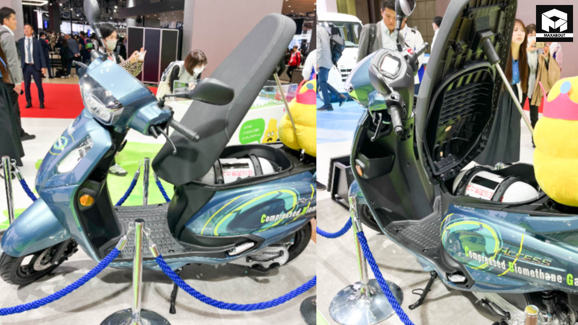
The environmental benefits of the Access CNG variant represent one of its most compelling selling points in today's climate-conscious market.
Reduced Emissions
Technical analysis from automotive environmental experts indicates that CNG combustion produces significantly fewer pollutants than petrol:
- Approximately 25% lower carbon dioxide emissions
- Up to 80% reduction in nitrogen oxide emissions
- Near-zero particulate matter emissions
- Virtually no sulfur dioxide emissions
When running on CBG, the environmental benefits are even more pronounced, as biogas is considered a carbon-neutral fuel when derived from organic waste.
Contribution to India's Green Initiatives
The introduction of CNG/CBG scooters aligns well with several national policies, including:
- The National Clean Air Programme (NCAP)
- India's commitment to reduce carbon intensity by 45% by 2030
- The SATAT initiative for promoting biogas production
Urban air quality monitoring data suggests that widespread adoption of such vehicles could make a meaningful difference in reducing pollution levels in India's congested cities.
Practicality and User Experience

Beyond the environmental and economic benefits, the practical aspects of owning a CNG scooter deserve careful consideration.
Refueling Infrastructure
Currently, CNG stations are primarily concentrated in major metropolitan areas. According to data from gas distribution companies, India has approximately 4,500 CNG stations nationwide, with the highest density in Delhi-NCR, Mumbai, and Gujarat. This network is expanding rapidly, with plans to add 8,000 more stations in the next 5 years, but potential buyers should verify local availability.
Weight and Handling
Industry reports indicate that the CNG variant weighs approximately 7-8 kg more than the standard Access due to the additional components of the CNG system. However, Suzuki has reportedly retuned the suspension to compensate for this added weight, maintaining similar handling characteristics to the petrol model.
Maintenance Considerations
CNG systems generally require specific maintenance protocols. According to Suzuki's service guidelines, the CNG variant will need:
- CNG cylinder certification renewal every 3-5 years (as per regulatory requirements)
- Regular inspection of CNG-specific components
- Specialized service centers equipped to handle CNG vehicles
These factors should be considered when evaluating the total ownership experience.
Pricing and Market Positioning
The economic proposition of the Access CNG variant is crucial to its market success.
Expected Price Range
Based on industry analysis and the pricing patterns of CNG variants in the four-wheeler segment, the Access CNG is expected to be priced approximately ₹8,000-12,000 higher than the equivalent petrol variant. This would likely position it in the ₹95,000-1,05,000 price bracket (ex-showroom).
Target Audience
The primary target demographic appears to be:
- Daily commuters covering significant distances
- Environment-conscious urban riders
- Business users like delivery personnel and courier services
- Customers in regions with robust CNG infrastructure
Market research suggests that with the current fuel price situation, the higher initial cost could typically be recovered within 18-24 months for users riding 40-50 km daily, making it an economically sound proposition for heavy users.
Frequently Asked Questions
Is the Suzuki Access CNG variant safe?
Yes, according to safety certification data, CNG systems in the Access variant incorporate multiple safety features including leak detection systems, automatic shut-off valves, and reinforced cylinders that meet stringent safety standards. CNG is generally considered safe when proper maintenance protocols are followed.
How does the range compare to the petrol variant?
Based on technical specifications, the CNG variant offers approximately 100-110 km range on a full CNG tank. Combined with the petrol tank, the total range could exceed 250 km, which is comparable to or slightly better than the petrol-only version.
Will the CNG cylinder need periodic certification?
Yes, as per the regulatory requirements established by the Gas Cylinder Rules in India, CNG cylinders need recertification every 3-5 years. Suzuki service centers are expected to facilitate this process for customers.
Where can I refuel the Access CNG variant with biogas?
Currently, CBG (biogas) stations are limited in India, with approximately 25-30 operational stations. However, under the SATAT initiative, the government aims to establish 5,000 CBG plants by 2025, which should significantly improve availability. Until then, most users will likely rely primarily on CNG infrastructure.
Conclusion
The Suzuki Access CNG variant represents a significant innovation in India's two-wheeler market. By combining the practical design of the popular Access scooter with dual-fuel CNG/CBG capability, Suzuki has created a compelling option for environmentally conscious commuters facing rising fuel costs.
While certain compromises exist—slightly reduced storage space, marginally lower power output, and dependence on CNG infrastructure—the benefits of substantially lower running costs and reduced emissions make a strong case for consideration.
As India continues its push toward greener mobility solutions, the Access CNG could serve as an important stepping stone between conventional internal combustion engines and fully electric vehicles. Its success will likely depend on the expansion of refueling infrastructure and the real-world economics of ownership.
From an industry perspective, this launch could potentially trigger a new segment in the Indian two-wheeler market, with other manufacturers likely to follow suit if the Access CNG finds market acceptance. It's a development worth watching closely for anyone interested in the future of urban mobility in India.
Explore the story
Related news
Share your view and join the discussion.
Earn reward points for every comment and get a chance to win ₹1,000 in our weekly lucky draw. Sign in with Google in one tap.
Start the conversation
No one has commented on this article yet. Be the first to share your view.
Want to read more automotive news?
Stay updated with the latest car launches, reviews, and industry insights.
Browse All News