
Royal Enfield Classic 350 Flex Fuel Testing: E85 Compatibility Coming
Royal Enfield Classic 350 Flex Fuel: A New Era for Indian MotorcyclesThe motorcycle landscape in India might soon witness a significant shift with Royal Enfield testing a flex-fuel version of its iconic Classic 350. Recent spy shots have revealed this development, and I'm genuinely excited about wha...
Editorial Team
Royal Enfield Classic 350 Flex Fuel: A New Era for Indian Motorcycles
The motorcycle landscape in India might soon witness a significant shift with Royal Enfield testing a flex-fuel version of its iconic Classic 350. Recent spy shots have revealed this development, and I'm genuinely excited about what this means for Indian riders.
For those unfamiliar, flex-fuel technology allows engines to run on various blends of gasoline and ethanol - potentially up to E85 (85% ethanol, 15% gasoline). This is particularly relevant as our government pushes toward increased ethanol blending in fuels to reduce petroleum imports and emissions.
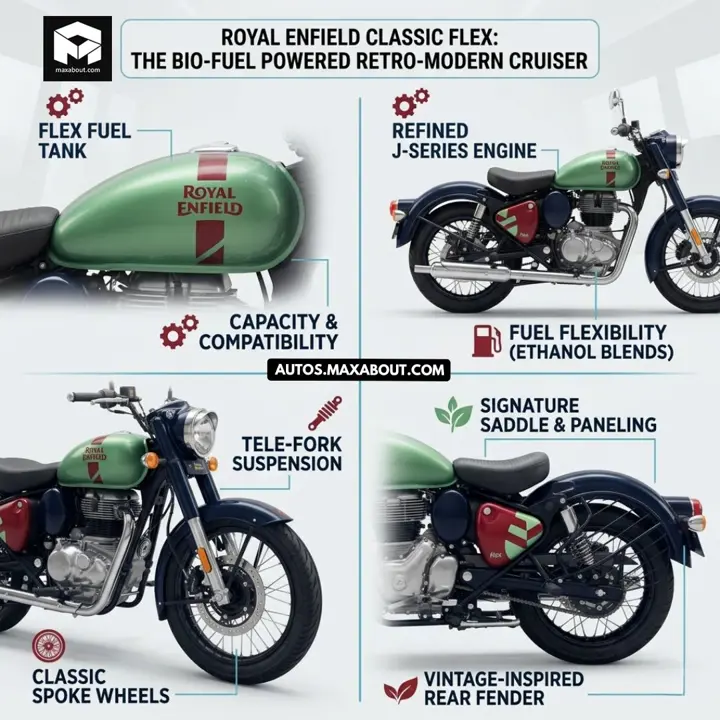 The timing couldn't be more strategic. With fuel prices constantly fluctuating and environmental concerns mounting, Royal Enfield's choice to implement this technology in their bestselling model speaks volumes about their commitment to adaptation.
What makes this especially significant is how it aligns with India's ambitious ethanol roadmap. For motorcycle owners, this could eventually translate to more fuel options at the pump and potentially lower running costs, though initial purchase price might be higher due to the specialized fuel system components required.
The Spotted Test Mule: What We Know So Far
The recently spotted Royal Enfield Classic 350 test mule reveals some telling modifications. Most notably, the motorcycle featured a distinctly labeled fuel tank with "E85" markings - the international designation for 85% ethanol-blended fuel. This isn't just a cosmetic addition; it indicates substantial modifications to the fuel delivery system beneath that iconic teardrop tank.
The test bike was observed near Royal Enfield's Chennai facility, sporting minimal camouflage but with clear instrumentation modifications that likely monitor fuel-mixture parameters. From what I can see, the engine casing appears slightly modified, probably housing corrosion-resistant components to handle ethanol's properties.
Based on typical Indian motorcycle development cycles, I'd estimate we're looking at a late 2024 or early 2025 launch timeline. The test mule appears to be in advanced testing stages, suggesting engineering validation is well underway. What's particularly interesting is that Royal Enfield has chosen to maintain the Classic's iconic silhouette rather than develop an entirely new model for this technology.
While specifications remain unconfirmed, the motorcycle likely features modified fuel injectors, upgraded seals, and recalibrated ECU to handle varying ethanol concentrations. The testing phase suggests Royal Enfield is fine-tuning the system for Indian climate conditions and fuel quality variations.
Potential Benefits for Indian Riders: Economy, Environment and Performance
A flex fuel Classic 350 could bring several tangible benefits to Indian riders. The most immediate advantage might be cost savings, as ethanol typically costs less than petrol. With current E20 blends already showing modest savings, an E85 compatible Classic could potentially reduce running costs by 10-15% - significant for those who clock substantial kilometers monthly.
From an environmental perspective, the timing couldn't be better. Major Indian cities struggle with air quality issues, and ethanol blends produce fewer particulate emissions and greenhouse gases compared to conventional petrol. I think this could be particularly valuable in dense urban environments like Delhi and Mumbai where pollution levels frequently reach hazardous levels.
Performance-wise, riders might notice some differences. Ethanol has a higher octane rating than petrol, which could translate to smoother engine operation. However, fuel efficiency might decrease slightly as ethanol contains less energy per liter than petrol. The characteristic Royal Enfield thump should remain intact, perhaps with subtle refinements to throttle response.
The infrastructure for higher ethanol blends is developing unevenly across India. While states like Uttar Pradesh, Maharashtra and Karnataka have better ethanol availability due to their sugar production, other regions lag behind. The government's ethanol blending program and tax incentives should gradually improve this situation, making flex fuel motorcycles increasingly practical throughout the country.
Challenges and Considerations for Owners
While flex fuel technology brings environmental benefits, potential Classic 350 owners should be aware of several practical challenges. First, expect a 20-30% reduction in mileage with E85 compared to regular petrol, as ethanol contains less energy per litre. On Indian highways, this could mean more frequent refueling stops during those weekend rides to Lonavala or Nandi Hills.
Maintenance considerations are equally important. Ethanol is more corrosive than petrol, potentially affecting fuel system components over time. I'm concerned about how this might play out in extremely humid coastal areas like Mumbai or Chennai, where moisture-related issues could be amplified.
Service network readiness remains questionable. While Royal Enfield has an extensive service network, technicians in smaller towns may initially lack expertise with flex fuel systems. Additionally, replacement parts specific to flex fuel models might face availability delays in remote areas of Uttarakhand or Northeast India.
Resale value is another consideration. Until flex fuel becomes mainstream, these motorcycles might face valuation uncertainty in the second-hand market, especially in regions where E85 availability remains limited. As a potential owner, weighing these practical challenges against environmental benefits will be essential.
Royal Enfield's Strategy: Why Classic 350 for Flex Fuel?
Royal Enfield's choice of the Classic 350 for flex fuel technology reveals a thoughtful strategic approach. As their bestselling model, the Classic 350 provides the perfect test platform with a large, established user base. I think this balances innovation with commercial prudence.
The move brilliantly marries Royal Enfield's heritage-focused brand identity with environmental consciousness. Unlike competitors who are primarily exploring electric alternatives (like Bajaj and TVS), Royal Enfield seems to be carving a different path that preserves their iconic thump while reducing emissions.
This strategy offers several advantages for the Chennai-based manufacturer. The Classic's simple, robust engine architecture likely requires fewer modifications for ethanol compatibility compared to more complex motors. If successful, I expect this technology will gradually extend to the Meteor, Hunter, and eventually their premium 650cc range.
What stands out is how this approach respects their loyal customer base who value tradition while still making substantive environmental progress. It's a distinctly Royal Enfield solution to the industry-wide sustainability challenge.
India's Ethanol Roadmap and What It Means for Motorcyclists
The government has set ambitious targets for ethanol blending in fuel, aiming for 20% (E20) nationwide by 2025-26. Currently, most pumps offer E10 (10% ethanol blend), though this varies by region. The National Biofuel Policy establishes this framework as part of India's push toward energy security and emissions reduction.
For motorcycle owners, this transition brings mixed implications. On the positive side, ethanol is renewable and can reduce certain emissions. The government has introduced tax benefits for flex-fuel vehicles, though the exact structure for two-wheelers is still developing.
However, there are practical considerations. Older motorcycles (particularly pre-2017 models) weren't designed for higher ethanol blends, potentially facing issues like:
Rubber/plastic component degradation
Potential for moisture absorption in fuel systems
Slight reduction in fuel efficiency (ethanol contains less energy per volume)
Motorcycle owners should expect a gradual transition rather than an overnight change. The infrastructure rollout for higher ethanol blends will happen in phases, beginning in major cities. Flex-fuel vehicles like the upcoming RE Classic offer future-proofing, but the government has indicated that conventional fuels will remain available during the transition period to support existing vehicles.
Conclusion: Is a Flex Fuel Royal Enfield Right for You?
The flex-fuel Royal Enfield Classic 350 represents an interesting crossroads for potential buyers. If you're primarily an urban rider with access to emerging infrastructure and value environmental impact, waiting for this variant makes sense. However, if you ride extensively in remote areas where specialized fuel availability might remain limited for years, sticking with the standard model could be more practical.
From an economic perspective, consider your riding habits. The initially higher purchase price might be offset by potential government incentives and future fuel flexibility as ethanol prices stabilize. Long-term owners will benefit most from this future-proofing technology.
Beyond Royal Enfield, this development signals India's broader automotive evolution. As the world's largest two-wheeler market embraces alternative fuels, expect other manufacturers to follow suit. This represents not just a new model variant, but a glimpse into the sustainable future of Indian motorcycling — balancing our passion for riding with environmental responsibility.
Explore the story
Related news


Share your view and join the discussion.
Earn reward points for every comment and get a chance to win ₹1,000 in our weekly lucky draw. Sign in with Google in one tap.
Start the conversation
No one has commented on this article yet. Be the first to share your view.
Want to read more automotive news?
Stay updated with the latest car launches, reviews, and industry insights.
Browse All News