
Renault Turbo CNG: Dual-Cylinder Performance Explained
Indian car buyers have always faced an uncomfortable trade-off. You either get a punchy, responsive engine that drinks fuel like there's no tomorrow, or you go the sensible route — CNG, decent mileage, but zero excitement behind the wheel. Nobody ever really questioned this. It felt like a rule writ...
Editorial Team
Indian car buyers have always faced an uncomfortable trade-off. You either get a punchy, responsive engine that drinks fuel like there's no tomorrow, or you go the sensible route — CNG, decent mileage, but zero excitement behind the wheel. Nobody ever really questioned this. It felt like a rule written in stone.
Then Renault went and did something genuinely interesting.
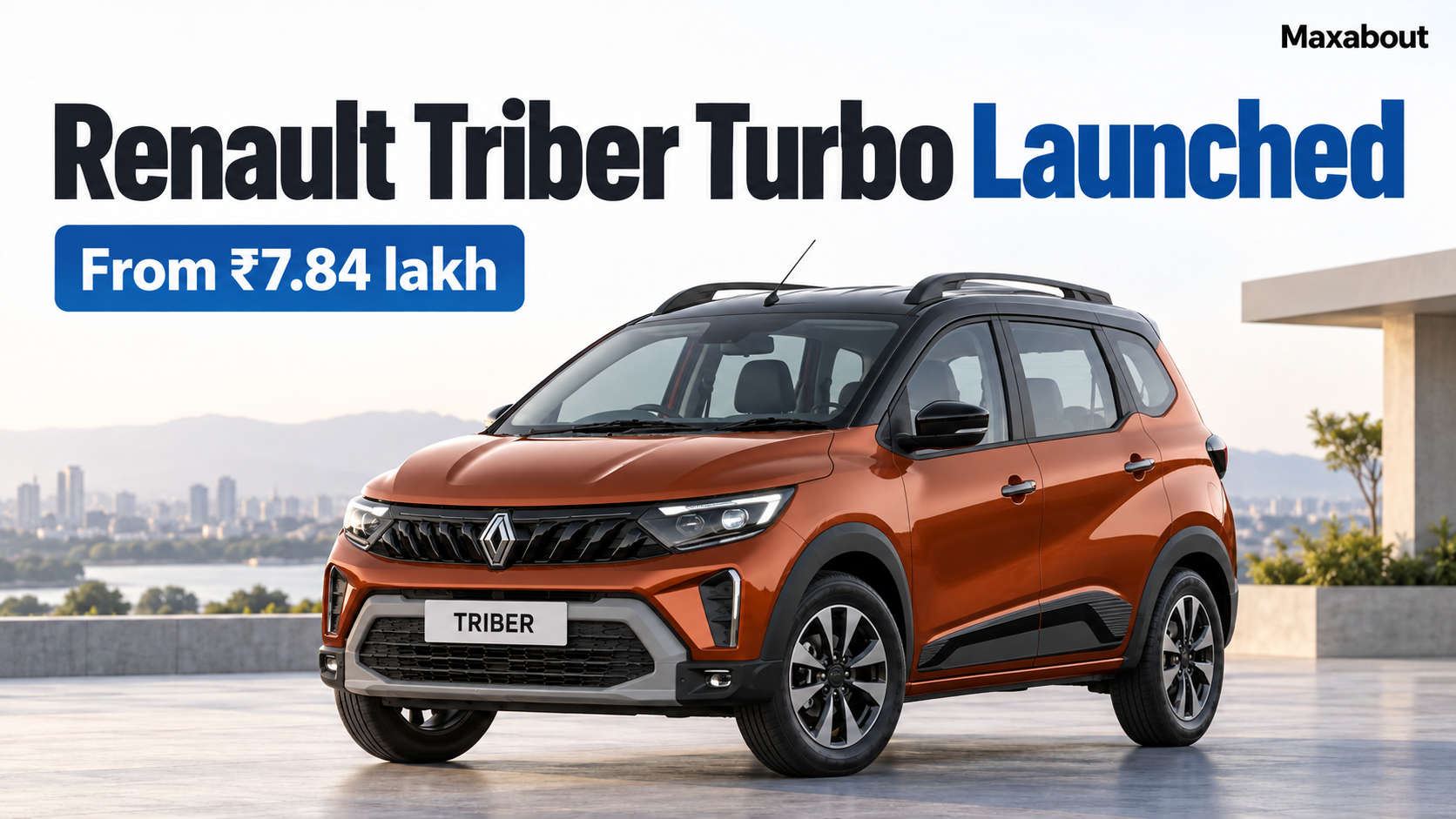
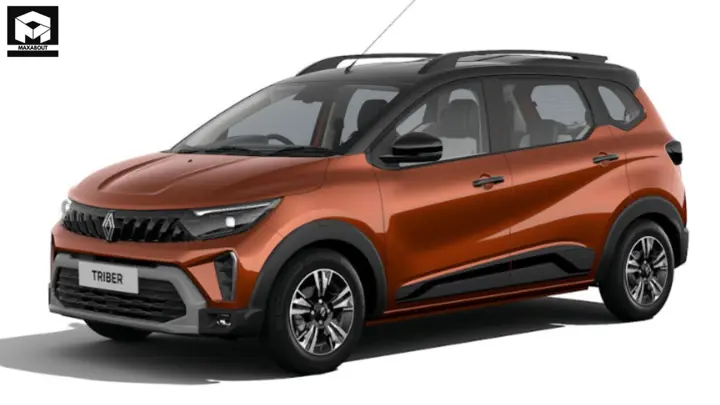 The French automaker has introduced a turbocharged engine paired with a dual-cylinder CNG setup — a combination that, frankly, very few saw coming in this segment. The dual-cylinder configuration isn't just a marketing talking point either. It addresses one of the biggest complaints about traditional CNG setups: limited boot space and reduced range anxiety. Two cylinders mean more gas storage, and that matters enormously on a long Mumbai to Pune stretch or navigating Delhi's unpredictable traffic.
The timing makes sense too. Petrol prices have been stubbornly high across major Indian cities, and CNG infrastructure has quietly expanded — Mumbai, Delhi, Pune, and Ahmedabad now have reasonably dense CNG station networks. For daily commuters, the economics are hard to ignore.
But here's what's genuinely worth asking: can a turbocharged engine actually work well on CNG without compromising either performance or efficiency? That's the question generating real buzz right now — and it deserves an honest look.
What Exactly Is a Dual-Cylinder CNG Setup and Why Does It Matter?
Most people who've dealt with traditional CNG cars know the frustration immediately. You open the boot, and a large chunk of that space is simply gone — swallowed by a single bulky CNG cylinder sitting right where your luggage should go. For a family loading up for a weekend trip, that's a genuine problem, not a minor inconvenience.
A dual-cylinder setup changes the equation quite significantly. Instead of one large tank dominating the boot floor, two smaller cylinders are mounted beneath the boot or distributed more efficiently within the vehicle's underbody. The result is that boot space remains largely usable — which sounds simple but is honestly a big deal for Indian families who need that room.
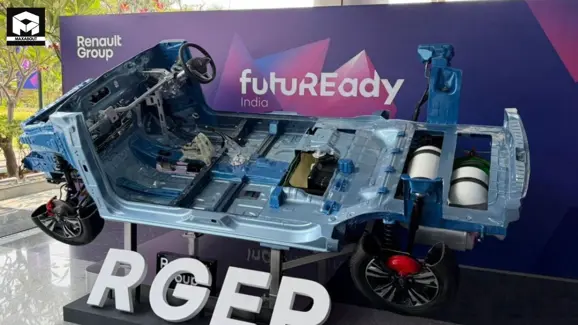 There's another practical advantage: combined storage capacity is higher. More CNG on board means fewer stops at refuelling stations. On a run like Delhi to Jaipur — roughly 280 kilometres — that kind of range matters. You're not anxiously scanning for the next CNG pump somewhere outside Gurugram. Same logic applies to Mumbai-Pune stretches, where highway driving eats through fuel faster than city crawling.
Think of it this way — it's similar to carrying two medium-sized water bottles instead of one oversized jug. Same total volume, but far easier to manage and store without disrupting everything around it.
From what industry observers are noting, this configuration represents a genuine engineering refinement rather than just a marketing talking point — and for CNG adoption to grow beyond city commuters, solving exactly these practical concerns was essential.
Turbocharged Engine on CNG: Performance Numbers That Actually Surprise You
Here's where things get genuinely interesting. Turbo engines and CNG have historically been an awkward combination. CNG has a lower calorific value than petrol, which means less energy per unit volume — and when you're forcing compressed air into a smaller displacement engine expecting explosive combustion, that energy gap becomes very noticeable. Most older naturally aspirated CNG setups already felt sluggish. A turbo on CNG? Conventionally, that sounded like a recipe for disappointment.
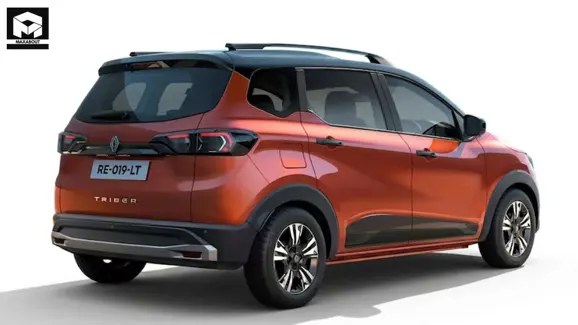 Renault's approach appears to challenge that assumption meaningfully. On petrol, the turbocharged engine produces figures that feel genuinely punchy for this segment. On CNG mode, the power drop exists — and it's honest to acknowledge that — but from what reviewers and early observers are reporting, the deficit is noticeably smaller than what you'd experience in older CNG setups.
In real-world terms, this apparently translates to something practical. Merging onto the Bengaluru outer ring road during peak hours, or pushing past a slow-moving truck on Chennai's ECR — situations where older CNG cars would leave you anxiously waiting — reportedly feel more manageable here. The turbo helps compensate where the fuel's natural limitations would otherwise create a frustrating flat spot.
Turbo lag on CNG? Reviews suggest it's present but not dramatically disruptive. It's the kind of slight hesitation you consciously notice only when you're specifically looking for it.
This isn't petrol-level sharpness. But it's meaningfully closer than before.
Fuel Efficiency and Running Costs: The Numbers Indian Buyers Actually Care About
Performance conversations are interesting. But in India, the real question most buyers ask is simpler: how much will this actually cost me to run?
Let's look at rough current numbers. CNG in cities like Delhi and Mumbai hovers around ₹75–80 per kg. Petrol sits closer to ₹103–106 per litre in most metros. The Renault's CNG efficiency reportedly delivers around 26–28 km per kg, while the petrol variant returns roughly 18–19 km per litre under realistic conditions.
That works out to approximately ₹2.85–3.0 per km on CNG versus ₹5.5–5.8 per km on petrol. For someone driving 1,500 km monthly, the monthly saving lands somewhere between ₹3,700 and ₹4,300. Over a year, that's real money — close to ₹50,000 in savings.
The CNG variant typically carries a price premium of roughly ₹80,000–90,000 over the base petrol version. At those monthly savings, the break-even period works out to around 18–22 months. Perfectly reasonable for a daily-use family vehicle.
But here's where it gets complicated. CNG infrastructure in India is still deeply uneven. Delhi-NCR, Mumbai, Ahmedabad, Pune — strong networks, manageable queues. Move to a Tier 2 city like Bareilly, Nashik outskirts, or Coimbatore, and the nearest CNG station might genuinely inconvenience your daily routine.
For those buyers, the calculus shifts entirely. The savings exist on paper, but the operational friction changes the real-world value significantly.
Boot Space, Practicality, and Everyday Indian Family Life
Here's where the dual-cylinder setup genuinely earns its place. Anyone who has sat behind the wheel of an older CNG car knows the frustration — you open the boot, and a massive single cylinder stares back at you, leaving barely enough room for a weekend bag. Renault's approach of splitting the storage into two smaller cylinders, mounted lower and more efficiently, changes that equation meaningfully.
From what reviewers and early observers have noted, usable boot space remains reasonably practical — not perfect, but workable. A family of four heading to the airport with standard luggage should manage without strapping bags to the roof. That's a genuine improvement over what CNG buyers have tolerated for years.
Weekend trips to Lonavala, Kasauli, or Coorg? Realistic, with some discipline around packing. You won't fit everything everyone wants to bring, but that's true of most compact cars in this segment regardless of fuel type.
The practicality story gets more compelling for ride-sharing and commercial operators — arguably the largest CNG buyer segment in India. Cab drivers running Pune to Mumbai or grinding through Bengaluru's traffic daily need two things: fuel savings and passenger comfort. The reduced boot intrusion means rear passengers aren't squeezed, which matters enormously for driver ratings and repeat rides.
That said, honest disclosure matters here. This isn't a cavernous boot. Families expecting SUV-level luggage capacity will be disappointed.
Pros and Cons: An Honest Assessment Without the Marketing Gloss
Let me be straightforward here. This setup has genuine strengths, but it also carries real compromises that deserve honest attention.
What genuinely works: The running cost advantage is significant. For anyone covering 2,000-plus kilometres monthly, the savings over petrol add up quickly — easily justifying the investment within 18 to 24 months for high-mileage users. The dual-cylinder design recovering boot space is a meaningful practical improvement over traditional CNG setups. And the turbo engine does meaningfully close the performance gap that has always made standard CNG feel sluggish in city traffic. Renault's service network has also expanded considerably across tier-two cities, which matters for long-term ownership confidence.
Where it falls short: The upfront price premium over the standard petrol variant is noticeable. If you're driving moderate distances, the math simply doesn't work in CNG's favour. More critically, CNG infrastructure remains genuinely patchy outside major metros — anyone in smaller towns knows the anxiety of hunting for a functioning pump.
There's also an honest concern worth raising: turbocharged engines on CNG face greater long-term stress. The combination of forced induction and gaseous fuel introduces variables that even experienced mechanics in smaller towns may not be fully equipped to handle. It's not a dealbreaker, but it warrants realistic expectations.
And petrol mode still feels noticeably sharper. That gap hasn't disappeared entirely.
Who Should Actually Buy This — And Who Should Think Twice?
Let me be straightforward here, the way a friend would be before you sign anything.
This vehicle makes genuine sense for you if you're a daily commuter in Delhi NCR, Ahmedabad, Pune, or Mumbai, where CNG stations are reasonably accessible and the monthly fuel savings are real and consistent. If you're clocking 2,000 km or more every month — whether you're running a cab on an aggregator platform or simply commuting long distances — the economics here are genuinely compelling. Families wanting something practical but not completely boring will also find the turbo's character refreshing compared to standard CNG options.
But if you live in parts of the Northeast, a smaller Tier 3 town, or any area where CNG infrastructure is still developing, this becomes a different conversation entirely. The efficiency advantage evaporates if you're regularly defaulting to petrol mode.
Highway-focused drivers should also pause. This isn't built for long expressway stretches where performance consistency matters most. And if you regularly need serious boot space, the CNG cylinder placement will frustrate you quickly.
The honest summary: high-mileage urban buyers in CNG-ready cities will genuinely benefit. Everyone else should weigh the compromises carefully before committing.
Final Verdict: Is Renault's Turbo CNG Combination the Future of Affordable Motoring in India?
Renault has done something genuinely worth acknowledging here. Pairing turbo performance with dual-cylinder CNG in an affordable package isn't just clever marketing — it addresses a real frustration that Indian CNG buyers have lived with for years. The sluggish, underpowered CNG experience that most people reluctantly accepted? This combination directly challenges that perception.
Is it revolutionary? Not entirely. But meaningful? Absolutely yes.
The dual-cylinder layout solves the boot space problem that made previous CNG options impractical for families. The turbo engine brings back some driving dignity that CNG setups typically strip away. These aren't minor refinements — they're thoughtful responses to documented, real-world complaints from actual Indian buyers.
That said, execution has gaps. CNG infrastructure outside major cities remains patchy. Some refinement concerns have emerged from early reviews. And the running cost advantage requires genuine commitment to CNG usage, not occasional dips into the fuel mode.
In the broader context, India's CNG adoption curve is clearly rising. Government policy continues pushing alternative fuels firmly. Competitors will follow — that much is certain. Renault has simply moved first, and in competitive segments, that matters.
My considered opinion: if you're an urban buyer clocking serious daily mileage in a CNG-served city, this deserves genuine shortlist consideration. Not blind enthusiasm — but real, serious consideration.
Explore the story
Related news




Share your view and join the discussion.
Earn reward points for every comment and get a chance to win ₹1,000 in our weekly lucky draw. Sign in with Google in one tap.
Start the conversation
No one has commented on this article yet. Be the first to share your view.
Want to read more automotive news?
Stay updated with the latest car launches, reviews, and industry insights.
Browse All News