
Renault Duster Outsells Triber, Tops Sales in April 2026
Nobody really saw this coming. Renault in India had been running on fumes for a while — a brand that once genuinely excited buyers had slowly faded into the background. The Triber was doing the heavy lifting, keeping the brand alive in the sales charts. Then April 2026 happened.When the monthly sale...
Editorial Team
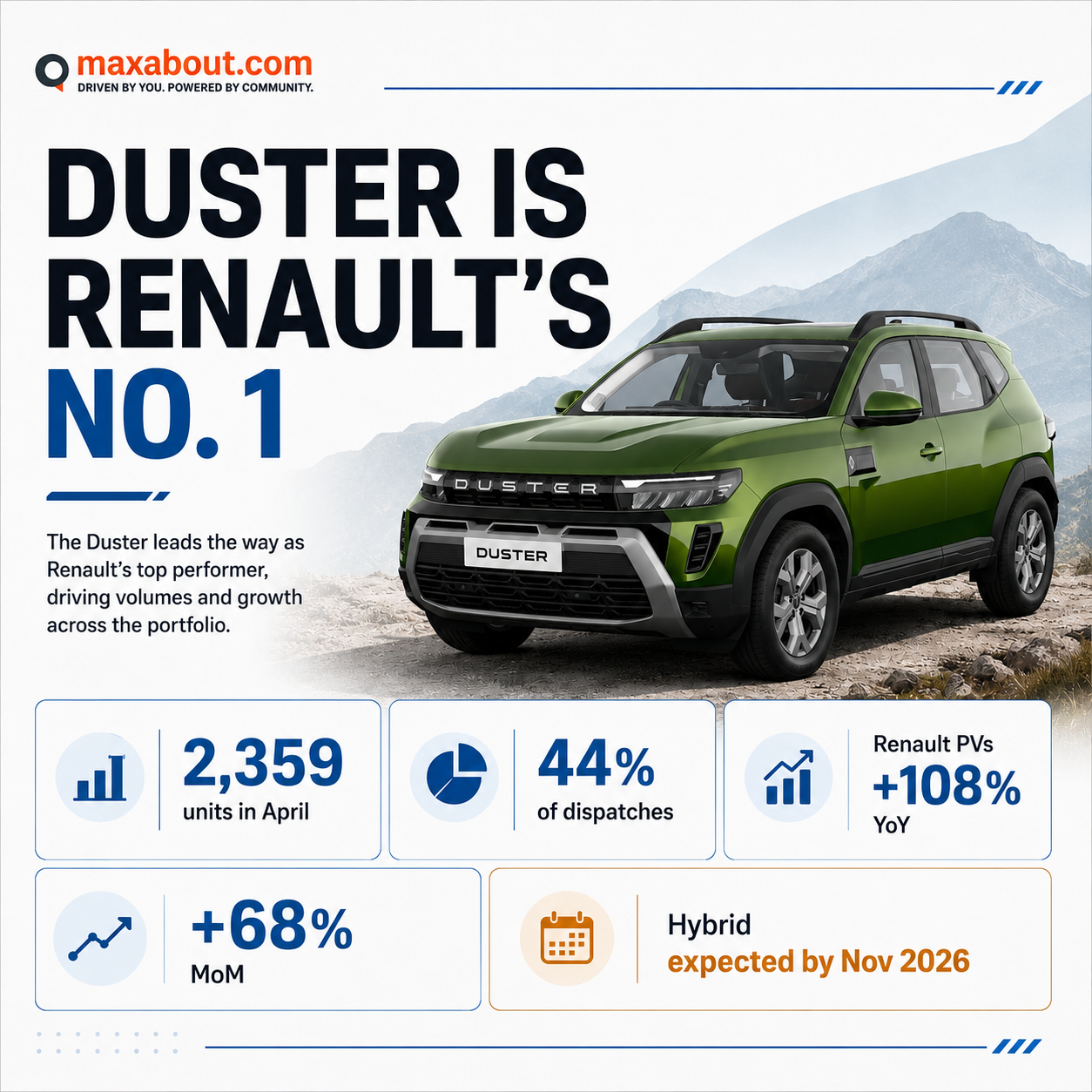
Nobody really saw this coming. Renault in India had been running on fumes for a while — a brand that once genuinely excited buyers had slowly faded into the background. The Triber was doing the heavy lifting, keeping the brand alive in the sales charts. Then April 2026 happened.
When the monthly sales data dropped, the Duster had not just returned — it had outsold the Triber to become Renault's No. 1 model. That is a sentence I genuinely did not expect to write anytime soon. And from what industry observers are saying, most analysts didn't either.
Why does this matter? Because the mid-size SUV space in India right now is arguably the most brutal battlefield in the entire automotive market. Buyers here are informed, demanding, and spoiled for choice. For the Duster to cut through that noise — against established rivals with stronger dealer networks and bigger marketing budgets — says something real about the product itself.
The SUV segment has also evolved significantly. Indian buyers today are looking beyond just ground clearance and boot space. Features, refinement, and value at a given price point are all being scrutinized carefully. The fact that the Duster is resonating again suggests Renault may have genuinely listened this time around.
A Quick Look Back: Why the Original Duster Still Has a Cult Following in India
When the first-generation Duster arrived in India around 2012, it landed at exactly the right moment. The SUV segment was growing, but genuine off-road capable vehicles at an accessible price point were rare. Renault essentially offered something that felt honest — real ground clearance, a torquey diesel engine, and a ride quality that actually handled broken tarmac rather than just pretending to.
 Owners in places like Pune, Nagpur, and across the Northeast — where roads can shift from smooth highway to potholed chaos within a few kilometres — genuinely trusted it. That reputation spread organically, the old-fashioned way. Word of mouth.
The diesel motor, in particular, was widely appreciated. It pulled well, returned reasonable efficiency on long highway stretches, and felt built for purpose rather than built for a spec sheet. That combination earned the Duster a loyal following that, frankly, outlasted the car's commercial run.
It eventually faded. Tougher competition, a changing market, and some strategic missteps on Renault's part meant the Duster quietly stepped back. But the affection never fully disappeared. So when the new Duster was confirmed, that older generation of admirers — people who had owned one or simply always wanted to — paid immediate attention. That pre-existing goodwill is something no marketing budget can simply manufacture.
What the New Duster Brings to the Table: Features, Powertrain, and Positioning
So what exactly is Renault offering this time around? From available specifications and early reviews, the new Duster comes built on a more modern platform — and that foundation shows in how the vehicle carries itself. It feels more substantial, more considered. Less like a workhorse and more like something that actually wants to impress you.
On the powertrain side, the new Duster arrives with a turbocharged petrol engine — a 1.0-litre unit in the base configuration and a stronger 1.3-litre turbo petrol for the higher variants. A mild hybrid option is also in the mix, which makes practical sense given fuel prices and urban traffic conditions across Indian cities. Whether you're crawling through Bengaluru's outer ring road or doing long stretches on the Delhi-Jaipur highway, having that extra efficiency matters. Transmission choices include both manual and automatic options, which covers a reasonable spread of buyer preferences.
Pricing sits broadly in the ₹12–18 lakh range, and that positioning is genuinely interesting. It places the Duster in a competitive but not overcrowded space — premium enough to feel like an upgrade, accessible enough to not feel aspirational to the point of irrelevance.
Inside, from what early reviews suggest, the cabin quality is noticeably better than what older Duster owners might remember. The infotainment system is a proper touchscreen unit with wireless connectivity, and higher trims reportedly get ADAS features — lane assist, automatic emergency braking, and the like. Boot space is generous for the segment. Where it does cut corners is in some of the harder plastics lower down the cabin and a few switchgear elements that feel less refined than the price tag might suggest. Honest, but not a dealbreaker.
Why the Duster Outsold the Triber in April 2026: Reading the Numbers
The sales figures from April 2026 tell an interesting story. The Duster overtaking the Triber as Renault India's top-selling model in a single month is not something you can brush aside easily. The Triber has been a reliable volume contributor for Renault — affordable, practical, and popular with families looking for a seven-seat option without stretching their budget too far. So when the Duster steps in and claims that top spot, it is worth asking why.
Pent-up demand is probably the most straightforward explanation. The Duster nameplate carries genuine nostalgia in the Indian market. Buyers who followed the relaunch closely, placed early bookings, and waited through production ramp-up phases — many of them likely took delivery right around April. That kind of concentrated demand can create an artificial spike in monthly numbers that does not necessarily reflect what steady-state sales will look like three or six months down the line.
There is also the broader segment story at play here. SUVs have consistently outpaced MPVs in India over the last several years, and that trend shows no sign of reversing. Industry reports point to buyers increasingly prioritising road presence, perceived safety, and higher ground clearance — all of which the Duster delivers. The Triber, despite its versatility, operates in a space where consumer enthusiasm has plateaued somewhat.
April specifically may have added a tailwind. The post-financial year period often sees fresh purchase decisions as buyers finalise budgets and new model year variants arrive. If Renault timed a variant launch or introductory pricing window around this period, that could have pulled forward demand meaningfully.
That said, one month's data deserves cautious interpretation. Sustained performance over the next several months will be the real measure of whether the Duster has genuinely reclaimed its footing — or simply enjoyed a strong opening chapter.
Real-World Practicality: How the Duster Handles Indian Roads and Daily Use
Numbers and sales rankings only tell part of the story. The question that actually matters to most buyers is simpler: does it hold up on the roads we actually drive every day?
Ground clearance has always been a Duster strength, and the updated version continues that tradition. At around 205mm, it handles waterlogged stretches during Mumbai's monsoon season with noticeably more confidence than lower-slung crossovers. The underbelly isn't constantly at risk on the broken, potholed roads that seem permanent on the outskirts of Bengaluru or Pune.
Ride quality draws consistent praise in early test drive reports. The suspension setup appears well-tuned for Indian conditions — firm enough to feel composed on the Delhi-Jaipur highway run, yet absorbent enough to take the edge off urban road damage without that unsettling floaty feeling that plagues some softer-tuned rivals.
Cabin noise is reasonably controlled at highway speeds, though from what reviewers have noted, it isn't class-leading. AC cooling performance — genuinely critical in northern and central India through April and May — gets positive mentions, with the system reportedly reaching comfortable temperatures quickly even under harsh afternoon sun.
Rear seat space is adequate for family highway trips, though taller passengers may find legroom acceptable rather than generous. For city use, the turning radius and overall dimensions make parking in tight urban lots manageable, if not effortless.
Ownership Costs, Service Network, and the Renault Trust Factor
Here is where things get genuinely complicated. The Duster may win you over on paper, but Renault's after-sales reputation in India has historically been its weakest link — and any honest discussion of this vehicle has to address that directly.
Renault currently operates around 600+ service touchpoints across India, including authorized workshops and dealerships. That sounds reasonable until you compare it against Maruti's 4,000+ network or Hyundai's 1,300+ outlets. In major metros — Mumbai, Delhi, Bengaluru, Hyderabad, Chennai, Pune — you will find multiple Renault facilities without much trouble. But if you are based in a smaller city or a tier-3 town, the nearest authorized center could be a 60 to 90 kilometer drive. That is a real concern, not a minor inconvenience.
From what existing Kwid and older Duster owners report, annual maintenance costs for a Renault typically fall between ₹8,000 and ₹14,000 per year under normal usage, assuming standard service intervals of every 10,000 kilometers or 12 months. The new Duster's service intervals are reportedly similar, which keeps running costs predictable. Spare parts availability in major cities seems to have improved noticeably over the past two years, though owners in smaller markets occasionally report waiting periods for specific components.
Insurance costs sit broadly in line with segment competitors — expect first-year comprehensive premiums somewhere in the ₹28,000 to ₹38,000 range depending on variant and city, which is neither alarming nor particularly attractive.
To Renault's credit, the brand has been actively expanding its network and has introduced service camps in underserved regions. But credit only goes so far. The trust gap with buyers outside urban India remains real, and no amount of sales momentum fully erases that concern overnight.
Who Should Buy the Duster — and Who Should Think Twice
Let me be straightforward here, because this is genuinely useful to think through before you spend ₹12 to ₹20 lakh on anything.
The Duster makes real sense if you:
Split your driving between city traffic and weekend highway runs — this is where the Duster's suspension tuning genuinely shines
Live in a Tier 2 city like Nagpur, Coimbatore, or Lucknow where broken roads and uneven surfaces are daily reality, not occasional surprises
Want a European design that doesn't look like every other SUV in the parking lot
Prioritize ride height and road presence over a third row of seats
Be honest with yourself and look elsewhere if you:
Frequently travel to areas where Renault's service reach is still thin — a breakdown 200 kilometers from the nearest workshop is a serious problem, not a minor inconvenience
Need a third row for regular family use
Are thinking about resale value three to four years out — Japanese and Korean alternatives simply hold their value more predictably right now
From what I can see, the Duster rewards buyers who choose it with clear eyes. It's a capable, characterful SUV that has earned its April sales numbers honestly. Just make sure your priorities align with what it actually offers.
Can Renault Sustain This Momentum Beyond April 2026?
One strong month is genuinely encouraging. But in the Indian car market, one month is also exactly that — one month. Buyer attention shifts fast, newer launches create fresh distractions, and the competition never really sleeps. So the real question worth asking is whether Renault can turn this April performance into something more durable.
A few things will matter more than anything else. Consistent delivery timelines are probably the most urgent priority. When a model generates buzz and waiting periods stretch beyond reason, early goodwill evaporates quickly. Renault needs to ensure that someone walking into a showroom today gets their Duster within a reasonable window — not six months later with a weak explanation.
Variant pricing also needs watching. If the well-equipped trims drift toward a price point where more established rivals offer better ownership security, the value proposition weakens. Keeping the mid-range variants genuinely competitive is what converts consideration into purchase decisions.
There is also a geography problem worth addressing. Renault's marketing has historically leaned heavily toward metro cities. But a significant portion of India's SUV buyers now come from Tier 2 and Tier 3 cities — places like Indore, Coimbatore, Lucknow, and Rajkot. These buyers are informed and willing to spend, but they also need accessible service networks and local confidence in the brand. Reaching them meaningfully requires more than digital campaigns.
On the product side, whether a diesel option eventually joins the lineup could determine how far the Duster's appeal stretches — particularly for buyers covering long highway distances regularly. From what industry discussions suggest, a diesel variant remains a possibility, and if priced sensibly, it could open a different buyer segment entirely.
Ultimately, the most powerful marketing Renault has access to right now costs nothing — word of mouth from satisfied owners. If the people who bought the Duster in April are genuinely happy six months from now, that experience will do more for the brand than any campaign. Ownership quality, service responsiveness, and parts availability will shape that narrative quietly but decisively.
The Duster's return is a positive development for the segment. It gives buyers another credible, characterful option in a space that was beginning to feel formulaic. But the real verdict won't arrive in April sales charts. It will come from owners a year down the line — in parking lots, on highway drives, and in honest conversations. That story is still being written.
Explore the story
Related news
Share your view and join the discussion.
Earn reward points for every comment and get a chance to win ₹1,000 in our weekly lucky draw. Sign in with Google in one tap.
Start the conversation
No one has commented on this article yet. Be the first to share your view.
Want to read more automotive news?
Stay updated with the latest car launches, reviews, and industry insights.
Browse All News