
Reliance Targets 120 GWh Battery Factory Capacity
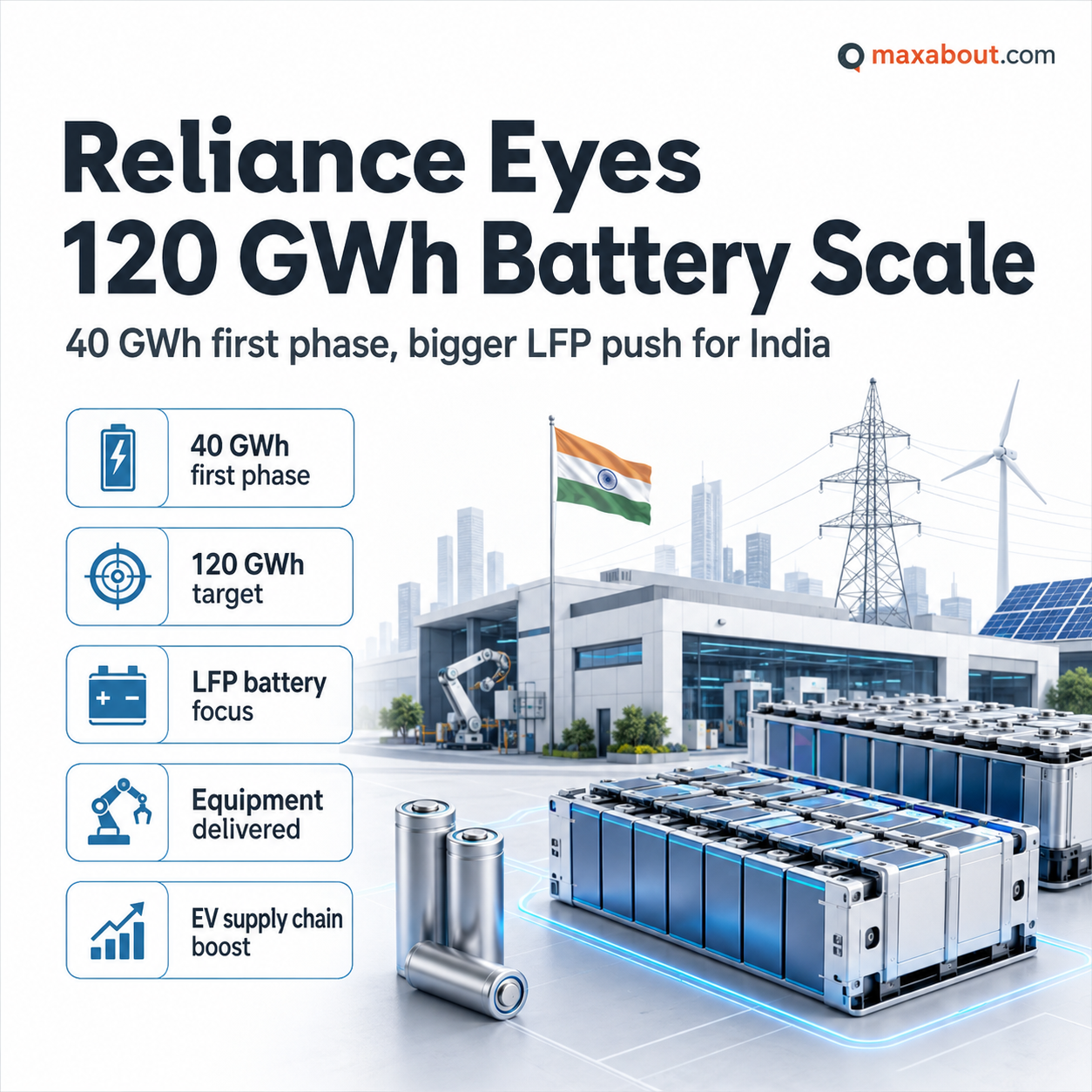
Reliance Industries is targeting a major scale-up in battery manufacturing, with a plan to expand its battery energy storage and cell giga factory from an initial 40 GWh annual capacity to as much as 120 GWh annual capacity. The first 40 GWh phase is reported to be on track for commissioning this ye...
Editorial Team
Reliance Industries is targeting a major scale-up in battery manufacturing, with a plan to expand its battery energy storage and cell giga factory from an initial 40 GWh annual capacity to as much as 120 GWh annual capacity. The first 40 GWh phase is reported to be on track for commissioning this year, with equipment already delivered to the site.
What you need to know
Initial phase: 40 GWh annual battery energy storage and cell factory capacity.
Longer target: up to 120 GWh annual capacity.
Battery chemistry focus: lithium iron phosphate battery manufacturing.
Reported status: equipment for the first phase has been delivered to the site.
India angle: the project is being positioned around clean-energy supply-chain resilience and local manufacturing scale.
Why 120 GWh is a big number
A 120 GWh annual battery target is not just a factory-size claim. For India, such capacity would sit directly inside the wider push for localized EV components, energy storage, and clean-energy infrastructure. Batteries remain one of the highest-cost and most strategically important parts of electric vehicles, so domestic scale can influence cost control, supply stability, and future product planning.
The reported first phase of 40 GWh is important because it gives the plan a near-term production anchor. The larger 120 GWh target signals where Reliance wants the project to go if execution, demand and supply-chain ramp-up stay on course.
Key facts at a glance
| Detail | Reported information |
|---|---|
| Company | Reliance Industries |
| Project type | Battery energy storage and cell giga factory |
| Initial annual capacity | 40 GWh |
| Planned scale-up | Up to 120 GWh annual capacity |
| Battery focus | Lithium iron phosphate batteries |
| Reported status | First-phase equipment delivered; commissioning targeted this year |
What it could mean for India EVs
If Reliance executes the battery factory ramp-up, the impact could extend beyond stationary energy storage. Local LFP battery capacity can support electric two-wheelers, fleet EVs, commercial mobility, charging infrastructure and grid storage. It may also reduce dependence on contested global battery supply chains, though the real effect will depend on production timelines, cell quality, cost competitiveness and downstream customer adoption.
The project is also being linked to broader clean-energy infrastructure, including the Giga Complex and Kutch Solar Farm. The reported job-impact claim of 200,000 jobs across those clean-energy projects underlines why this is being framed as an industrial-scale story rather than a narrow EV update.
What to watch next
Whether the first 40 GWh phase is commissioned on schedule.
How quickly Reliance moves from equipment installation to commercial output.
Whether the 120 GWh target is backed by phased timelines and customer offtake.
How the LFP battery focus translates into EV, storage and fleet applications.
FAQs
What is Reliance's reported battery factory target?
Reliance is reportedly targeting up to 120 GWh annual battery factory capacity after an initial 40 GWh phase.
Is the 40 GWh phase already operational?
The first phase is reported to be on track for commissioning this year, with equipment delivered to the site. Commercial production details still need to be watched.
Why does LFP battery manufacturing matter?
Lithium iron phosphate batteries are widely used for cost-conscious EV and energy-storage applications. Local LFP manufacturing can help India reduce supply-chain dependence if it reaches competitive scale and quality.
Bottom line: Reliance's 120 GWh battery factory target makes this one of India's most important clean-energy manufacturing stories to watch, especially for EV supply-chain localization and future battery cost trends.
Explore the story
Related news

Share your view and join the discussion.
Earn reward points for every comment and get a chance to win ₹1,000 in our weekly lucky draw. Sign in with Google in one tap.
Start the conversation
No one has commented on this article yet. Be the first to share your view.
Want to read more automotive news?
Stay updated with the latest car launches, reviews, and industry insights.
Browse All News