
Nissan Patrol India Launch: 5 Things You Need to Know
The Nissan Patrol has spent decades building a reputation that most SUVs only dream about. Serious off-road credentials, a loyal global following, and a presence in markets where roads genuinely test vehicles — the Middle East, Australia, Africa. It is the kind of nameplate that carries real weight....
Editorial Team
The Nissan Patrol has spent decades building a reputation that most SUVs only dream about. Serious off-road credentials, a loyal global following, and a presence in markets where roads genuinely test vehicles — the Middle East, Australia, Africa. It is the kind of nameplate that carries real weight. And now it is confirmed for India.
That actually means something. Full-size, body-on-frame SUVs are increasingly rare in this market. The Toyota Land Cruiser has a waiting list that stretches into the absurd. The segment is small but the demand is clearly there, especially among buyers in Delhi, Mumbai, and Hyderabad who have either driven a Patrol abroad or simply want something beyond the usual monocoque flagship crowd.
India's appetite for premium and ultra-premium SUVs has grown considerably over the last few years. Buyers at the top end are no longer settling. They want genuine capability, not just expensive badges and large screens. The Patrol speaks directly to that buyer.
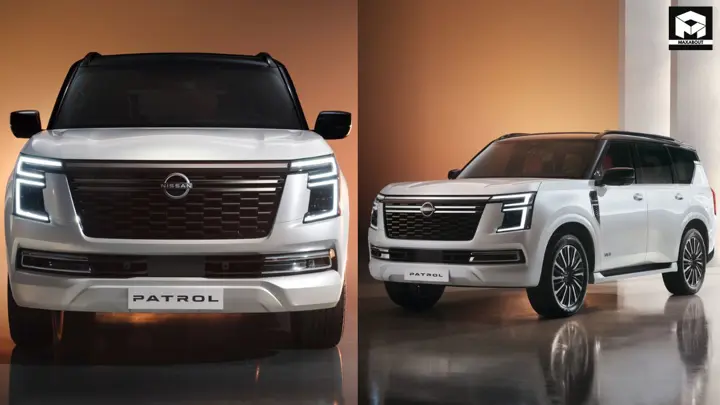 So here are five things you actually need to know before this vehicle arrives — pricing expectations, what powertrain makes sense for Indian conditions, who this is really for, and whether the wait will be worth it.
What Exactly Is the Nissan Patrol and Why Does It Have Such a Cult Following
If you have spent time in the Middle East or Australia, you already know what a Patrol is. It is practically a cultural institution in those markets. In the UAE and Saudi Arabia, the Patrol outsells almost every other large SUV year after year. That is not marketing — that is decades of earned trust from people who genuinely depend on these vehicles in extreme conditions.
For Indian readers less familiar with it, here is the simplest way to understand what the Patrol is: imagine a vehicle built the old-fashioned way, with a body-on-frame construction, a proper ladder chassis underneath, and serious mechanical capability — wrapped in a genuinely premium interior. That combination is increasingly rare today.
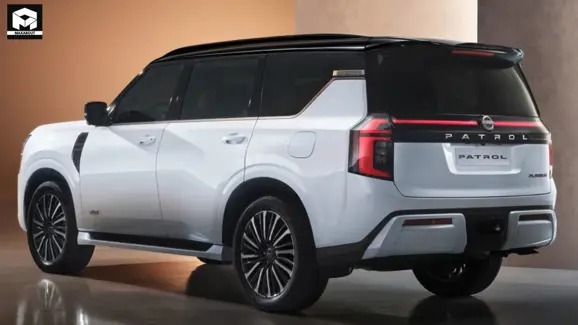 Almost everything popular in India right now — the Fortuner being a notable exception — is built on a monocoque platform, where the body and structure are one unit. That works well for smooth roads and urban comfort. But body-on-frame vehicles like the Patrol are fundamentally different. From what international owners consistently report, the ladder frame gives it durability and off-road composure that monocoque crossovers simply cannot match under serious stress.
Think of it as broadly occupying the same space as a Land Cruiser 300 or a Defender — vehicles that blend luxury with genuine capability rather than just suggesting it.
Expected Price and Which Variant Is Likely to Land in India
This is where things get genuinely interesting — and admittedly, a little speculative. Based on India's CBU import duty structure, which typically adds 100% or more to the base cost of a fully built-up vehicle, the Patrol is almost certainly going to land somewhere in the ₹2 crore to ₹2.5 crore range, possibly higher depending on the trim Nissan chooses to bring in.
For context, that puts it directly alongside the Land Cruiser 300, which itself sits in that bracket and has a waiting period that stretches into years. Nissan will need to price this carefully.
What variant arrives matters enormously. India will likely receive a single, higher-spec trim — that is fairly standard practice for CBU luxury imports here. Whether that includes the top-tier platinum finish or a mid-range configuration is still unconfirmed officially.
From what industry sources suggest, expect the twin-turbocharged V6 petrol rather than the diesel, given emission compliance considerations. That means performance credentials should be strong, even if fuel bills will reflect the engine's appetite.
At this price point, buyers are not calculating features per rupee. They are buying exclusivity, capability, and frankly, the statement the vehicle makes.
Engine Options and Performance: What Powers the Patrol
The heart of the Patrol globally is a 3.0-litre twin-turbocharged V6 petrol engine, producing around 428 horsepower and 700 Nm of torque. Those figures are genuinely substantial. Paired with a nine-speed automatic transmission, power delivery is reportedly smooth and progressive rather than aggressive, which actually makes sense for a vehicle this size and weight.
A diesel variant exists in certain markets, but given India's current emission framework and Nissan's likely strategy, the V6 petrol is almost certainly what arrives here first. Whether a diesel follows depends entirely on demand signals and regulatory clarity.
Now, the honest part. A large turbocharged V6 in Mumbai or Delhi traffic will drink fuel at a pace that needs serious acknowledgement. Global reviews consistently report real-world efficiency figures in the range of 7 to 10 kilometres per litre under mixed conditions. On open expressways like the Delhi-Jaipur or Mumbai-Pune corridor, that number improves, but city stop-go will be punishing on the fuel gauge.
Off-road capability, from what reviewers and off-road enthusiasts internationally have noted, is genuinely impressive. The suspension travel, ground clearance, and four-wheel drive system handle rough terrain confidently. For buyers eyeing weekend runs through Ranthambore or Spiti-adjacent routes, the Patrol's hardware appears genuinely capable rather than cosmetically rugged.
Indian buyers at this segment simply need to budget for fuel costs honestly.
Off-Road Capability and Real-World Usability on Indian Roads
The Patrol arrives with serious off-road hardware. We're talking genuine body-on-frame construction, a proper four-wheel drive system with low-range transfer case, substantial ground clearance, and long-travel suspension that was engineered for punishment. This isn't a soft-roader wearing a tough costume. The mechanical foundation is legitimate.
But here's the honest question worth asking: how many Indian buyers at this price point will actually push it off-road? Realistically, most luxury SUV purchases in Mumbai, Bengaluru, or Gurugram involve school runs, airport transfers, and weekend highway drives. The off-road capability becomes more of a reassuring feature than a frequently used one.
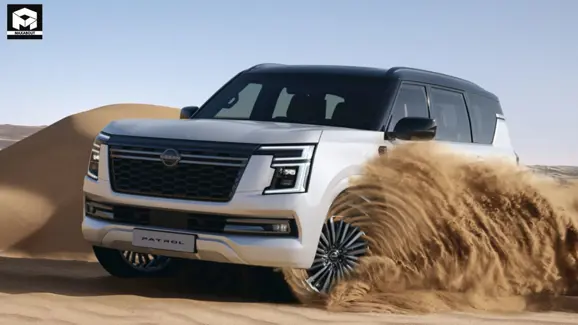 That said, India's genuine off-road community is real and growing. Ladakh, Spiti Valley, Zanskar, Coorg, and the rougher stretches of the Western Ghats genuinely reward a capable vehicle. For buyers who actually plan those expeditions, the Patrol's hardware earns its price premium in ways that a monocoque crossover simply cannot match.
On broken urban roads, the body-on-frame setup presents an interesting trade-off. Pothole absorption is generally better due to the suspension travel, but the ride can feel slightly more deliberate compared to air-suspended monocoques like the Range Rover or GLS. It's a different kind of comfort — more composed over serious undulations, occasionally firmer over sharp urban breaks.
For mixed-use buyers, that compromise seems entirely reasonable.
Interior, Technology, and Comfort Features: How Does It Compare at This Price?
Step inside the Patrol and the immediate impression is one of sheer scale. The cabin is genuinely vast — three rows of seating with enough rear headroom to matter in real-world use. For Indian families traveling with parents, children, and the occasional extended family addition, that third row isn't just a token gesture. It's actually usable, which is more than can be said for many rivals at this price.
Global reviewers consistently highlight the second-row comfort as a particular strength. Generous legroom, recline, and a commanding view outside make longer journeys — think Mumbai to Pune, or Bangalore to Mysore — genuinely comfortable for adults.
Technology-wise, the Patrol offers a large infotainment screen, multi-zone climate control, and a capable ADAS suite covering lane assist, blind spot monitoring, and automatic emergency braking. The audio system is well-regarded. Where it falls slightly short is digital polish — the interface and graphics feel more functional than premium compared to the BMW X7 or Mercedes GLS at similar price points.
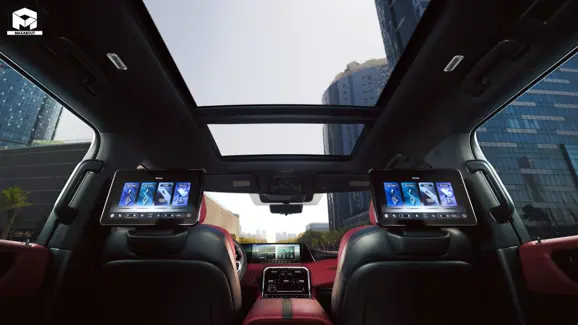 Honestly though, buyers in this segment tend to prioritise cabin space, build solidity, and long-term reliability over animated displays and haptic controls. The Patrol's interior feels hewn from durable, quality materials — that counts for a great deal when you're looking at years of ownership.
Nissan's Service Network and the Real Cost of Ownership
This is where I'd urge genuine caution. The Patrol may be an impressive machine, but Nissan's dealership footprint in India is limited — significantly more so than brands like Hyundai, Toyota, or even Mercedes-Benz. If you're based in Mumbai, Delhi, or Bangalore, you're likely covered. But buyers in smaller cities should verify local service availability before signing anything.
As a CBU (Completely Built-Up) import, the Patrol brings another layer of concern — parts availability. CBU vehicles frequently face longer wait times for replacement components, which can mean extended workshop stays after accidents or complex repairs. That's a real inconvenience at this price point.
On ownership costs, expect the following to factor into your calculations:
Insurance premiums on a flagship SUV at this value will be substantial — likely ₹1.5 lakh or more annually
Scheduled servicing costs for CBU vehicles typically run higher than locally assembled alternatives
Import duties already baked into the price mean any parts sourced separately won't come cheap either
From what industry observers note, annual ownership costs beyond the sticker price could be meaningful. This isn't a reason to walk away — but it is a reason to go in fully informed.
Should You Consider the Nissan Patrol Over Its Rivals: An Honest Take
The Toyota Land Cruiser 300 is the obvious benchmark here. It has a stronger dealer network, better resale value in India, and arguably more refined on-road manners. If those things matter most to you, the Land Cruiser is the safer bet — full stop.
But the Patrol makes a different kind of argument. It isn't trying to out-tech its rivals. It's built around a proven powertrain, genuine off-road capability, and an interior that prioritises space over visual drama. For buyers who understand what the Patrol represents globally — decades of desert-tested, military-adopted dependability — the badge carries real weight.
The ideal Patrol buyer in India is someone who values heritage over hype. Someone who spends weekends exploring roads beyond Spiti or Coorg, not just navigating Gurugram traffic. Someone who doesn't need a touchscreen the size of a television to feel satisfied.
The honest downsides? Nissan's India service network is limited. Import pricing will be steep. Fuel costs will be significant. These aren't small concerns.
But if exclusivity, interior room, and a powertrain reputation built over generations genuinely appeal to you — and your budget allows for premium running costs — the Patrol deserves serious consideration. Just go in clear-eyed, not caught up in the launch excitement.
Explore the story
Related news
Share your view and join the discussion.
Earn reward points for every comment and get a chance to win ₹1,000 in our weekly lucky draw. Sign in with Google in one tap.
Start the conversation
No one has commented on this article yet. Be the first to share your view.
Want to read more automotive news?
Stay updated with the latest car launches, reviews, and industry insights.
Browse All News