
Mercedes-Benz India Discontinues 4 Cars – What's Next
Mercedes-Benz India has just made a move that's worth paying attention to. The brand has officially discontinued four models from its Indian lineup — and honestly, this feels like more than just routine portfolio housekeeping. When a brand of this stature starts pulling models, it usually signals so...
Editorial Team
Mercedes-Benz India has just made a move that's worth paying attention to. The brand has officially discontinued four models from its Indian lineup — and honestly, this feels like more than just routine portfolio housekeeping. When a brand of this stature starts pulling models, it usually signals something bigger happening beneath the surface.
For anyone following the Indian luxury car segment, this is genuinely interesting. Mercedes-Benz doesn't make these decisions lightly. Every model that exits the lineup frees up resources, dealer attention, and strategic focus for whatever comes next. And from what recent official announcements suggest, what comes next looks fairly significant.
The models being shown the door include some that have had a decent run in India. At the same time, the brand is reportedly planning fresh launches that could reshape how it competes in a market that's growing more demanding by the year. Indian luxury buyers today are sharper, better informed, and willing to push back on value.
So why does this matter to you? Because lineup decisions like these reveal where a brand thinks the market is heading — what buyers actually want, what body styles are losing relevance, and where the real opportunity lies. This is not just a routine update. It feels like a genuine strategic shift, and it's worth understanding what's really changing.
The Four Models Being Discontinued: A Closer Look
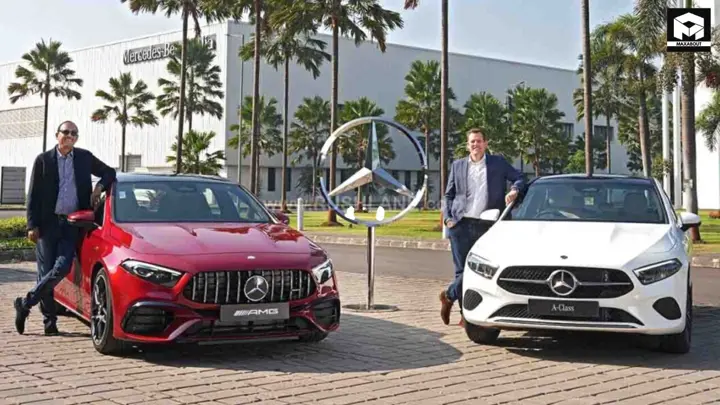
Mercedes-Benz India has confirmed the discontinuation of four models: the A-Class Limousine, the B-Class, the CLS, and the EQS SUV. Each of these served a distinct purpose in the lineup — but clearly, none of them found a sustainable footing in the Indian market.
The A-Class Limousine, priced around ₹40 lakh, was Mercedes-Benz's entry point into the Indian luxury sedan space. The idea was to bring younger buyers into the brand. In practice, buyers with that budget often stretched further or chose a premium SUV instead. It was a tough sell.
The B-Class faced an even harder road. A compact MPV-style car in a market obsessed with SUVs was always going to struggle. From what industry observers noted, demand was minimal and consistent discounting could not rescue it.
The CLS, a four-door coupe positioned above ₹1 crore, is essentially a global end-of-life situation. The platform is aging, and Mercedes has not signaled a next generation. It was a niche product serving a very specific taste — and that niche was simply too small here.
Then there is the EQS SUV. This one is more complex. Despite being a flagship electric offering, it faced resistance over its pricing, range perception, and limited charging infrastructure confidence among buyers. The EV transition in India is real, but buyers remain cautious at that price point.
Why Mercedes-Benz Is Making This Move Now
These discontinuations do not happen in isolation. From what industry analysts suggest, this is a calculated portfolio reset — one driven by shifting market realities that Mercedes-Benz can no longer afford to ignore.
The most obvious factor is the SUV wave. Buyers in Mumbai, Delhi, Bengaluru, and Hyderabad are increasingly drawn toward high-riding vehicles. It is not just a preference — it reflects practical thinking. Indian roads, urban or otherwise, reward ground clearance. Sedans, regardless of badge prestige, are simply losing relevance in the consideration set of luxury buyers here.
Based on recent market data, SUVs now account for a dominant share of luxury segment sales in India. Mercedes knows this. Holding slow-moving sedan and niche body styles in the lineup ties up resources — dealer floor space, marketing budgets, parts inventory — that could serve stronger-performing models instead.
Then there is the global electrification push. Mercedes is realigning its worldwide strategy around EVs and next-generation platforms. Older internal combustion models that lack a clear electric successor are quietly being phased out across markets, and India is no exception to that internal directive.
Rival brands are doing the same. From what industry analysts suggest, rationalizing lineups is now standard practice among premium manufacturers — fewer models, better margins, sharper focus.
New Mercedes-Benz Launches Planned for India: What to Expect
So the exits are happening — but honestly, the more interesting conversation is what's coming in. And from what official announcements and industry reports suggest, Mercedes-Benz isn't slowing down in India. If anything, they're doubling down.
The new-generation C-Class long wheelbase is widely expected to get fresh attention in the Indian market, given how well the current model has performed in cities like Mumbai and Delhi. A longer wheelbase matters here — rear passengers in India care deeply about legroom, and Mercedes knows that.
On the electric front, expect the EQ sub-brand to push harder. The EQS and EQB are already here, but industry reports point toward additional EQ variants being evaluated for local assembly at the Pune plant. Local assembly matters because it directly impacts pricing — a CBU import can add significant duty costs, pushing a competitive model into uncomfortably premium territory.
The GLE facelift is another model generating genuine anticipation. SUVs dominate premium buyer preference right now, and an updated GLE could land somewhere in the ₹95 lakh to ₹1.1 crore range depending on variant and assembly strategy.
Personally, I find the EQ lineup most promising — if Mercedes prices them sensibly through local assembly, they could genuinely challenge early EV adopters who currently default to other European options.
What This Means for Current Owners and Prospective Buyers
If you currently own one of the discontinued models, the immediate concern is understandable — but there is genuine reason for calm here. Mercedes-Benz India has a reasonably strong track record of supporting discontinued vehicles through authorized service centers. Spare parts supply typically remains available for 8 to 10 years post-discontinuation, which aligns with global brand standards.
That said, watch the resale market closely. Discontinued models tend to see softer resale values over time, simply because buyer confidence wavers when a nameplate disappears from showrooms. Insurance renewals should remain straightforward for now — insurers continue covering discontinued models without major complications, though premiums could gradually shift.
For prospective buyers sitting on the fence, the calculus is interesting. Dealers may offer attractive clearance pricing on remaining stock — potentially meaningful discounts on models that were priced north of ₹60 lakh. If the specific model genuinely suits your needs, a negotiated deal on existing inventory is worth exploring.
However, if you were only mildly interested, waiting for the new launches makes more sense. The incoming models will carry updated technology, fresher designs, and — critically — full warranty and service support from day one without any uncertainty attached.
Mercedes-Benz India's EV Strategy: Is This a Sign of Things to Come?
The discontinuations feel less random when you view them through a wider lens. Mercedes-Benz globally is deeply committed to electrification, and India is no longer a footnote in that story. Retiring older combustion-engine models creates space — both on paper and in showrooms — for the EQ lineup to breathe.
In India, Mercedes already retails the EQS sedan and EQB SUV, with the EQS SUV also available for those who want the full electric flagship experience. These are serious, well-equipped vehicles. But pricing remains a genuine barrier — the EQS starts north of ₹1.5 crore, which is steep even by luxury standards.
Then there's the infrastructure reality. Charging networks in cities like Mumbai, Bengaluru, and Delhi have improved noticeably. However, highway travel is still a genuine concern. Long drives from Delhi to Chandigarh or Pune to Goa require planning that petrol buyers simply don't think about. That anxiety is real for luxury EV buyers too, regardless of income level.
From what industry observers note, even affluent buyers in India evaluate EVs cautiously. High import duties keep EV prices significantly elevated, and government incentives — while improving under the revised customs duty framework for imported EVs — haven't yet made these vehicles genuinely accessible.
In my view, Mercedes-Benz's EV ambitions in India are directionally correct but perhaps slightly ahead of the infrastructure curve. The intent is solid. The execution will depend on how quickly charging networks expand and whether future models arrive with locally assembled options that ease pricing pressure.
Where Does Mercedes-Benz India Stand Against BMW and Audi Right Now?
The honest answer is that all three are in flux. Mercedes-Benz is trimming sedans and doubling down on SUVs. BMW India is doing something similar. Audi India, after its well-documented dealer network struggles a few years back, is still rebuilding trust in certain cities. So this is genuinely a competitive moment worth examining closely.
On SUV depth, Mercedes currently holds a reasonable edge. The GLA, GLC, GLE, and GLS cover a wide price band, and the AMG variants give the lineup some excitement at the top. BMW's X-series is strong — the X5 in particular has a loyal following among enthusiasts — but BMW's entry-level SUV story feels slightly less compelling in the ₹45–55 lakh range where a lot of first-time luxury buyers are shopping. Audi's Q5 and Q7 are competitive, though from what the community generally reports, wait periods and dealer experience can still be inconsistent depending on the city.
On electrification, BMW appears more confident right now. The iX and i4 have received reasonably positive feedback, and BMW seems more comfortable positioning EVs as everyday products rather than aspirational statements. Mercedes has the EQS and EQB, but pricing remains a significant barrier. Audi's e-tron lineup exists, though it hasn't generated the same conversation volume.
Service experience is where opinions get genuinely divided. In my observation, Mercedes dealerships in larger metros like Bengaluru, Delhi, and Mumbai tend to score reasonably well on facilities, but ownership forums frequently flag high service costs and parts availability delays in tier-two cities. BMW and Audi face similar criticism. None of the three has cracked truly consistent service quality outside the top eight or ten cities — and that matters when buyers in Pune or Ahmedabad are spending serious money.
Right now, Mercedes reads like the brand most actively responding to where Indian luxury demand is actually heading — fewer sedans, more SUVs, cautious electrification. Whether that translates into market leadership depends on execution over the next two or three years.
Final Thoughts: Is Mercedes-Benz India Headed in the Right Direction?
Honestly? I think this portfolio cleanup makes sense. Cutting slow-moving sedans to sharpen focus on what Indian buyers are actually purchasing — that is not a retreat, that is just smart business. The discontinuations sting a little emotionally, especially for anyone who always admired the E-Class as the definitive Mercedes statement. But sentiment does not shift units.
The planned launches feel genuinely promising, provided Mercedes follows through with competitive pricing and — this is the bigger ask — consistent after-sales support beyond the major metros. That last part is where optimism needs to stay cautious. A sharper lineup means nothing if ownership experience frustrates buyers in Jaipur or Kochi two years down the line.
Over the next two to three years, Indian luxury buyers stand to benefit from a leaner, more focused Mercedes range. Fewer confusing overlaps, stronger products in the segments that matter most. That is genuinely good news.
So let me ask — which discontinued model will you miss most? Or is there an upcoming launch you are particularly excited about? Drop your thoughts below. Would love to know what this shift means to you personally.
No comments yet
Be the first to share your thoughts!
Want to read more automotive news?
Stay updated with the latest car launches, reviews, and industry insights.
Browse All News