
Maruti's 300 kW Manesar Hydrogen Pilot: How Surplus Solar Becomes Process Fuel
Maruti Suzuki has commissioned a 300 kW green-hydrogen electrolyser pilot at Manesar, according to company-attributed reporting. It uses surplus solar electricity available during holidays to produce hydrogen, which is stored and later blended with natural gas for manufacturing process fuel. This is...
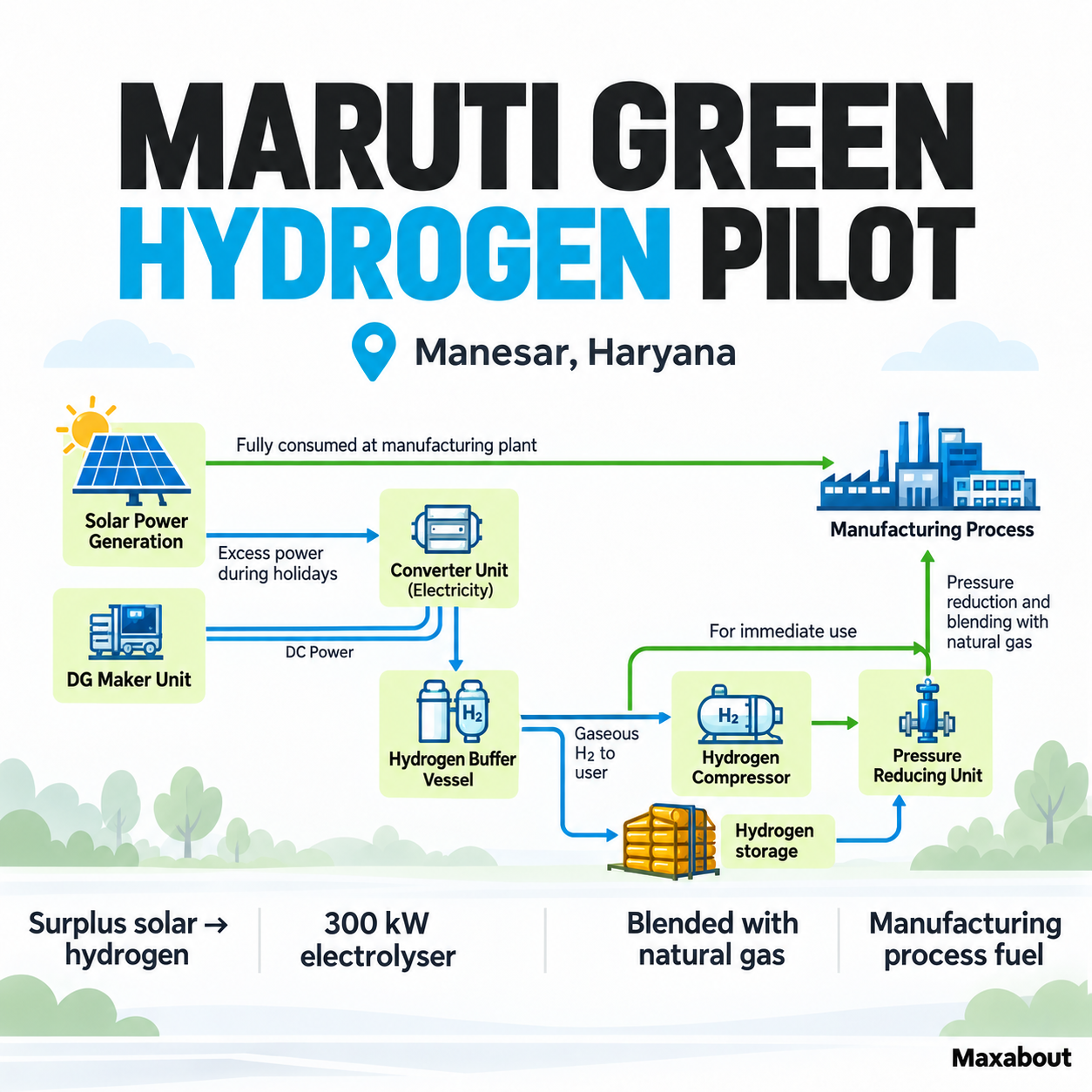
Maruti Suzuki has commissioned a 300 kW green-hydrogen electrolyser pilot at Manesar, according to company-attributed reporting. It uses surplus solar electricity available during holidays to produce hydrogen, which is stored and later blended with natural gas for manufacturing process fuel. This is an industrial energy project, not an announcement of hydrogen-powered cars or public refuelling infrastructure.
How the pilot uses holiday solar surplus
Manufacturing electricity demand falls when the facility is not running its normal holiday workload. The project is designed to turn otherwise unused solar generation into stored hydrogen for later process use. In this arrangement, electricity, storage and fuel use are linked across different times rather than requiring every unit of solar generation to be consumed immediately.
Surplus solar electricity powers the electrolyser.
The hydrogen produced is compressed and stored.
Stored hydrogen is blended with natural gas.
The blend is supplied as process fuel in manufacturing.
What 300 kW tells us—and what it does not
300 kW is the disclosed electrolyser rating. It is not a hydrogen output figure in kilograms or tonnes per day. Daily production would depend on operating hours, power availability and equipment performance. The checked report says Maruti has not disclosed daily hydrogen production capacity.
Likewise, this number alone cannot establish the project's annual emissions saving, fuel substitution percentage or commercial payback. Those require operating data and a stated calculation basis.
A pilot within a wider energy programme
Maruti says learning from Manesar will inform possible wider adoption across its Haryana and Gujarat manufacturing facilities. The pilot is therefore a way to evaluate the process before assuming large-scale deployment.
| Reported initiative | Status and role |
|---|---|
| Manesar hydrogen electrolyser | 300 kW pilot commissioned; hydrogen used in process-fuel blend |
| Kharkhoda biogas plant | 10 tonnes per day project planned for commissioning within FY2026-27 |
| Kharkhoda battery storage | 1 MWh system commissioned |
These figures describe different technologies and units. An electrolyser's power rating, a biogas plant's daily output and a battery's energy storage cannot be added together as one “capacity” total.
Keep the emissions target separate from results
The company describes a manufacturing carbon-footprint ambition of reducing approximately 615,000 tonnes to 266,000 tonnes by FY2030-31. The reported target draws on several clean-energy measures, not hydrogen alone. It should be treated as a future objective rather than an achieved reduction attributable to this pilot.
FAQs
Is the hydrogen being used in Maruti cars?
The disclosed use is manufacturing process fuel blended with natural gas. This update does not announce a hydrogen passenger-car launch.
How much hydrogen does the pilot produce daily?
Daily output is not disclosed in the checked report. The 300 kW rating should not be relabelled as tonnes-per-day production.
The Manesar green-hydrogen pilot demonstrates a specific use for surplus solar generation. Its wider significance will become clearer when Maruti reports operating results and decisions about subsequent deployment.
Explore the story
Related news






Share your view and join the discussion.
Earn reward points for every comment and get a chance to win ₹1,000 in our weekly lucky draw. Sign in with Google in one tap.
Start the conversation
No one has commented on this article yet. Be the first to share your view.
Want to read more automotive news?
Stay updated with the latest car launches, reviews, and industry insights.
Browse All News