
Mahindra's Grand Strategy: 16 New SUVs Coming to India by 2030
Mahindra's Bold Vision: 16 New SUVs by 2030Mahindra just dropped a bombshell announcement that's set to reshape the Indian automotive landscape: 16 new SUVs planned for launch by 2030. This is no small commitment from a company that's already among India's leading SUV manufacturers.I think this aggr...
Editorial Team
Mahindra's Bold Vision: 16 New SUVs by 2030
Mahindra just dropped a bombshell announcement that's set to reshape the Indian automotive landscape: 16 new SUVs planned for launch by 2030. This is no small commitment from a company that's already among India's leading SUV manufacturers.
I think this aggressive expansion plan reflects the explosive growth we're seeing in India's SUV market. With Indian roads varying from smooth highways to challenging rural paths, SUVs have become increasingly popular for their practicality and versatility.
Currently commanding around 20% of the domestic SUV market, Mahindra seems determined to strengthen its position against growing competition from Tata, Hyundai, and Maruti Suzuki. Their recent successes with models like the XUV700 and Scorpio-N have clearly boosted their confidence.
For us as consumers, this means more options across different price segments - potentially ranging from sub-₹10 lakh compact SUVs to premium offerings beyond the ₹20 lakh mark. In the following sections, I'll break down what we know about these upcoming models, their expected features, and how they might impact your future car-buying decisions.
Breaking Down Mahindra's SUV Roadmap
Looking at Mahindra's ambitious plan, the 16 new SUVs will be rolled out in phases through 2030, with a clear strategic focus on both ICE (Internal Combustion Engine) and electric platforms. Based on company announcements, approximately 9 of these models will be traditional fuel-powered, while 7 will be pure electric vehicles - showing Mahindra's commitment to the EV transition.
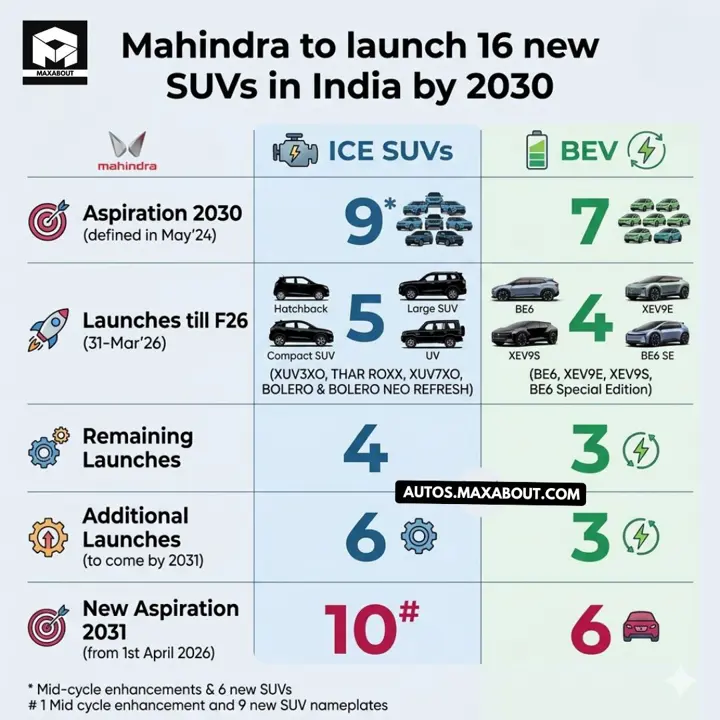 In terms of segmentation, Mahindra appears to be casting a wide net. They're targeting the sub-₹10 lakh compact segment with models like the upcoming XUV300 replacement, strengthening their mid-size portfolio (₹12-18 lakh) with new iterations of the XUV700, and expanding their premium offerings beyond ₹20 lakh with vehicles like the XUV900 coupe SUV and the five-door Thar.
What's particularly interesting is how this accelerated timeline contrasts with Mahindra's historically measured approach. As Rajesh Jejurikar, Executive Director at Mahindra, recently stated, "We're transforming from a product-refresh cycle of 8-10 years to introducing multiple new platforms every 3-4 years." This represents a significant shift in their product development philosophy.
The company is also focusing on purpose-built EV platforms rather than converted ICE vehicles, with their "Born Electric" lineup developed at their UK design center. This strategic pivot toward a more aggressive launch schedule suggests Mahindra is aiming to capitalize on their recent market momentum rather than resting on the success of current bestsellers.
The Electric Revolution in Mahindra's Strategy
A significant portion of Mahindra's 16 upcoming SUVs will be electric, marking the company's serious commitment to the EV segment. At the heart of this electric revolution are two dedicated platforms: the BE (Born Electric) and XEV platforms, which demonstrate Mahindra's shift from adaptation to purpose-built electric vehicles.
The BE platform will host completely new electric-only models with futuristic designs and cutting-edge technology. I'm particularly intrigued by the BE.05, BE.07, and BE.09 concepts Mahindra has teased - they look nothing like traditional Mahindras and signal a bold new design direction. Meanwhile, the XEV platform will underpin electric versions of existing models, starting with the XUV.e8 (electric XUV700).
Mahindra has pledged approximately ₹10,000 crore toward electric vehicle development, which is quite a substantial investment for an Indian automaker. This shows they're not just dipping their toes in the EV waters but diving in headfirst.
Currently, Mahindra's EV portfolio is limited to the e-Verito and e-KUV100, which haven't gained much traction in the market. These new models represent a complete overhaul of their electric strategy, targeting premium segments where range anxiety is less of a concern given Indian urban charging infrastructure limitations.
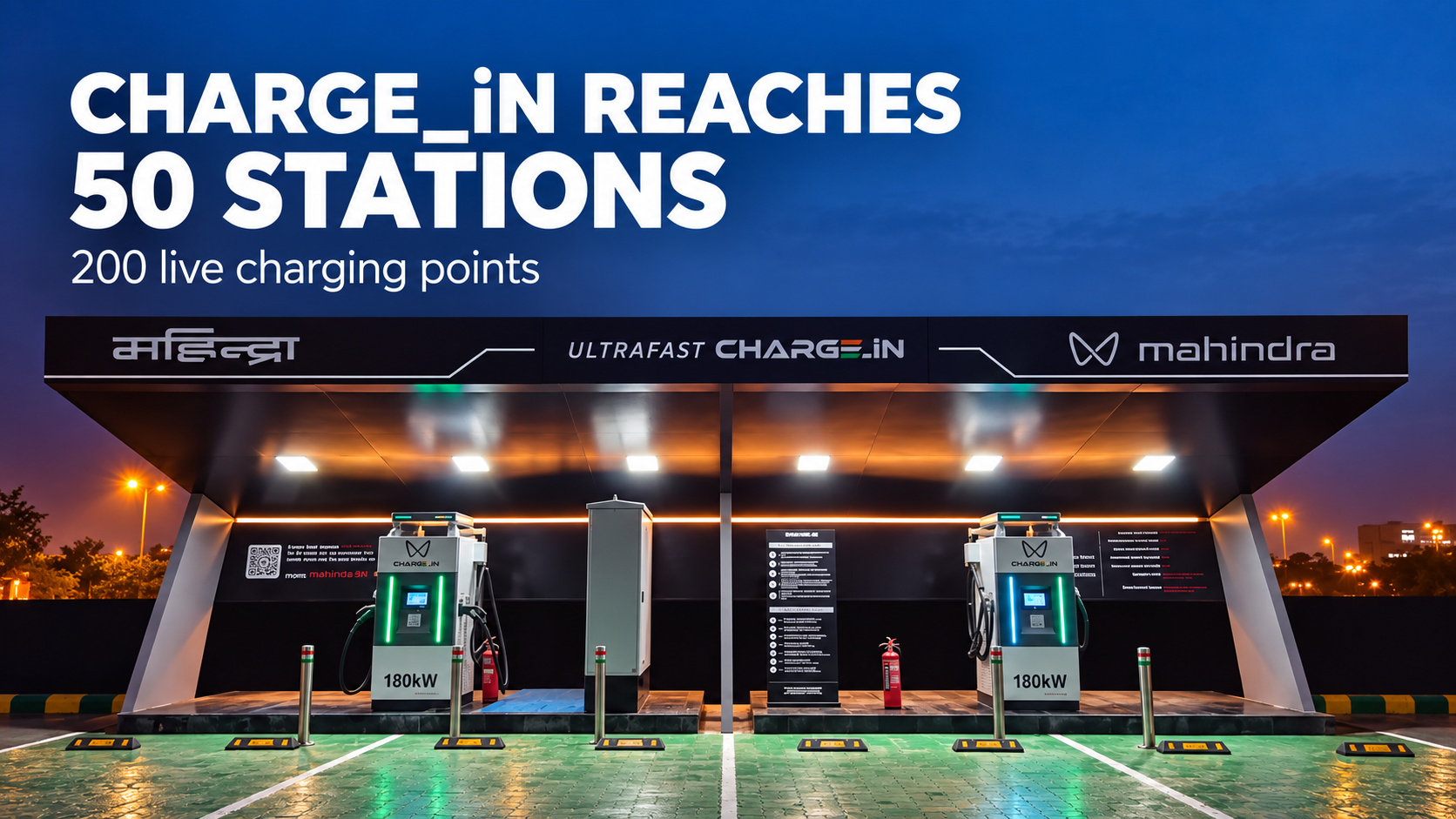
On the charging front, Mahindra appears to be exploring partnerships with existing networks rather than building their own extensive infrastructure - a pragmatic approach considering the massive investment required.
Expected Models and Segment Analysis
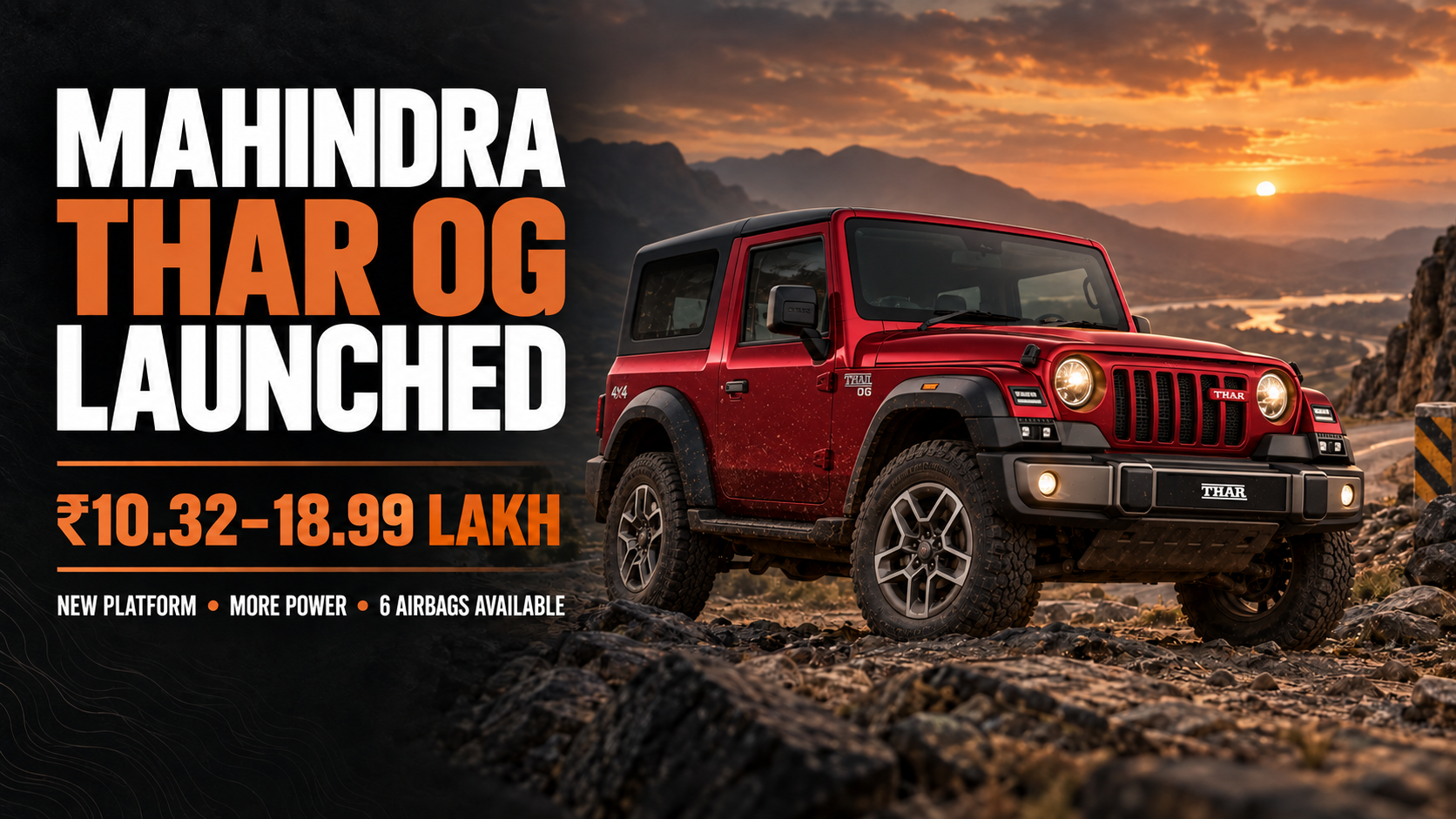
From what I've gathered, Mahindra's 16-vehicle plan includes both refreshes of their popular models and entirely new offerings. The next-generation Scorpio, XUV700, and Thar have been confirmed, with each expected to receive significant updates to maintain their strong market positions. I'm particularly interested in the Thar 5-door variant that's rumored to launch soon, which should address the practical limitations of the current model while preserving its off-road DNA.
In terms of segment prioritization, Mahindra seems to be following a three-pronged approach. First, they're doubling down on their stronghold in the ₹12-20 lakh range with the XUV and Scorpio families. Second, they're expanding upward with models like the XUV900 coupe-SUV expected to be priced around ₹25 lakh. Third, they're exploring compact SUVs below ₹10 lakh to challenge Maruti and Tata's dominance.
Pricing strategy appears calibrated to maintain Mahindra's value proposition while gradually elevating their brand. The recent XUV700 launch perfectly demonstrated this - offering exceptional features at a disruptive starting price of ₹12.49 lakh, but with higher variants reaching well into ₹20+ lakh territory. I expect this "value at entry, premium at top" approach to continue across their lineup.
Market Impact: Competing with Global and Indian Brands
Mahindra's ambitious plan to launch 16 new SUVs signals a direct challenge to both domestic rivals and global players. In my view, this will fundamentally reshape India's SUV landscape over the next decade.
Against Tata Motors, Mahindra appears to be countering innovation with innovation. While Tata has gained momentum with the Nexon and Harrier, Mahindra's expanded portfolio could reclaim market share, especially if they maintain their rugged DNA while adding contemporary features.
The real battleground will be against Hyundai-Kia, which currently dominate the feature-rich segment. Mahindra's BE and XEV electric platforms might finally offer an Indian alternative with comparable technology and refinement without the import premium.
Maruti Suzuki will likely feel pressure in the compact SUV space where their Grand Vitara has only recently established footing. I expect global brands like Volkswagen and Skoda might struggle most against this Mahindra onslaught, as they lack the extensive service network and local R&D that Mahindra possesses.
The competition will ultimately benefit consumers - forcing all manufacturers to improve quality, add features, and potentially stabilize pricing across segments as the market becomes increasingly crowded.
The Manufacturing and Investment Puzzle
Launching 16 new SUVs by 2030 raises serious questions about Mahindra's production capacity. The company currently operates major manufacturing facilities in Chakan, Nashik, and Haridwar, but these will likely need significant expansion to handle this ambitious rollout.
From what I understand, Mahindra is investing around ₹15,000 crore in its automotive business over the next 3-5 years. A substantial portion of this will go toward expanding their Chakan facility, which seems logical given its proximity to their R&D center.
Their partnerships with companies like Volkswagen for EV components and Amazon AWS for connected vehicle technology show they're serious about technological advancement. However, I wonder if their current annual production capacity of approximately 700,000 vehicles will be sufficient.
The challenges aren't just financial. Finding skilled labor, managing complex supply chains (especially semiconductor procurement), and maintaining quality control across multiple new platforms will test even Mahindra's well-established manufacturing prowess. Based on industry patterns, I think they'll likely phase these launches strategically rather than attempting to handle all simultaneously.
What This Means for Indian SUV Buyers
This ambitious rollout by Mahindra could be a game-changer for Indian consumers. With 16 new options entering the market, buyers will enjoy significantly more choice across different price points and segments. I expect we'll see more affordable entry-level options that could bring SUV ownership within reach of more families.
Competition drives innovation, and this move will likely pressure competitors like Tata, Hyundai, and Maruti Suzuki to up their game. This could translate to better features becoming standard across the industry - think advanced safety systems, improved connectivity, and better fuel efficiency options suited for our congested city conditions.
After-sales service is crucial in India, especially considering our challenging road infrastructure. Mahindra will need to expand their service network, potentially bringing authorized service centers to tier-2 and tier-3 cities. This accessibility would be a significant benefit for buyers outside metropolitan areas.
For the average buyer in places like Bangalore or Pune, this could mean more SUVs specifically designed for Indian conditions - vehicles that handle our unique challenges like waterlogged streets during monsoons or rough rural roads when visiting family in smaller towns. I believe we'll also see more India-specific innovations rather than merely adapted global platforms.
Challenges and Outlook: Can Mahindra Deliver?
While Mahindra's plan sounds impressive, the road ahead isn't without significant bumps. The semiconductor shortage continues to plague the automotive industry, and launching 16 new models will require massive supply chain coordination. I think Mahindra might struggle with this, especially considering how their XUV700 deliveries faced extended waiting periods after launch.
The regulatory landscape is another challenge. With BS7 emissions norms potentially arriving before 2030 and India's push toward electrification, Mahindra will need substantial R&D investment to ensure compliance across their expanded lineup.
Competition isn't standing still either. Tata Motors has been aggressive in both ICE and EV segments, while Maruti Suzuki is strengthening its SUV portfolio. International players like Hyundai and Kia continue to refine their offerings for Indian consumers.
Looking at Mahindra's track record, they've shown mixed results with timeline adherence. The Scorpio-N launched relatively on schedule, but the XUV300 faced delays, and the much-anticipated XUV900 coupe has seen its timeline shift multiple times.
Despite these challenges, I believe Mahindra is better positioned than ever to execute this strategy. Their recent products demonstrate improved quality, and their market understanding in Nashik or Coimbatore differs from global manufacturers. If they can maintain this trajectory while managing production challenges, Mahindra could genuinely strengthen its position as India's premier SUV manufacturer by 2030.
Explore the story
Related news

Share your view and join the discussion.
Earn reward points for every comment and get a chance to win ₹1,000 in our weekly lucky draw. Sign in with Google in one tap.
Start the conversation
No one has commented on this article yet. Be the first to share your view.
Want to read more automotive news?
Stay updated with the latest car launches, reviews, and industry insights.
Browse All News