
Lexus TZ: New 3-Row Electric SUV with 530km Range Coming Soon
Lexus Enters the EV Space with the 3-Row TZ Electric SUVLexus has finally made its grand entrance into the premium electric SUV market with the unveiling of the TZ, its first dedicated three-row electric vehicle. The TZ represents a significant milestone in Lexus's electrification journey, combining...
Editorial Team
Lexus Enters the EV Space with the 3-Row TZ Electric SUV
Lexus has finally made its grand entrance into the premium electric SUV market with the unveiling of the TZ, its first dedicated three-row electric vehicle. The TZ represents a significant milestone in Lexus's electrification journey, combining the brand's renowned luxury with zero-emission technology.
The headline specs look quite impressive—offering up to 530km of range, which should address range anxiety concerns for most luxury buyers. Size-wise, it positions itself as a proper family hauler with three rows of seating, something that's currently missing in the premium electric segment.
Looking at the Indian context, our luxury EV landscape is still developing, with most offerings coming from Audi, BMW, and Mercedes. If Lexus brings the TZ to India, it would likely target the upper echelon of electric SUV buyers—those looking for space and prestige without compromising on environmental values. I think it would sit above vehicles like the Audi e-tron and BMW iX in terms of positioning.
Given India's growing focus on electric mobility among premium buyers, especially in metro cities, the TZ could potentially carve out an interesting niche for itself when it arrives.
Design and Dimensions: A New Electric Identity
The Lexus TZ represents a significant design evolution for the brand, breaking away from the traditional spindle grille that has long defined Lexus vehicles. Instead, it adopts what I'd call a more streamlined, future-forward aesthetic that still maintains a distinctly Lexus DNA. The front fascia features a sleek, closed-off nose with an illuminated light bar that stretches across the width—a signature element emerging across premium EVs.
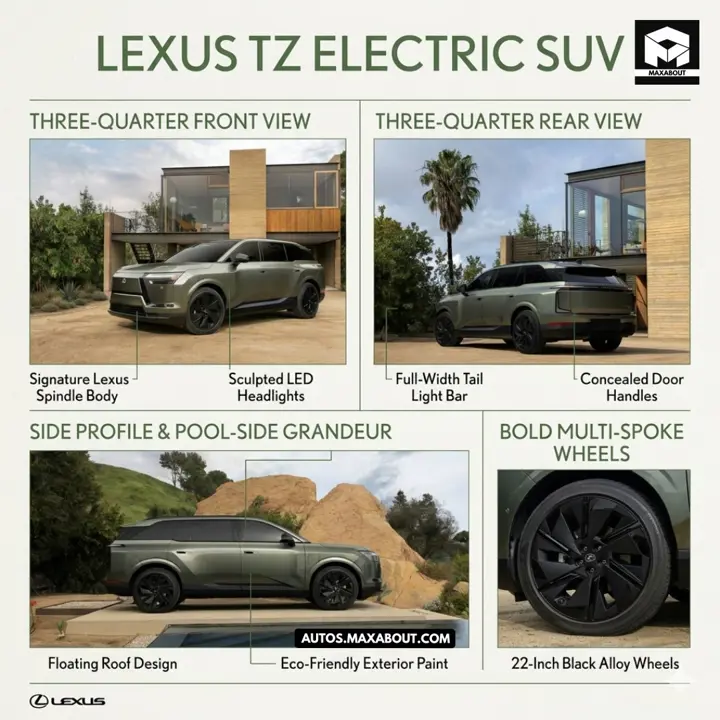 At approximately 5 meters in length, the TZ would be among the larger luxury SUVs on Indian roads, comparable to vehicles like the BMW X7. This substantial footprint translates to generous interior space, particularly beneficial for the third row, which in many 7-seaters feels like an afterthought. For Indian families who often travel with extended family members or domestic help, this proper three-row configuration offers practical utility that smaller luxury EVs simply can't match.
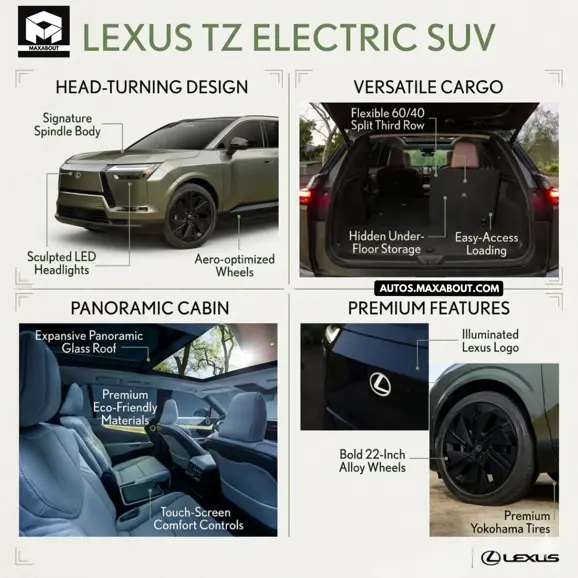
Inside, Lexus has embraced a minimalist approach with a floating center console and a panoramic glass roof that enhances the cabin's sense of spaciousness—a welcome feature when navigating through congested urban environments like Mumbai or Delhi. The interior materials reportedly maintain Lexus's renowned craftsmanship while incorporating sustainable elements, reflecting a thoughtful balance between luxury and environmental consciousness.
The TZ's generous dimensions would certainly stand out on Indian roads, where even premium SUVs often compromise on space to handle tight parking situations and narrow streets. This makes it an interesting proposition for luxury buyers who refuse to sacrifice space and presence for electrification.
Performance Specifications and Battery Technology
The Lexus TZ comes armed with impressive technical credentials that should raise eyebrows among luxury EV enthusiasts. The headline 530km range comes from a substantial battery pack that puts it squarely in competition with established players like the Audi e-tron and Mercedes EQC.
Power delivery appears substantial, with dual-motor configurations reportedly producing upwards of 300kW (approximately 400bhp). Based on available information, the 0-100 km/h sprint should take around 5.0-5.5 seconds – plenty quick for a vehicle of this size.
What interests me most is how these figures might translate to actual Indian conditions. From what I've observed, EVs typically lose 15-20% range in our summer heat with AC running full blast. Even with this adjustment, the TZ should deliver 425-450km on a single charge – quite practical for intercity travel between metros like Mumbai-Pune or Delhi-Jaipur.
The battery thermal management system deserves attention too. Our extreme temperature variations (from 45°C summers in Delhi to cold Himalayan winters) demand sophisticated cooling and heating systems. Lexus has traditionally excelled in engineering robustness, which should serve them well here.
Charging infrastructure remains India's Achilles heel, so the TZ's charging capabilities will be crucial. If equipped with 150kW+ DC fast charging compatibility, it could reach 80% capacity in approximately 30 minutes – reasonable for coffee breaks during longer journeys.
Interior Technology and Luxury Features
Stepping inside the Lexus TZ reveals a cabin that blends traditional Lexus craftsmanship with cutting-edge EV technology. The centerpiece is a massive 14-inch touchscreen infotainment system that flows seamlessly into the digital instrument cluster, creating what Lexus calls a "driver-focused cockpit."
 I'm particularly impressed by the voice command system, which understands natural speech patterns – something crucial for Indian drivers who often need hands-free operation in chaotic traffic conditions. The Mark Levinson audio system with 21 speakers creates an exceptional sound experience that I think rivals even Mercedes' Burmester offerings.
All three rows appear thoughtfully designed with adequate legroom – important for family-oriented Indian buyers. The climate control system employs a multi-zone approach with dedicated vents for all passengers. Based on Lexus' track record, I expect excellent dust filtration – a significant benefit in metropolitan areas like Mumbai and Delhi where air quality concerns are paramount.
Advanced driver assistance features include traffic-adaptive cruise control and lane-keeping technology – particularly valuable on unpredictable Indian highways. The 360° camera system with high resolution would make navigating tight parking spaces at malls in Bengaluru or Gurgaon considerably easier.
Worth noting is the optional refrigerated console – perfect for keeping beverages cool during summer drives across the scorching Deccan plateau.
Expected Pricing and Positioning in India
Looking at Lexus's premium positioning, I expect the TZ to land somewhere between ₹85 lakh to ₹1.2 crore in India. If imported as a CBU, the steep 100% import duties would push it toward the higher end of this range, making it a competitor to the Audi e-tron and Mercedes EQE SUV.
Should Lexus opt for local assembly (which seems unlikely initially), prices could potentially start around ₹75-80 lakh, making it more attractive against BMW iX and Jaguar I-PACE. The sweet spot would be around ₹90 lakh for the base variant to gain meaningful market share.
Maintenance costs should align with Lexus's reputation for reliability, though the limited service network remains a concern. Currently, Lexus operates just 7 service centers across major metros - significantly fewer than Mercedes or BMW. For EV-specific service capabilities, they would need substantial investment.
Ownership experience would likely include complimentary doorstep service and extended battery warranty - essential offerings to justify the premium over European rivals that already have more established EV ecosystems in India.
The TZ would target affluent buyers in Delhi, Mumbai and Bengaluru who want spacious luxury with environmental credentials - and who don't mind paying a premium for something exclusive.
Charging Infrastructure and Practicality for Indian Owners
The 530km claimed range sounds impressive on paper, but how practical is it in the Indian context? In my view, this range should comfortably cover a week of city commuting for most luxury car owners in metros, requiring perhaps just one home charging session per week.
Speaking of home charging, that's where most ownership experience will center. A dedicated 7.4kW wall box charger installation in your parking space is practically essential. Apartment associations in luxury housing complexes in Gurugram, South Mumbai and Koramangala are increasingly accommodating such requests.
For intercity travel, the situation is more challenging. While the Delhi-Jaipur or Mumbai-Pune corridors have reasonable fast-charging infrastructure, venture beyond these popular routes and you'll need careful planning. The range should theoretically handle Bangalore to Mysore round-trip, but I'd recommend keeping a 20% buffer for unexpected traffic or climate control usage.
Public charging infrastructure for premium EVs remains concentrated in tier-1 cities. Fast-charging stations at select five-star hotels and high-end malls exist, but are hardly ubiquitous. Lexus would likely partner with charging providers to offer preferential rates or reserved slots as part of the ownership package.
Range anxiety is still a legitimate concern, especially for those considering this as their only family vehicle for occasional long-distance travel. I'd suggest this works best as a second car for affluent households until our charging network matures further.
The Future of Lexus EVs in India: What to Expect
Lexus seems to be taking a measured approach to their EV strategy in India. I expect the TZ to arrive on our shores by late 2024 or early 2025, following its global rollout. Pricing will likely start around ₹90 lakh, positioning it against the Mercedes EQE SUV and Audi e-tron.
What's interesting is how Lexus is differentiating itself from both established German luxury brands and Tesla. While BMW and Mercedes emphasize technological innovation, Lexus appears to be banking on its reputation for reliability and a more distinctive design language.
Beyond the TZ, I anticipate Lexus will introduce smaller electric crossovers better suited to Indian urban conditions. The rumored compact LBX-based EV would make more sense for our market than the flagship TZ.
For luxury buyers in India, the TZ represents an interesting but niche proposition. I believe it will appeal primarily to early adopters who value environmental credentials alongside luxury. The broader significance might be in normalizing premium EVs, showing that electric doesn't mean compromising on prestige or comfort.
Explore the story
Related news
Share your view and join the discussion.
Earn reward points for every comment and get a chance to win ₹1,000 in our weekly lucky draw. Sign in with Google in one tap.
Start the conversation
No one has commented on this article yet. Be the first to share your view.
Want to read more automotive news?
Stay updated with the latest car launches, reviews, and industry insights.
Browse All News