
Kia Seltos Top Seller in Korea Gets Vibro Sound Seat
Here is something that caught my attention recently — the Kia Seltos is not just winning over buyers on Indian roads. It is sitting at the top of the sales charts in South Korea too. For a car that many of us associate almost entirely with Indian highways and urban traffic, that is a genuinely surpr...
Editorial Team
Here is something that caught my attention recently — the Kia Seltos is not just winning over buyers on Indian roads. It is sitting at the top of the sales charts in South Korea too. For a car that many of us associate almost entirely with Indian highways and urban traffic, that is a genuinely surprising piece of news.
Think about it for a moment. South Korea is Kia's home turf. Local buyers there have access to every segment, every price point, and every global model Kia makes. And yet, the Seltos is what they are choosing. That says something real about how well this SUV is put together — not just for emerging markets, but for discerning buyers anywhere.
What makes this more interesting for Indian readers is the fact that Kia's India operations have had significant input into the Seltos platform over the years. This is not a car designed somewhere else and simply sold here. There is genuine Indian DNA in its development story.
The Korean-spec model has also surfaced with a feature called the Vibro Sound Seat — a haptic seat technology that syncs with the audio system. It sounds like something from a premium lounge experience rather than a mid-size SUV. Whether that eventually makes its way to India is the question worth asking. And honestly, from what I have seen so far, I would not rule it out.
What Does 'Top Seller In Segment In Korea' Actually Mean?
This is worth pausing on for a moment. Korea is not an easy market to win. From what industry reports suggest, the domestic automotive landscape there is dominated by fierce brand loyalty — Hyundai and Kia themselves command enormous home-ground support, but so does the broader expectation of quality that Korean buyers hold their own brands to. These are not first-time car buyers making cautious choices. They are experienced, demanding consumers who have access to everything the global market offers.
So when the Seltos tops its segment there, based on recent sales data, that is a genuinely meaningful signal. It means the car is winning on merit in a sophisticated, scrutinising home market — not riding on aspirational appeal or price-point positioning alone.
Compare that loosely to how the Seltos has held its ground in India's mid-size SUV segment — one of the most fiercely contested spaces in our market. Both stories point to the same conclusion: this is a car that earns its numbers rather than inheriting them.
The Vibro Sound Seat Feature — What Is It and Why Does It Matter?
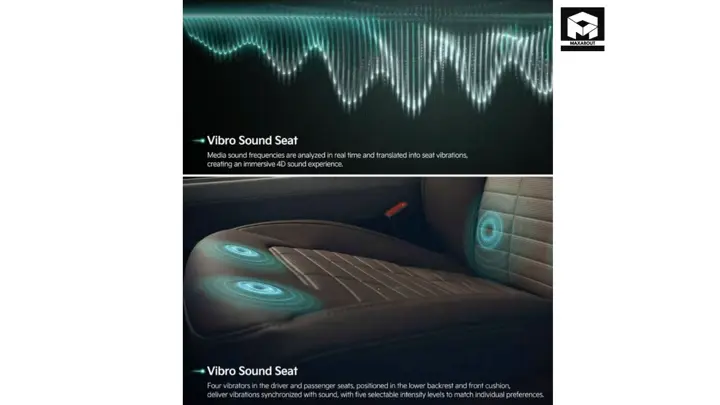
Now, this is where things get genuinely interesting. Among the updates on the Korean-spec Seltos, the Vibro Sound Seat feature caught my attention more than anything else. It is not a headline-grabbing spec like horsepower or ground clearance — but it is the kind of thoughtful engineering detail that actually changes how you experience a car daily.
Here is the basic idea. The seats are fitted with small vibration actuators that respond to the audio playing through the car's sound system. So when music is playing, you are not just hearing it through the speakers — you are feeling it through the seat itself. Bass lines, rhythmic beats, dynamic shifts in the soundtrack — they translate into subtle physical vibrations that sync with what your ears are processing.
If you have ever used a bass shaker in a home theatre setup, the concept is broadly similar. Those devices attach beneath your sofa and rumble in time with movie sound effects — explosions, engine roars, deep musical tones. The Vibro Sound Seat applies that same principle to a car cabin, in a far more refined and compact form.
It is not about making things louder or more overwhelming. From what the feature description suggests, it is about adding a physical dimension to an audio experience — which, in a well-insulated cabin, can genuinely make long drives feel more immersive and engaging.
This fits into a broader trend worth noticing. Automakers are increasingly treating the car interior as an entertainment and sensory environment, not just a functional space. Features like ambient lighting, spatial audio systems, and now haptic seat technology are all moving in the same direction — making the cabin feel like a curated experience rather than simply a place you sit.
For now, this feature is specific to the Korean-market Seltos. Whether it arrives on India-spec models is an open question.
Will The Vibro Sound Seat Ever Come To India? A Realistic Look
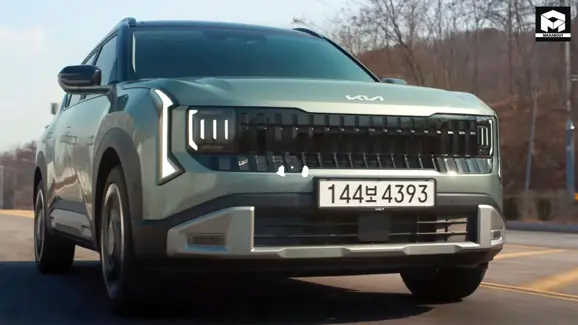
This is probably the question most Indian Seltos buyers are asking right now. And honestly, the answer is not a simple yes or no.
Kia India has a reasonably strong track record of bringing global features closer to home. The panoramic sunroof, ADAS suite, connected car technology — these are not features you typically associate with a sub-₹20 lakh vehicle. Yet here they are, available on the India-spec Seltos. That history matters when you try to read where things might go next.
The India-spec Seltos currently ranges from roughly ₹11 lakh to around ₹20 lakh. At the top trim, buyers are already expecting a premium experience. It seems plausible that a feature like Vibro Sound Seat, if it can be packaged without significantly inflating costs, could find a home in the highest variant. From what patterns suggest, Kia tends to use top trims as showcase tiers — places where they demonstrate genuine innovation rather than just piling on conventional equipment.
That said, cost sensitivity is real. Not every global feature makes the commercial cut for India, and some get quietly dropped during localisation decisions.
What is encouraging, though, is that urban Indian buyers — particularly in cities like Bengaluru, Mumbai, and Delhi — are increasingly receptive to tech-forward cabin features. The conversation around in-car experience has genuinely shifted in these markets. Whether Kia acts on that appetite with this specific feature remains to be seen.
How The Seltos Has Evolved To Stay Relevant In India's Brutal SUV Market
When the Seltos arrived in India in 2019, it did something genuinely impressive — it gave Kia a foothold in one of the world's most competitive automotive markets almost overnight. The launch was not just a product introduction; it was a statement. Buyers responded with long waiting periods and genuine enthusiasm, and the Seltos essentially carried Kia's entire India reputation on its shoulders in those early years.
The second generation brought meaningful updates — sharper styling, a revised interior, and a technology push that kept it feeling fresh against newer rivals. From what industry observers and long-term owners have consistently noted, build quality has remained one of its most durable strengths. The cabin solidity, the fit and finish — these things hold up, and Indian buyers have noticed.
The feature list has always punched hard for the segment. Panoramic sunroofs, connected car technology, and multiple powertrain choices — both diesel and petrol — gave buyers genuine flexibility. The service network expansion across tier-two cities also addressed an early concern that Kia's reach outside metros was limited.
But honesty matters here. Some owners have flagged that ride quality on broken urban roads — the kind you encounter daily in cities like Pune or Hyderabad — can feel firmer than expected. Rear seat comfort has sparked debates, particularly on longer highway runs. And pricing has quietly crept upward over the years, pushing the top variants into genuinely premium territory that deserves scrutiny.
Still, the Seltos has survived a market that has only grown more crowded. That alone says something real about how it has been managed.
What Korean Market Trends Could Mean For Indian Kia Buyers Down The Line
There is a pattern worth paying attention to here. Features that debut in Korea rarely stay exclusive to Korea for long. Kia's home market tends to function as a proving ground — where new technology gets refined, consumer-tested, and eventually distributed across global markets within one or two product cycles.
We have seen this play out already. Connected car technology, which felt almost futuristic when it first appeared in Korean-spec Kia models, eventually made its way into India through the UVO suite. Over-the-air updates, once a privilege of premium global variants, are now a genuine talking point in India-spec Seltos brochures. ADAS features like lane keep assist and forward collision warning followed a similar path — appearing abroad first, then trickling into Indian variants as the platform matured.
It would be reasonable to expect the Vibro Sound Seat feature to follow a comparable trajectory. Not immediately, and not guaranteed — but the direction of travel looks encouraging.
What makes this more plausible is that Kia has consistently treated India as a priority market, not an afterthought. The evidence is in the investment — a dedicated manufacturing facility, localised feature decisions, and a genuine willingness to bring near-global specification levels to Indian buyers. The Seltos's continued dominance in Korea only strengthens the case for deeper feature parity going forward.
Should You Buy The Seltos Right Now Or Wait For Potential Updates?
This is the question that genuinely trips people up. And honestly, I understand why — the mid-size SUV segment in India moves at a pace that can make a six-month-old purchase feel slightly outdated. But let me give you a straight answer rather than the usual "it depends" non-answer.
Buy it now. Here is why that makes practical sense.
The current Seltos is already one of the most feature-complete packages in its segment. The panoramic sunroof, ADAS suite, connected car technology, and strong engine options — particularly the 1.5-litre turbo-petrol — give you a genuinely premium ownership experience today. Waiting for a speculative update that may or may not arrive within your planning window is not a strategy, it is just anxiety dressed up as patience.
From a practical standpoint, Kia's service network has expanded meaningfully into tier-2 cities. If you are based in Nagpur, Coimbatore, or Jaipur, finding a service centre is far less stressful than it was even three years ago. That matters enormously over a five-year ownership cycle.
In stop-and-go city traffic — the kind that defines daily commuting in Pune or Chennai — the Seltos's fuel efficiency figures hold up reasonably well based on real-world owner feedback. It is not class-leading, but it is respectable and predictable.
Resale value is another strong argument in favour of buying now. Kia Seltos consistently holds its value well in the used car market, reflecting genuine buyer confidence in the brand.
The Hyundai Creta, Maruti Grand Vitara, and Honda Elevate are all capable alternatives pushing the segment forward — but none of them currently offer the complete combination that the Seltos delivers at its price point. Wait if you must, but do not wait indefinitely for a feature that may never reach India.
Final Thoughts — Global Success, Local Ambitions
There is something genuinely encouraging about seeing the Seltos top sales charts in Korea. It is not just a feel-good story — it signals that Kia has built a product credible enough to compete at home, not just in emerging markets where buyers have fewer alternatives.
The Vibro Sound Seat is a small feature, but it says something larger. Kia is clearly thinking about the Seltos as a premium experience, not just a feature-count exercise. That mindset, over time, tends to benefit Indian buyers too — even if the rollout takes longer than we would like.
What I find most interesting here is the direction of travel. Global validation usually accelerates local investment. If Kia sees the Seltos performing strongly across two very different markets, it has every reason to keep the product sharp and competitive in India. That likely means more meaningful updates, better feature parity, and continued attention to build quality — which is exactly what the mid-size SUV segment here demands right now.
For Indian buyers, this global credibility is a quiet reassurance. You are not buying a car designed only for your market and forgotten elsewhere. That matters more than most people realise.
Explore the story
Related news



Share your view and join the discussion.
Earn reward points for every comment and get a chance to win ₹1,000 in our weekly lucky draw. Sign in with Google in one tap.
Start the conversation
No one has commented on this article yet. Be the first to share your view.
Want to read more automotive news?
Stay updated with the latest car launches, reviews, and industry insights.
Browse All News