
Indrajaal Ranger Anti-Drone Vehicle Unveiled – Based on Toyota Hilux
Introduction: When Pickup Trucks Go to War Against DronesThe Indrajaal Ranger isn't your typical Toyota Hilux cruising down dusty trails. This is the Hilux's cooler, more serious sibling – one that's dressed to impress hostile drones. Grene Robotics, a Hyderabad-based defense tech company, has trans...
By kirti shah
Automotive Journalist
Introduction: When Pickup Trucks Go to War Against Drones
The Indrajaal Ranger isn't your typical Toyota Hilux cruising down dusty trails. This is the Hilux's cooler, more serious sibling – one that's dressed to impress hostile drones. Grene Robotics, a Hyderabad-based defense tech company, has transformed the legendary pickup into India's first mobile anti-drone platform. Think of it as bringing a high-tech umbrella to a drone fight, except this umbrella costs considerably more and can actually stop threats from the sky.
What caught my attention here isn't just the technological achievement – it's the practical thinking behind it. Instead of building something from scratch, Grene Robotics leveraged the Toyota Hilux's proven reliability and transformed it into a mobile defense platform. Smart move, considering the Hilux has literally been to war zones and back.
Why the Toyota Hilux Makes Perfect Sense
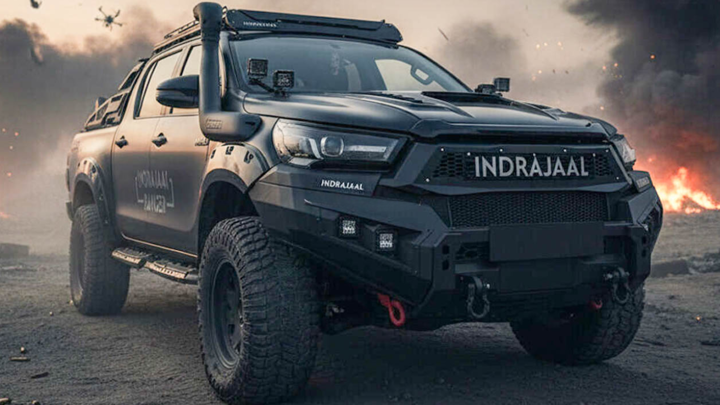
Let's talk about the elephant in the room – or rather, the pickup truck on the battlefield. Why choose the Hilux as the foundation for this advanced defense system?
Battle-Proven Reliability
The Toyota Hilux has earned its stripes across some of the world's toughest environments. From the deserts of the Middle East to conflict zones worldwide, this pickup has demonstrated remarkable durability. When you're mounting expensive drone detection equipment, you need a platform that won't let you down when things get rough.
I've always respected how the Hilux handles punishment that would cripple lesser vehicles. That same ruggedness now serves a higher purpose – carrying technology that protects critical infrastructure and personnel.
Mobility and Terrain Capability
Defense operations don't happen exclusively on smooth highways. The Hilux's four-wheel-drive system and high ground clearance allow the Indrajaal Ranger to deploy in varied terrain conditions. Whether it's border areas, rough industrial sites, or emergency response situations, this platform can get where it needs to be.
- All-terrain capability: Handles diverse ground conditions from deserts to mountainous regions
- Quick deployment: Mobile platform responds faster than fixed installations
- Tactical flexibility: Can reposition based on evolving threat scenarios
- Cost-effective: Leverages commercial vehicle platform reducing development costs
The Indrajaal System: More Than Just Hardware
Now here's where things get interesting. The Indrajaal Ranger isn't just a truck with some antennas slapped on top. It's an integrated defense ecosystem that brings serious capabilities to counter-drone operations.
Detection and Tracking Capabilities
According to publicly available information from Grene Robotics, the Indrajaal system provides 360-degree coverage for drone detection. The system integrates multiple detection technologies to identify aerial threats across different ranges and altitudes.
What sets this apart from stationary systems is the continuous protection bubble it creates. As the vehicle moves, so does the protective coverage – think of it as a mobile safe zone that follows you around.
Multi-Layered Defense Approach
The system reportedly employs several countermeasure options depending on the threat level and operational requirements. Industry reports suggest these systems typically include:
- Soft-kill measures: Electronic countermeasures that disrupt drone communications and navigation
- Detection range: Multiple kilometers of coverage radius (specific ranges vary by configuration)
- Rapid response time: Quick threat assessment and countermeasure deployment
- Multiple simultaneous targets: Capability to track and counter several drones at once
Real-World Applications and Use Cases
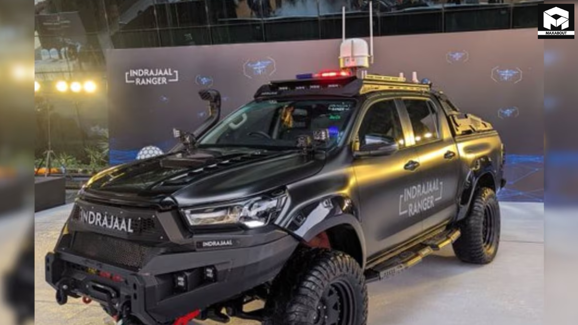
Let me be straight with you – this isn't technology for technology's sake. The Indrajaal Ranger addresses genuine security challenges that have emerged in recent years.
Border Security and Military Operations
India's borders present unique security challenges where mobile drone defense becomes crucial. Convoys, temporary military installations, and patrol units often report vulnerability to drone surveillance and potential attacks. A mobile platform like the Indrajaal Ranger can accompany these operations, providing overwatch.
Critical Infrastructure Protection
Power plants, refineries, and communication hubs face increasing drone-related security concerns. While permanent installations offer protection, events and temporary situations require flexible solutions. That's where this mobile platform shines.
VIP Protection and Special Events
High-profile gatherings, state visits, and major events commonly employ counter-drone measures. Users in the security industry often report that mobile systems provide better coverage for dynamic situations where threat vectors constantly change.
Technical Specifications and Performance
While complete technical specifications remain partially classified for security reasons, publicly available information provides insight into the system's capabilities.
System Integration
The Indrajaal Ranger integrates its detection and countermeasure equipment without significantly compromising the Hilux's mobility. The installation reportedly maintains the vehicle's ability to operate in standard road conditions while carrying the additional equipment load.
Operational Parameters
- Coverage area: 360-degree hemispherical protection
- Detection range: Multi-kilometer radius (varies by drone type and conditions)
- Response time: Rapid threat assessment and countermeasure deployment
- Power supply: Self-contained power generation for extended operations
- Crew requirements: Minimal operator training with automated threat detection
The Growing Drone Threat Landscape
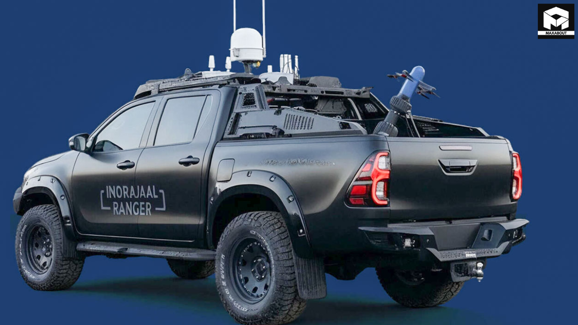
I think it's important to understand why vehicles like the Indrajaal Ranger matter now more than ever. The drone threat isn't hypothetical – it's very real and evolving rapidly.
Democratization of Aerial Technology
Commercial drones have become incredibly accessible. What once required military budgets now costs less than a decent smartphone. This democratization brings benefits but also creates security vulnerabilities. Reports from security forums worldwide consistently highlight incidents involving unauthorized drones near sensitive locations.
Sophisticated Threats Require Sophisticated Responses
Today's commercial drones can carry payloads, stream high-definition video, and operate autonomously. Some reports suggest modified drones have been used in conflict zones for surveillance and even payload delivery. Traditional security measures simply can't address threats that literally fly over walls and fences.
India's Indigenous Defense Technology Push
The Indrajaal Ranger fits into a larger narrative about India's defense manufacturing capabilities. Grene Robotics represents the kind of homegrown innovation that India's "Make in India" initiative aims to foster.
Reducing Import Dependence
Historically, India has imported significant defense equipment. Indigenous solutions like the Indrajaal Ranger reduce foreign dependence while building domestic expertise. This matters not just economically but strategically – you want control over the technology protecting your borders.
Customization for Local Needs
Domestic developers understand local operational requirements better. Indian terrain, climate conditions, and specific threat scenarios differ from other regions. Solutions designed here account for these unique factors from the ground up.
Comparing Mobile vs. Fixed Anti-Drone Systems
You might wonder why mobile systems matter when fixed installations can offer robust protection. Both have their place, but they serve different operational needs.
Advantages of Mobile Platforms
- Tactical flexibility: Reposition based on evolving threats and operational requirements
- Convoy protection: Accompanies moving targets that need continuous coverage
- Temporary deployment: Provides security for time-limited events without permanent installation
- Gap coverage: Fills protection gaps between fixed installations
- Rapid response: Deploys quickly to emerging threat locations
When Fixed Systems Work Better
Permanent installations make sense for locations with consistent, long-term security requirements. Airports, nuclear facilities, and major government buildings typically employ fixed systems with deeper integration into overall security infrastructure. The ideal approach often combines both – fixed systems for permanent locations and mobile units for dynamic situations.
Challenges and Limitations
Let's keep it real – no system is perfect. The Indrajaal Ranger, impressive as it is, faces challenges common to mobile defense platforms.
Operational Considerations
Mobile systems inherently trade some capabilities for mobility. Power generation, equipment size, and detection range often face constraints compared to larger fixed installations. The vehicle-mounted platform must balance protection capability with the Hilux's carrying capacity and operational requirements.
Electronic Warfare Environment
Counter-drone systems operate in increasingly complex electromagnetic environments. Users commonly report that urban areas with dense electronic noise present detection challenges. The system must distinguish between legitimate and threatening drones amid substantial RF clutter.
Evolving Threats
Drone technology advances rapidly. Today's countermeasures must anticipate tomorrow's threats. Systems require regular updates and adaptations as drone capabilities evolve. This ongoing development cycle demands continuous investment and engineering refinement.
The Technology Behind Counter-Drone Systems
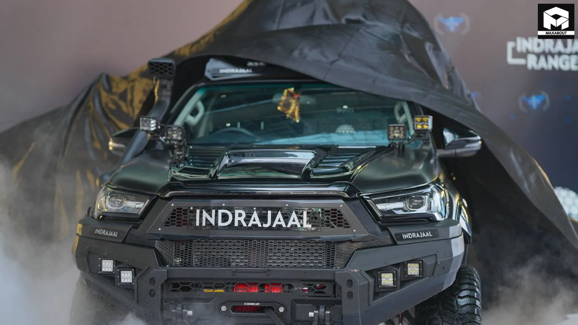
Understanding how these systems work helps appreciate the engineering achievement the Indrajaal Ranger represents.
Detection Technologies
Modern counter-drone systems typically integrate multiple detection methods. Each technology addresses different aspects of the detection problem:
- RF detection: Identifies communication signals between drones and operators
- Radar systems: Tracks physical movement and provides range/altitude data
- Optical sensors: Visual identification and tracking using cameras
- Acoustic sensors: Detects characteristic sounds produced by drone motors
Countermeasure Options
Once detected, threats require neutralization. Industry-standard approaches generally include signal jamming that disrupts control links, spoofing that sends false navigation data, and in some configurations, directed energy solutions. The specific mix deployed varies based on operational requirements and legal frameworks.
Market Position and Competition
The counter-drone market has exploded in recent years, with solutions ranging from handheld jammers to sophisticated integrated systems. Where does the Indrajaal Ranger fit in this landscape?
Global Counter-Drone Market
Industry reports suggest the global counter-drone market continues growing rapidly, driven by increasing drone incidents and security concerns. International solutions from companies in Israel, the United States, and Europe have dominated this space. The Indrajaal Ranger represents India's entry into this competitive arena with a uniquely mobile platform.
Competitive Advantages
Several factors position the Indrajaal Ranger competitively:
- Cost-effectiveness: Leveraging commercial vehicle platform reduces development and production costs
- Proven platform: Building on Hilux reliability minimizes platform-related risks
- Local support: Domestic manufacturing enables easier maintenance and support infrastructure
- Customization potential: Modular approach allows configuration for specific operational needs
Future Developments and Roadmap
Technology doesn't stand still, and neither will the Indrajaal platform. Several potential development directions could enhance the system's capabilities.
Integration with Broader Defense Networks
Future iterations may integrate more deeply with existing defense communication networks. This would enable coordinated responses across multiple units and integration with command and control systems. Network-centric warfare concepts suggest that connected systems perform more effectively than isolated units.
Enhanced Automation and AI
Artificial intelligence applications in threat detection and classification continue advancing. Machine learning algorithms can potentially improve detection accuracy, reduce false positives, and enable faster response times. This reduces operator workload while enhancing system effectiveness.
Counter-Swarm Capabilities
Drone swarm technology represents an emerging threat where multiple coordinated drones operate simultaneously. Future system upgrades may specifically address these scenarios with enhanced multi-target engagement capabilities and coordinated countermeasures.
Frequently Asked Questions
What makes the Toyota Hilux suitable for this application?
The Hilux combines proven reliability, excellent terrain capability, and sufficient payload capacity for the detection and countermeasure equipment. Its widespread availability and established maintenance infrastructure also support operational deployment. The platform has demonstrated durability in harsh conditions worldwide, making it ideal for security operations.
How does the Indrajaal Ranger detect drones?
The system employs multiple detection technologies including RF monitoring, radar tracking, and optical sensors to provide comprehensive 360-degree coverage. This multi-layered approach enhances detection reliability across various drone types and operational conditions. Specific technical details remain classified for security reasons.
Can the system neutralize all types of drones?
Counter-drone systems generally work most effectively against commercial drones operating on standard frequencies and navigation systems. Highly modified or autonomous drones may present additional challenges. System effectiveness varies based on drone type, operational environment, and specific countermeasures deployed.
Is this technology available for civilian applications?
Counter-drone technology typically faces regulatory restrictions due to concerns about interference with legitimate communications and aviation safety. Deployment generally requires appropriate authorization and often remains limited to government, military,
Explore the story
Related news





Share your view and join the discussion.
Earn reward points for every comment and get a chance to win ₹1,000 in our weekly lucky draw. Sign in with Google in one tap.
Start the conversation
No one has commented on this article yet. Be the first to share your view.
Want to read more automotive news?
Stay updated with the latest car launches, reviews, and industry insights.
Browse All News