
India Isobutanol-Diesel Blending Mandate Watch: What It Could Mean For Diesel Users
India's next major biofuel discussion may move beyond petrol. A reported policy push around isobutanol diesel blending in India suggests the government is studying whether diesel can follow the E20 petrol transition with its own lower-emission fuel blend. The mandate is not final yet, but official c...
Editorial Team
India's next major biofuel discussion may move beyond petrol. A reported policy push around isobutanol diesel blending in India suggests the government is studying whether diesel can follow the E20 petrol transition with its own lower-emission fuel blend. The mandate is not final yet, but official comments and ongoing research make it a story worth tracking for diesel car owners, commercial fleets, transport operators, and fuel-policy watchers.
What You Need To Know
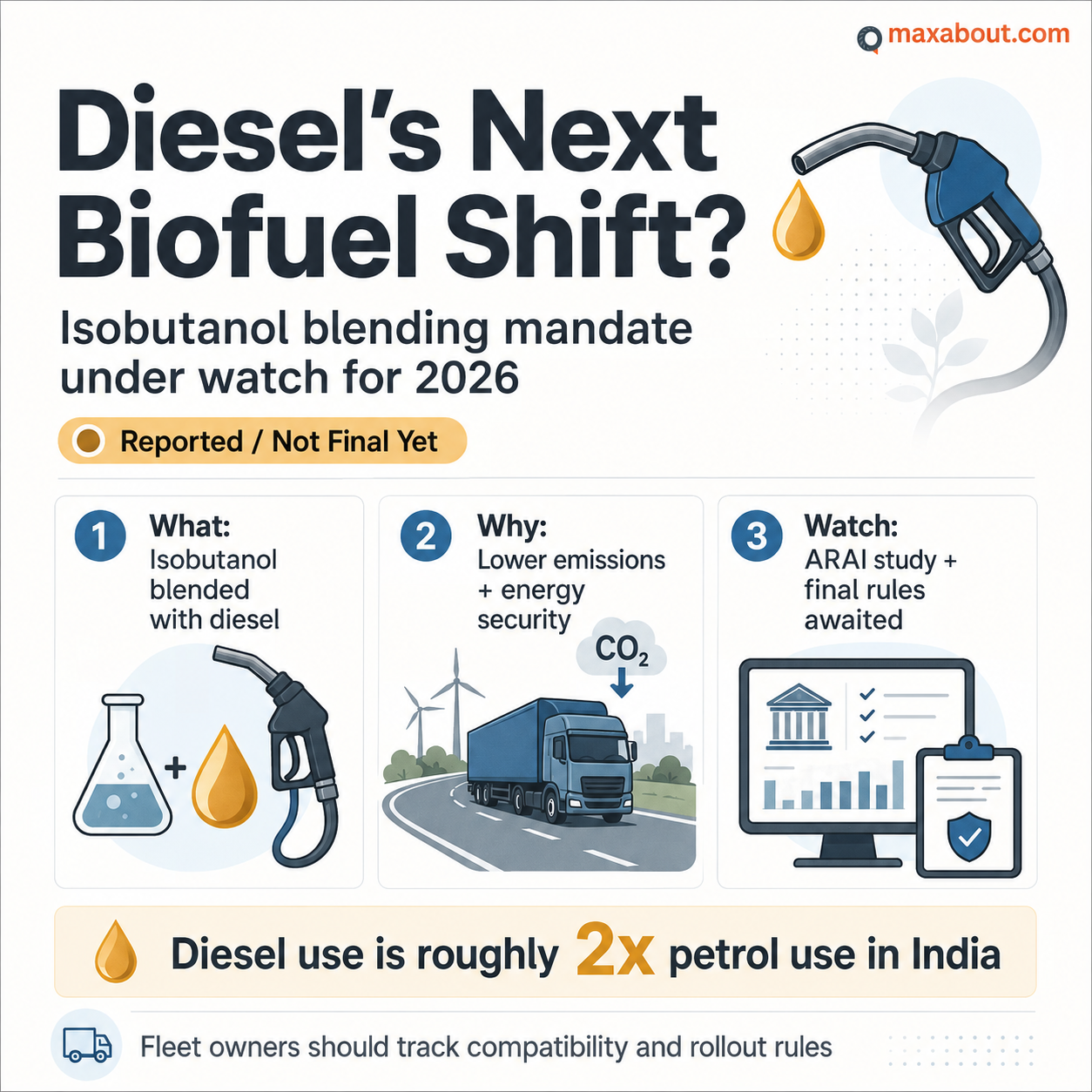
Isobutanol blending with diesel is being discussed as a possible policy move for 2026.
The story is currently a reported mandate watch, not a final government notification.
BPCL research and an ARAI study have been reported as part of the technical evaluation.
The impact could be significant because diesel consumption in India is much larger than petrol consumption.
Final blend percentage, rollout timing, compatibility rules, and fuel availability remain unconfirmed.
What Is Isobutanol And Why Use It With Diesel?
Isobutanol is a biofuel alcohol that can be produced from biomass and ethanol-linked pathways. Compared with ethanol, it is generally discussed for its higher energy density and lower corrosiveness, which makes it interesting for fuel-blending research. For India, the broader logic is familiar: reduce emissions, improve energy security, and lower dependence on imported crude where possible.
The diesel angle matters because diesel powers a major share of India's freight, public transport, farm equipment, commercial vehicles, and many private vehicles. Even a modest blending rule could affect a much wider usage base than a niche passenger-car update.
Confirmed Vs Reported Details
| Point | Status | Why It Matters |
|---|---|---|
| Isobutanol-diesel mandate | Reported / under watch | A final notification has not been issued yet. |
| BPCL research | Reported | Fuel-company research is important before large-scale blending. |
| ARAI study | Reported | Vehicle and engine compatibility needs technical validation. |
| Rollout timing | Unconfirmed | Reports point to 2026, but no final date is available. |
| Blend percentage | Unconfirmed | This will decide real-world impact on fuel supply and vehicles. |
What Diesel Owners And Fleet Operators Should Watch
For private diesel car owners, the immediate takeaway is simple: nothing changes until official rules are notified. For fleets and commercial users, the watchpoints are more practical. Fuel compatibility, warranty guidance, long-term engine durability, regional availability, and pump-level implementation will matter more than the headline itself.
Whether the mandate applies nationwide or starts as a pilot.
Whether older diesel engines need special compatibility guidance.
How fuel suppliers handle storage and distribution.
Whether vehicle manufacturers issue owner advisories.
How the blend affects fuel economy, emissions, and maintenance.
Why This Policy Could Be Bigger Than A Petrol Update
India's diesel ecosystem is deeply tied to logistics, construction, agriculture, public transport, and long-distance mobility. That means an isobutanol-diesel rule would not just be an automotive headline; it could become an energy-security and operating-cost story. The policy also follows India's wider push toward alternative fuels, including ethanol blending in petrol and flex-fuel engine studies.
The important caveat is that diesel blending is technically and commercially sensitive. A successful rollout would need evidence from fuel research, emissions testing, vehicle compatibility studies, and a clear implementation roadmap.
FAQs
Is India already mandating isobutanol-blended diesel?
No. Based on current reporting, it is a policy watch item and not a final notified rule.
Will isobutanol-diesel affect existing diesel cars?
That is still unclear. Compatibility guidance will depend on the final blend percentage, technical studies, and manufacturer advisories.
Why is ARAI involved?
ARAI's reported role matters because engine and emissions testing is needed before any large-scale fuel-blending policy can be implemented responsibly.
What should fleet operators do now?
Fleet operators should monitor official notifications, fuel-supplier guidance, OEM advisories, and any pilot rollout details before changing operating plans.
Bottom Line
The isobutanol diesel blending India story is important, but it should be read carefully: the direction of travel is serious, while the final rules are still awaited. For now, diesel users should treat this as a 2026 policy watch and track official details on blend percentage, compatibility, and rollout timing.
Explore the story
Related news




Share your view and join the discussion.
Earn reward points for every comment and get a chance to win ₹1,000 in our weekly lucky draw. Sign in with Google in one tap.
Start the conversation
No one has commented on this article yet. Be the first to share your view.
Want to read more automotive news?
Stay updated with the latest car launches, reviews, and industry insights.
Browse All News